Drought can be a geopolitical game-changer, and as the climate continues to warm, we can expect increased disruptions in food production, forced migration, and even violent conflict over dwindling resources.
Weather doesn’t discriminate between rich and poor countries, but its impact can vary depending on a government’s ability to respond to it. In a developed state, drought can alter economic output, swing elections, and create friction between various interests and industries, all of which are vying for what’s left in the reservoirs (think of the pro and anti-almond PR war in California). In an underdeveloped state, drought can be the first step toward humanitarian disaster: people are forced from their homes, putting added resource stresses on the populations that receive them, sometimes resulting in violence and persecution; disease spreads as people turn to dirty and polluted water sources; and weak state institutions are stretched to the limit as the government struggles to respond. It’s an environment in which terrorist and criminal networks thrive, and although top-level security analysts seldom manage to connect the dots, drought can be the beginning of a process that ends in international piracy or terrorist insurgency (think Somali piracy in the Gulf of Aden or the rise of Boko Haram in Nigeria’s increasingly arid Borno State).
Here are some of the major droughts that are expected to persist in 2018:
Somalia
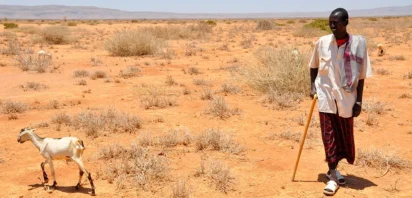
Drought has been ravaging the Horn of Africa since 2015, and one of the most affected countries has been Somalia. Over 1.1 million people have been forced from their homes in search of food and clean water, and 875,000 of them remain internally displaced. An overwhelming majority of these people are very young: a full two-thirds of the displaced are under the age of 18. The effects of the Somali drought are being compounded by the fact that neighboring countries like Kenya and Ethiopia are also experiencing crop failures and widespread die-offs of livestock, adding to the plight of Somali migrants who manage to cross the border.