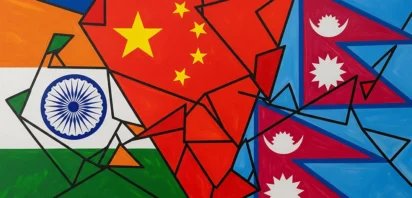
In the high shadows of the Himalayas lies a nation whose size belies its significance. Nepal is neither rich in resources nor vast in territory, yet its very location has made it a stage upon which the great rivalries of South Asia are played out. Its mountains, often imagined as barriers, are in fact gateways: narrow passes and contested routes that shape the flow of armies and goods.
Here, geography is destiny. For India, Nepal is both shield and vulnerability, a buffer above its most fragile frontier. For China, it is an opening to South Asia, a chance to turn altitude into access. And for Nepal itself, every domestic tremor echoes across the region, magnified by the anxieties of its larger neighbors.
To understand Nepal, then, is to glimpse more than a small republic’s struggles with instability. It is to see how one country’s fragility can unsettle an entire neighborhood, and how the contest for influence across Himalayan valleys may determine the balance of power between two giants.
Nepal’s Strategic Position Between India and China
Nepal’s importance in South Asia begins with its geography. The country is small, landlocked, and located high in the Himalayas, directly between India to the south and China to the north. Because it has no access to the sea, Nepal must rely on its neighbors for trade routes, energy supplies, and connections to global markets. This reliance places permanent limits on Nepal’s independence. Even when its leaders try to pursue balanced foreign policies, the simple fact remains: Nepal is not viable without some form of cooperation with either India or China.
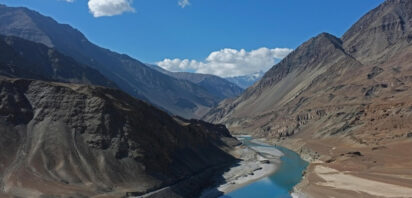
The physical terrain compounds this importance. The Himalayas are one of the world’s greatest natural barriers. For centuries, they limited large-scale movement between the Indian subcontinent and the Tibetan plateau. But Nepal contains valleys and mountain passes that provide rare openings across this formidable frontier. Whoever influences Nepal gains greater control over these crossings, which matter not only for commerce but also for military logistics and energy transmission.
- For India, Nepal functions as a protective shield. It sits just above the narrow Siliguri Corridor, the “chicken’s neck” strip of land that links India’s mainland to its northeastern states. If Chinese influence in Nepal were to expand, India could perceive its most vulnerable access point to be at risk.
- For China, Nepal offers depth and opportunity. Stronger ties with Kathmandu help Beijing secure its Tibetan border while also providing potential routes to South Asian markets.
In this way, Nepal’s geography makes its domestic politics inseparable from regional power struggles. Instability inside Nepal does not stay confined; it threatens to upset the balance between two giant neighbors who both see the country as strategically vital.
Nepal’s Political Instability and Regional Security Impact
Since becoming a republic in 2008, Nepal has been politically unstable. Governments rarely last long. Parties break apart, coalitions collapse, and corruption scandals constantly undermine trust. Citizens have grown weary of leaders who seem to serve themselves rather than the public.
The protests of September 2025 were an escalation of long-standing political tensions. When the government suddenly banned major social media platforms, young people saw it as an attempt to silence criticism. For Generation Z, who use these platforms not only for communication but also for education, work, and political debate, the ban was unacceptable.
Protests erupted in Kathmandu and across the country. They quickly grew beyond the initial trigger, transforming into a broad call for accountability, transparency, and systemic reform. After violent clashes between protesters and security forces, Prime Minister K.P. Sharma Oli resigned.
Although the immediate cause was domestic, the consequences reverberated regionally:
- For China, the unrest endangered infrastructure projects it has financed under the Belt and Road Initiative (BRI). Without stability, these projects risk stalling or losing credibility.
- For India, the unrest raised concerns about migration surges across the open border, disruptions in cross-border trade, and the potential for greater Chinese influence when the dust settled politically.
The protests reflect a common theme, that Nepal’s internal fragility always has external consequences. Its political institutions remain weak, which means that instability can quickly spill over into regional rivalries. Nepal is not just managing its own domestic problems; it is sitting at the crossroads of a larger contest where every crisis is magnified by geography.
China’s Belt and Road Investments and Economic Influence in Nepal
China’s involvement in Nepal has expanded rapidly over the past decade, and its approach is best understood through economics. Beijing has not sought influence through military bases or overt pressure but through investment, trade, and infrastructure. This strategy is part of the larger Belt and Road Initiative (BRI), which aims to connect China to the wider world through new transport corridors and energy networks.
In Nepal, Chinese projects include airports, road tunnels, hydropower plants, industrial parks, and telecommunications infrastructure. The most ambitious plan is the Jilong–Kathmandu railway, which would cut through the Himalayas to link Nepal directly with Tibet. These projects promise real benefits: new jobs, cheaper transportation, more reliable electricity, and easier access to international markets.
But there is a deeper logic. Nepal already buys far more from China than it sells. Chinese exports flood Nepalese markets, while Nepal struggles to export much beyond limited agricultural products and handicrafts. Infrastructure projects deepen this economic connection. As roads, railways, and power lines point northward, Nepal’s dependence shifts from India toward China.
China’s approach centers on shaping Nepal’s long-term orientation. The more Nepal relies on Chinese trade and technology, the greater Beijing’s leverage becomes. In effect, Nepal’s development path is being tied to China’s regional vision, one in which infrastructure and investment translate into influence.
India’s Security Concerns and Geopolitical Interests in Nepal
India’s ties with Nepal run deep. The two countries share centuries of cultural and religious connections. Sacred sites in Nepal attract thousands of Indian pilgrims each year, while Nepali citizens can live and work freely in India under a special treaty signed in 1950. Economically, India is Nepal’s largest trading partner, supplying food, fuel, and manufactured goods. Millions of Nepalese workers in India also send remittances back home, linking the two economies even further.
Yet this closeness is also a source of vulnerability. Many in Nepal resent what they see as India’s heavy-handedness, especially after the 2015 blockade, which caused severe shortages and damaged India’s image.
At the same time, Chinese projects in Nepal are seen in New Delhi not as harmless development but as potential threats. A railway linking Kathmandu to Tibet, or a Chinese-built airport close to the border, raises alarm because it could shift the security balance in the region.
For India, Nepal is more than just a neighbor; it is part of its first line of defense. Losing influence there would weaken India’s northern shield and expose sensitive corridors like Siliguri. It would also signal a decline in India’s role as South Asia’s dominant power at a time when it already faces challenges from other neighbors.
Thus, every Chinese-built road or power line near the border is seen as a strategic challenge. For New Delhi, maintaining its privileged position in Nepal is not only a matter of economics or culture, but also of safeguarding national security and preserving regional leadership.
China’s Strategic Restraint During Nepal’s Political Crisis
When Nepal’s political crisis erupted, China reacted with caution. Instead of backing a particular leader or trying to intervene directly, Beijing emphasized dialogue, stability, and continuity. It recognized Nepal’s interim government quickly and avoided comments that could be seen as meddling.
This approach reflects a cautious strategy. China knows that its infrastructure projects depend on a stable environment. Political chaos could delay construction or damage the credibility of the BRI as a whole. But overt interference could backfire even worse, provoking suspicion in Nepal and a strong response from India.
By keeping a low profile, China achieves several things at once. It protects its investments, avoids unnecessary confrontation with India, and reassures Nepalese leaders that Beijing is a partner rather than a manipulator. This restraint is not passive but deliberate: by avoiding dramatic moves, China positions itself for long-term consolidation of influence once the political situation settles.
India’s Vulnerabilities and Regional Stakes in Nepal’s Unrest
For India, Nepal’s unrest is a direct challenge to the foundations of its regional role. The resignation of Prime Minister Oli disrupted high-level visits and highlighted India’s inability to predict or shape events in a country it has long considered part of its core neighborhood.
India’s vulnerabilities come from many directions:
- The open border makes it easy for unrest in Nepal to spill over, whether through migration surges, trafficking, or cross-border violence.
- Millions of Nepali workers in India create deep social linkages, but also the risk of instability spreading into Indian communities.
- Cultural ties, such as shared Hindu traditions, mean that upheaval in Nepal resonates within Indian society, magnifying its political impact.
On top of this, India is facing broader regional challenges. Its relations with Bangladesh and the Maldives have recently been strained, raising questions about its ability to maintain leadership in South Asia. If Nepal drifts closer to China or falls deeper into instability, it would signal further erosion of India’s neighborhood dominance.
For these reasons, India sees Nepal as a test case. Can it maintain influence in the one country where its cultural, economic, and strategic ties are strongest? Or will Chinese projects and Nepal’s domestic turmoil combine to weaken New Delhi’s hand? The answer will not only affect India–Nepal relations but will also shape the larger balance of power in South Asia.