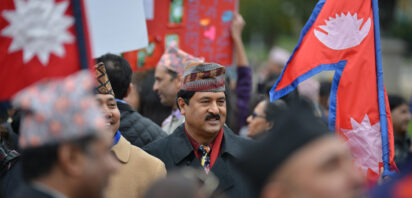
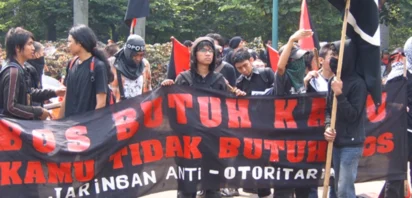
In September 2025, Kathmandu erupted as tens of thousands of Gen Z protesters took to the streets demanding justice, accountability, and an end to corruption — a movement that led to deadly clashes, a government crackdown, and ultimately the resignation of Prime Minister KP Sharma Oli. Nepal faces a well-known crossroads: a proud history of popular mobilization paired with a fragile institutional path towards stable, inclusive democracy. Street politics have long been part of Nepal’s political identity, from the Jana Andolan movements that toppled the monarchy to youth-led rallies that have shaped recent constitutional debates, but protests alone do not bring progress.
The urgent task for Kathmandu is to turn protest energy into strong institutions: schools that teach critical citizenship, transparent channels for grievances that prevent street escalation, and an agreement between leaders and citizens that makes democratic gains permanent.
Across the Global South, scholars now talk of ‘protest democracy’: mass mobilization as an intrinsic, not accidental, component of modern political life. That does not mean every rally is healthy for democracy, only that protest often arrives where formal institutions fail to answer pressing grievances — inequality, corruption, exclusion — and forces those institutions to adapt or fracture. Nepal’s recent cycles of mass action reflect exactly this dynamic: citizens demanding accountability, jobs, and representation.
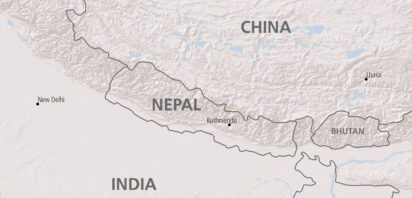
Education sits at the heart of any lasting solution. International bodies insist that quality, inclusive education builds the civic muscles democracies need: media literacy, critical thinking, and the habit of collective problem-solving. Where curricula teach debate and rights, young people are less likely to see street confrontation as the only option. Where schooling is inequitable, marginalized groups are pushed toward grievance politics. Nepal’s geography and inequality make this acute: isolated mountain communities, under-resourced rural schools and youth unemployment create fertile ground for anger that is easily mobilized on the streets. Investing in human capital is therefore not abstract philanthropy; it is national stability policy.
But education reform is not a technocratic sideline. In Thailand and Bangladesh, student movements showed how classrooms incubate change — or, when co-opted, quell it. In Chile, student protests shifted constitutional politics. Those cases teach Nepal two lessons. First, protect schools as democratic spaces where contestation is channeled into civic learning, not punished. Second, tie education investment to immediate civic outcomes: civic curricula, community debate programs and teacher training in conflict-sensitive pedagogy that can transform protests from eruptions into dialogic improvements. UNESCO’s ‘education for citizenship’ framework and International IDEA’s reports underline that curricular reform must be accompanied by teacher support and measurable learning outcomes.
Political institutions also need urgent repair. Protests tend to succeed when there are credible, accessible channels to translate demands into policy — independent commissions, empowered parliaments, and local fora where disputes are negotiated. Nepal’s federal experiment was meant to decentralize power and bring decision-making closer to citizens, but where that promise has been hollowed by weak local capacity or partisan capture, street politics expand.
Practical reforms include robust, independent electoral management, routine public hearings on contentious reforms, and transparent grievance redress mechanisms that deliver visible, short-term wins. International experience shows that governments that engage demonstrators — by opening formal dialogue and amending policies — often defuse tensions more effectively than those that crack down.
Security forces matter, too. Research from RAND and comparative observers shows that whether militaries and police are professional, accountable and trained in crowd de-escalation determines whether protests lead to reform or repression. Nepal must prioritize modern, rights-respecting training for police, coupled with independent review mechanisms for protest-related violence. Civil society and international partners can help design curricula and monitoring protocols so that crowd management protects lives while preserving the right to dissent. When security institutions are seen as neutral guardians rather than partisan instruments, protesters trust institutions enough to test reforms without fear.
Yet reform will not stick without measurable targets and international support. Adopt a three-part compact that links domestic reform to donor cooperation: first, a national civic-education drive with clear KPIs (number of schools implementing civic modules, teacher-training seats filled, and youth civic-engagement rates tracked annually); second, a transparency and grievance index for local governments (publication of budgets, public-hearing logs, and redress timelines); third, a police-professionalism scorecard (training completion, complaints processed, and independent investigations).
Donors and multilateral agencies — UNDP, UNESCO, the World Bank — should offer technical grants tied to these milestones, creating an incentive structure that makes reform politically costly to abandon. This is the practical application of the SDG framework: connect education (SDG4) and peaceful institutions (SDG16) with measurable delivery.
Nepal must also lean into a plural civic culture. Curricula that respect linguistic and ethnic diversity, encourage women’s leadership in civic forums, and teach media literacy will reduce the appeal of polarizing rhetoric. Civic spaces — town halls, youth parliaments, and community mediation centers — should be protected as commons where disagreement is taught, rehearsed, and regulated. The global literature is blunt: democracies that build civic capacities and protect space for dissent convert episodic protest into sustained progress; those that punish dissent calcify grievance into cycles of unrest.
The political cost of inaction is significant. Half-hearted measures — token hearings, fleeting funds, security-first responses — will not restore public trust. Nepal requires a bold, integrated plan that considers education as security policy and democratic repair as development work. This is not utopian; it is sensible statecraft. If Kathmandu can transform its long history of popular mobilization into institutions that value citizen voices rather than criminalize them, Nepal will not only stabilize its politics — it will also deepen democracy for a generation.
Nepal’s choice is simple: treat protests as a symptom to be understood and remedied, or treat them as a threat to be crushed. Teach the next generation how to deliberate; professionalize institutions so they listen; and underpin reform with measurable, donor-backed milestones. Nepal’s future depends on it: democracy is not merely the applause of the street, but the quiet work of schools, parliaments and public servants who answer when citizens knock. If Kathmandu seizes this moment, it can turn the applause of the street into the patient work of institutions that listen. If it does not, grievances will calcify into cycles of unrest. The choice will shape Nepal’s democracy for a generation.
The views expressed in this article belong to the author(s) alone and do not necessarily reflect those of Geopoliticalmonitor.com.