
When Gabriel García Márquez begins Chronicle of a Death Foretold with the line “On the day they were going to kill him, Santiago Nasar…”, the reader already knows the outcome. The suspense lies not in what happens, but in how a whole town lets it happen. Everyone knows; no one acts. The story is not about murder alone — it is about collective failure, the paralysis of a society that mistakes foreknowledge for inevitability.
In 2025, the world feels disturbingly similar. We are not short of omens. Wars grind on, alliances fracture, economies weaponize, climate systems convulse. Commentators warn of “a new world war in slow motion.” Yet, like Márquez’s townsfolk, the global community moves between disbelief and resignation, convinced that the coming storm is fated — and therefore unstoppable.
The Fatalism of Power – Knowing and Doing Nothing
In Márquez’s town, everyone has heard that the Vicario brothers intend to kill Santiago Nasar. But the warning disperses like fog. People shrug it off, thinking someone else will intervene. “It was as if we’d all known it was going to happen, but none of us believed it would,” the narrator reflects.
That same sense of fatalism infects global politics today.
The war in Ukraine has entered its fourth year, reshaping borders, economies, and consciences. It began with predictable warnings — Western intelligence briefings, Russian troop build-ups, diplomatic ultimatums — yet few imagined invasion would truly happen. When it did, the world adjusted rather than transformed. Each new escalation — missile strikes, nuclear rhetoric, now long-range weapons — triggers anxiety, but little decisive course correction. The logic of inevitability dominates, that this war must burn itself out before peace can even be imagined.
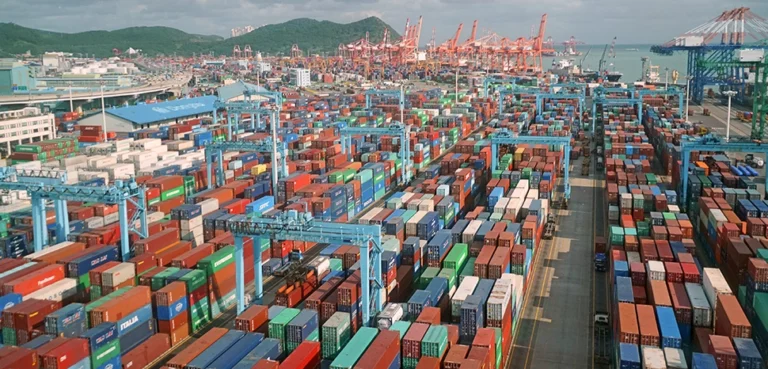
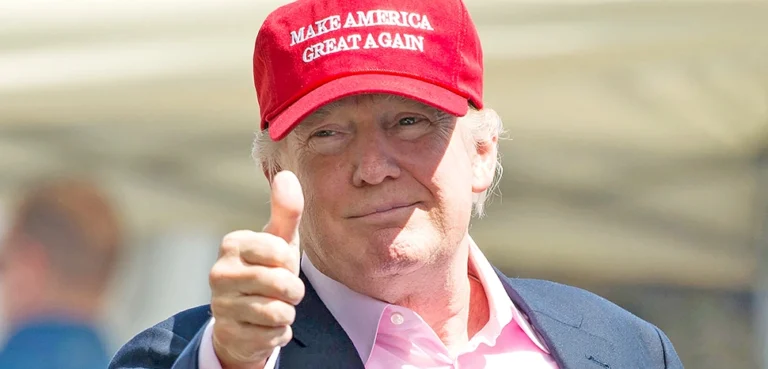
In East Asia, tensions between the United States and China follow a similarly foretold script. Both nations speak of “guardrails,” yet act as though collision is preordained. The trade war, re-ignited by Washington’s new 100 % tariffs and Beijing’s retaliatory export bans, mirrors the rigid pride of Márquez’s characters: each side trapped by the need to appear strong, even if that strength leads to ruin. Analysts speak of “decoupling” and “cold war” as though these are natural weather patterns, not human choices.
Even the Doomsday Clock, now fixed at 90 seconds to midnight, embodies our age’s fatalism — a symbol meant to awaken urgency but often received as confirmation of destiny. In Márquez’s world, this is the moment when townsfolk gather to watch the inevitable unfold; in ours, it is the global community refreshing headlines as the hands inch closer to midnight.
The Silence Between Alarms — Communication and the Collapse of Meaning
If Chronicle of a Death Foretold is a study in forewarning ignored, it is also a study in communication gone wrong. The letters, messages, and shouts that could have saved Santiago are misdelivered, misplaced, or misunderstood. The town’s greatest tragedy is not ignorance, but the failure to interpret what is already known.
On the world stage, communication falters in eerily similar ways.
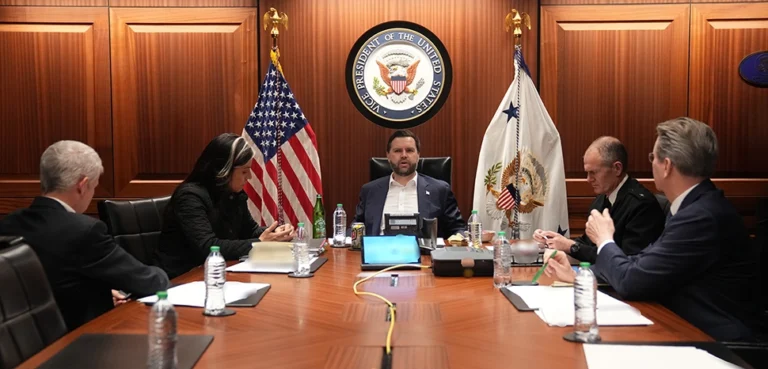
Diplomatic channels, once meant for de-escalation, are now stage sets for accusation. Russian officials warn that Western missiles for Ukraine would be a “dramatic escalation.” Western governments respond that the weapons are purely defensive. Each side hears only provocation. The conversation mirrors Márquez’s chorus of half-heard warnings, each distorted by disbelief or pride.
Elsewhere, the Middle East repeats the cycle. The long-simmering crisis between Israel and its neighbors, the rise of Iran’s regional assertiveness, and the unraveling of ceasefire efforts show how warnings lose meaning when saturated by repetition. When every day is a “red alert,” the phrase itself dies of exhaustion.
Meanwhile, global institutions — the United Nations, the World Trade Organization, even the IMF — struggle to make themselves heard amid the noise of populism and bloc politics. Just as Márquez’s priest never delivers the message in time, today’s institutions draft resolutions that never reach the streets where the violence brews.
Even in economics, messages misfire. Nations building “alternative financial systems” — China’s CIPS, Russia’s SPFS, digital currencies in the Gulf and ASEAN — are signaling a world turning away from Western structures. Yet the signal is treated as background noise. Like Santiago’s unopened letter, the warning sits on the doorstep, unread.
Honor, Ideology, and the Rituals of Violence
Why did the Vicario brothers kill Santiago? Because they had to — not by law, but by the unwritten code of honor. To refuse vengeance would be to betray identity.
That logic, of course, still governs nations.
Russia justifies its war as defense of national dignity, a restoration of historical truth. China’s hard line on Taiwan is framed as defense of sovereignty and respect. The United States couches its interventions in the rhetoric of freedom and moral order. Across regions, leaders invoke identity and moral necessity to sanctify confrontation. Each side, like the Vicario twins, feels righteous; each sees restraint as shameful.
The new bloc politics — Russia, China, Iran, and North Korea aligning loosely against Western coalitions — mirrors the social script of Márquez’s town. Violence becomes an act of moral duty, not greed. To step back would dishonor the group.
Even the climate crisis carries this tragic moral code. Rich nations proclaim responsibility but move sluggishly; poorer nations demand justice but lack leverage. The resulting inaction, disguised as negotiation, is a slow-motion vengeance of the planet against human arrogance — a killing foretold not in rumor but in scientific consensus.
Breaking the Script — What Márquez Teaches the Statesmen
In Chronicle of a Death Foretold, Márquez offers no neat resolution. Years later, the narrator returns, gathering testimonies, reconstructing memory. The exercise is not to reverse the death — it cannot be — but to understand the pattern that made it inevitable.
If our world is to avoid its own Santiago moment, we must do likewise.
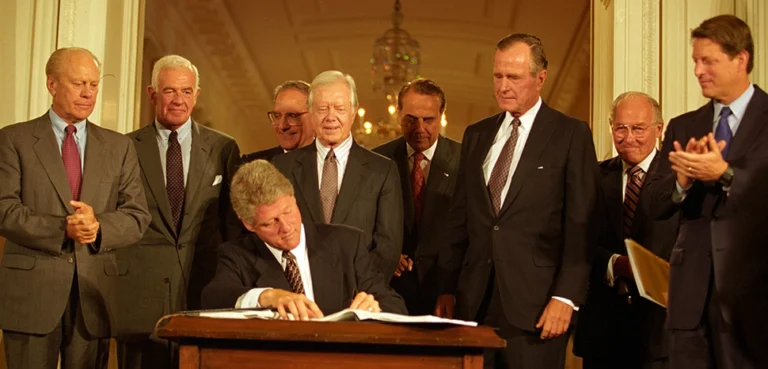
First, we must reclaim belief in agency. Fatalism is seductive because it absolves. But the past century shows otherwise: diplomacy ended the Cold War, international treaties slowed nuclear spread, collective action eradicated diseases and built shared prosperity. These gains were not fate; they were choice. The greatest rebellion against tragedy is to act as though the future is unwritten.
Second, communication must be restored as a bridge, not a weapon. Quiet diplomacy, cultural exchange, and back-channel dialogue — practices now derided as naïve — are precisely what kept the worst crises of the 20th century from consuming the world. We need forums where messages are not drowned by megaphones, where mistranslation does not kill.
Third, we must dismantle the moral myth of “honor through dominance.” Nations, like people, kill when they believe dignity requires blood. True honor lies in restraint — in choosing coexistence over revenge. The world’s major powers could signal strength not through escalation, but through coordinated de-risking: arms-control revival, humanitarian truces, climate-security compacts.
Fourth, institutions must regain credibility through accountability. The International Criminal Court’s war-crime warrants, or ecocide proposals emerging from Ukraine and the Amazon, are early steps in a global reckoning — our equivalent of Márquez’s narrator interrogating the past. Justice may not resurrect the dead, but it can prevent repetition.
The Red Morning Yet to Come
The moral of Chronicle of a Death Foretold is not that fate exists, but that fate is made — by omission, by fatigue, by the quiet arithmetic of looking away. The townsfolk of Márquez’s novel remember the murder not as a crime, but as a collective shame: something they allowed through inertia. The greatest tragedy is that they could have stopped it a hundred different ways, and did not.
Our civilization now stands in that same pre-dawn stillness. The portents are everywhere: nuclear modernization, digital surveillance, resource conflict, AI-driven arms races, disinformation eroding truth itself. We watch, we scroll, we analyze — but seldom intervene. The world’s death, if it comes, will not surprise us. It will merely confirm what we already believed.
And yet, as Márquez might remind us, even the foretold can be undone by a single act of conscience. A door closed, a word spoken, a message delivered in time. The question is whether humanity, having rehearsed its own tragedy for so long, can still improvise a different ending.
Epilogue: Refusing the Script
The chronicle of our age is being written in real time. We know the threats — Ukraine, Taiwan, Gaza, the Arctic melt, the fractured internet, the weaponized economy. But knowledge without courage is complicity.
Perhaps the task now is not to predict the next global war, but to reclaim the forgotten verbs of prevention: to listen, speak, restrain, repair.
If Santiago Nasar’s death was the town’s shame, a world war would be ours. And when the chroniclers of the future turn back the pages, may they find that, in the early morning of our own Red Monday, someone finally refused to let the knife fall.