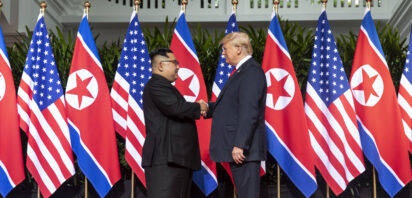
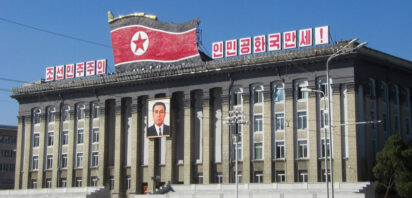
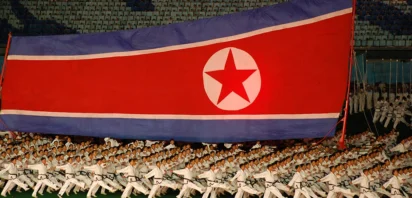
On 23 March, North Korea declared that denuclearization was permanently off the table. Most analysts read it as routine posturing. It was not. Pyongyang had been watching Iran closely — a state that tried every alternative to the nuclear absolute, negotiated in good faith, and was struck anyway. Their declaration was a verdict: if even diplomacy ends in airstrikes, the only rational conclusion is the one North Korea reached decades ago.
Iran will reach it too. The question this piece asks is not whether that conclusion is inevitable — it is why the international system has made it so.
Fool Me Once
It is tempting to dismiss North Korea and the Iranian regime as paranoid. But their doctrine of mistrust is not irrational. It is pattern recognition. And it rests on three major cases:
The first instructive case is Muammar Qadhafi. In 2003, Libya voluntarily dismantled its WMD program in exchange for sanctions relief and reintegration into the international community. Eight years later, NATO air power helped remove him from power. He was later killed by his own people in a drainage ditch. The lesson, drawn immediately and explicitly by the leadership in Pyongyang, was simple: surrendering your deterrent is surrendering your life.
The second case is Ukraine. In 1994, Ukraine held the world’s third-largest nuclear arsenal. Under the Budapest Memorandum, it surrendered that arsenal in exchange for security assurances from Russia, the United States, and the United Kingdom. In 2014, Russia annexed Crimea. In 2022, it launched a full-scale invasion. A state that gave up its weapons was invaded by one that had guaranteed its safety. Other guarantors watched from afar, offering money, limited weapons, and words of encouragement.
What makes the Ukraine case particularly relevant to Iran is not just the betrayal but who committed it. Russia was, at the time of the 2022 invasion, already a strategic partner of Iran. When Tehran watched the Budapest Memorandum collapse, it filtered it through alliance logic. Russia was an ally. The lesson was not registered.
Pyongyang, with fewer illusions about great power reliability, drew the opposite conclusion and enshrined its nuclear irreversibility into law in September 2022. With limited safeguards, the lesson from Ukraine landed cleanly and fast. Tehran, reading the same events through the lens of a warmer Russian alliance, took longer to arrive at the same conclusion. That blind spot would prove consequential.
The third betrayal, of course, is Iran’s own — and it is the most important of all.
The Deal That Worked
The Joint Comprehensive Plan of Action (JCPOA), also known as the Iranian nuclear deal, signed in 2015, was not a concession extracted under duress, but a genuine test of reintegration. Iran accepted intrusive IAEA inspections, reduced its enriched uranium stockpile by 98%, and limited its centrifuge operation in exchange for the lifting of sanctions. Every party to the agreement, including US intelligence agencies, confirmed it was being complied with. The Iranian economy began to recover. A generation of young, educated Iranians had reason to believe that a different Iran was possible.
Then Donald Trump withdrew in May 2018. Iran had not violated the deal. There was no trigger event, no discovered breach. The withdrawal was a unilateral political decision that pulled the floor out from under every Iranian who had argued that engagement with the West was worth the risk. It was an unforced error of historic proportions — a working agreement, fully verified, abandoned for short-term domestic optics.
What happened next was equally revealing about how the international order actually works. The remaining signatories —UK, France, Germany, China and Russia—tried to keep the deal alive via a European mechanism called INSTEX. It was designed, specifically, to bypass US sanctions and allow humanitarian trade in an attempt to prove that a multilateral order could function without Washington. It failed. European banks and companies, dependent on dollar-denominated transactions, were too exposed to American secondary sanctions to risk trading with Tehran. By 2023, INSTEX was quietly dissolved.
The lesson was clear: it doesn’t matter how many countries sign your agreement. If the country that controls the global reserve currency walks away, the agreement dies. Pyongyang had long been wary of multilateral frameworks like the Six-Party Talks for exactly this reason. Iran learned it the hard way.
Biden’s attempts to revive the agreement went nowhere. When Trump returned in 2025, Oman-mediated talks offered one last window. The Iranian leadership was split in a way Kim Jong Un’s never is: the IRGC and the hardline faction, convinced this was a Libya-style trap, accelerated enrichment rather than negotiate. Talks collapsed. The military strikes of mid-2025 and February 2026 followed.
The hardliners had just been proven right.
Will Iran Turn into North Korea?
Iran is not yet a North Korea. But it is beginning to look like one.
The position of Supreme Leader has passed from Khamenei Sr. to his son — a hereditary succession in a system initially designed to prevent exactly that. The IRGC, a military-ideological institution, is consolidating decision-making authority that once belonged to the clerical establishment. These changes are not cosmetic. They will have long-lasting effects on both the diplomatic and domestic trajectories of Iran.
North Korea was, in the early 1950s, nearly erased. US-led UN forces advanced to the Chinese border. Pyongyang was levelled. The regime survived only through massive Chinese military intervention, and the war stalled in a ceasefire, not a peace treaty, that has lasted over seventy years. The trauma of near extinction went on to produce a philosophical doctrine of hypervigilance, self-reliance, and permanent mobilization called Juche.
The nuclear program that followed was the physical manifestation of that doctrine and it worked. Not in the sense that it made North Korea prosperous or its people free, but in the precise, limited sense that it made the regime undislodgeable. No American president, however hawkish, has seriously proposed military action against a nuclear-armed North Korea. The deterrent achieved its purpose.
Crucially, North Korea’s model was enabled by specific structural conditions: a geographically isolated peninsula with a friendly great power on its northern border, an ethnically homogeneous population with no living memory of an alternative political reality, and — perhaps most importantly — an adversary in South Korea that was structurally conflict-averse. Seoul sits 30 miles from the demilitarized zone. Any military confrontation risks the destruction of one of the world’s largest and most economically significant cities. South Korea has, consistently and across administrations, acted as a brake on American military ambition — favoring engagement, economic incentives, and managed coexistence over confrontation.
These conditions made the hermit kingdom viable. They do not exist in Iran.
Begin with the population. Iran is not an ethnically homogeneous state. Persians constitute roughly 60% of a population of 93 million, but significant minorities — Azeris, Kurds, Lurs, Baloch — have distinct identities, distinct grievances, and distinct connections to kin across international borders. The Kurdish population alone spans Iran, Iraq, Turkey, and Syria. The Baloch straddle the border with Pakistan. Total information control — the kind that has kept North Korea’s population in genuine ideological isolation for three generations — is physically impossible in a country whose borders are this porous and whose minorities are this connected. Suppressing internal dissent, already a condition in post-2022 Iran, becomes a permanent necessity. We saw this already during the horrific February 2026 protests, where thousands are alleged to have been killed by the regime.
Then there is the nature of the adversary. North Korea’s primary regional rival is South Korea, a state that has every incentive to avoid escalation. Iran’s is Israel. Israel’s strategic doctrine toward an Iranian nuclear capability is not deterrence or managed coexistence. It is prevention, pursued with consistent willingness to act unilaterally, preventively, and with little regard for international law. Where South Korea functions as a structural restraint on American military ambition, Israel acts as an accelerant. There is no equilibrium available to Iran that resembles the Korean DMZ. Unlike in North Korea, the adversarial dynamic in Iran is active, open-ended and with no natural ceiling.
Geography compounds this. Iran borders seven countries by land, and another eight by sea. Its coastline stretches over 5,000 kilometers. The Strait of Hormuz — through which roughly 30% of the world’s seaborne oil transits — runs along its southern edge. This gives Iran the capacity to threaten global energy markets and hold the world economy partly hostage in a way that Pyongyang never could. But it also means Iran cannot close its walls. Dotting the entire coastline on the other side of the Persian Gulf are US military installations, meaning that Iran’s perimeter is not only permanently open but fundamentally exposed. The Strait is simultaneously Iran’s most powerful weapon and its most dangerous vulnerability.
There is also the social question. Iran has a median age of roughly 33. Its urban population is educated, literate, and connected — or was, before successive rounds of internet restriction. The generation that came of age under the JCPOA era had a lived experience of partial opening, of economic normalization, of the possibility of a different Iran. That generation did not disappear when the nuclear deal collapsed. You cannot North Koreanize a population that has already tasted the alternative without incurring a permanent state of internal resistance. The consolidation that took Kim Il-sung decades to achieve, and that was complete before most of the current population was born, is not available to Tehran on the same timeline or at the same cost.
The fifth difference is the one that matters most right now: Iran’s proxies. North Korea, for all its regional enemies, does not need its own version of Hezbollah, the Houthis, or the militias in Iraq. It needs none of these things because its geography, demography, and the conflict-aversion of its adversaries make genuine isolation viable. Its deterrence is vertical: a nuclear arsenal pointed outward, walls sealed inward.
Iran’s deterrence has always had to be horizontal: projected outward through proxy forces that create strategic depth, buffer zones, and the capacity for asymmetric retaliation across a wide theatre. Hezbollah in Lebanon was not just an instrument of pressure on Israel. It was Iran’s forward deterrent, the force that made any strike on Iranian territory carry the credible cost of a multi-front response. The Houthis in Yemen were not just ideology; they were a hand on the throat of Red Sea shipping. The militias in Iraq were the capacity to threaten American forces and Gulf infrastructure simultaneously. The severe degradation of that network catastrophically complicates Iran’s strategic position. By weakening the proxy architecture, the strikes removed Iran’s only viable security alternative to the nuclear absolute.
If the Iranian regime survives — and many signs point to that possibility — what comes next is not a choice between proxies and nukes. It is the recognition that nukes are now the only rational security option, and that because the fortress cannot fully close, the nuclear capability will have to compensate for the permeability that geography and demographics enforce. To address internal threats, the regime will have to compensate with a more brutal internal security apparatus. A more aggressive forward posture on the borders. A ‘suicide vest’ deterrent aimed at the Strait, at Gulf infrastructure, at regional energy markets. The architecture of a state that knows it cannot seal itself off and so must make itself too costly to attack. The international system, having blocked every alternative, has no standing to call it irrational.
What a Second DPRK Means for the World
Pull back from Iran for a moment and consider what the convergence of two states on the same strategic conclusion reveals about the international order.
The nuclear non-proliferation regime rests on a foundational assumption: that the costs of acquiring nuclear weapons — sanctions, isolation — outweigh the benefits, and that the security umbrella provided by nuclear states to their allies makes independent deterrents unnecessary. The DPRK was a stress test of that assumption and it is increasingly proving false.
Iran acquiring nuclear weapons would not simply add one more state to the nuclear club. It would confirm, in a second and geographically distinct case, that the rational response to the international system as it functions is the North Korean conclusion. It would do so in a region that is categorically more volatile than the Korean peninsula, with more actors, more fault lines, less geographic containment, and no equivalent of China’s stabilizing interest in preventing catastrophic escalation.
The regional proliferation cascade is the most immediate consequence. Saudi Arabia has directly stated that it will pursue its own nuclear capability if Iran acquires one. Turkey is not far behind in its strategic calculations. A nuclear Middle East, with multiple independent arsenals, overlapping territorial disputes, sectarian and ethnic tensions that have no equivalent on the Korean peninsula, represents a qualitative shift in global risk that the current non-proliferation architecture has no answer to. Other volatile regions, like the uranium-rich Sahel, are likely also paying attention.
The energy dimension adds a layer that the Korean situation never had. A nuclear-armed Iran controlling the Strait of Hormuz is not merely a security problem. It is an economic one, with leverage over global markets that fundamentally alters the calculus of sanctions, coercion, and deterrence.
And then there is what it means for Iranian people. The North Korean precedent here is not encouraging. The slow closure of civil society, the subordination of every economic and cultural institution to the security apparatus, the extinguishing of the culture and longing for freedom that produced Iran’s protest movements and its extraordinary artistic and intellectual life. The population that mourned the JCPOA, that took to the streets in 2019 and 2022 under the slogan ‘Woman, Life, Freedom’, faces the prospect of prolonged hardship and suppression.
The Architecture of Permanent Mistrust
The JCPOA was the last moment the international system offered Iran, and all those looking, a different answer. It was a genuine opening, a proof of concept that re-entry was possible, that the trust architecture could be rebuilt incrementally, that the everyone-for-themselves logic was not the only available one. The US decision to withdraw from it — unilaterally, without cause, and then burning the possibility of future negotiations — was not just a policy failure. It was, in the most precise sense, a self-fulfilling prophecy. A hegemon that sees agreements as vulnerabilities to exploit eventually produces states that cease to believe in agreements at all.
The question the Iran-DPRK parallel forces the international community to ask is not really about Iran or North Korea. It is about the conditions that make their logic correct. If the rational response to the international order, as demonstrated across multiple cases, across different regions, different ideologies, different historical contexts, is permanent mistrust and the fortress state, then the problem is not the states that reach that conclusion. It is the system that teaches them to.
The world is about to have a second DPRK. It will be louder, more unstable, and harder to contain than the first. And the clearest explanation for why is not Iranian ideology, or the IRGC, or the legacy of the Islamic Revolution, which itself was a product of decades of US and British interference and exploitation. It is a fifteen-year-old decision made in Washington that told a country willing to negotiate that negotiation was not on offer.
They will not, so easily, be fooled again.
The views and opinions expressed in this article are those of the author alone and do not represent those of Geopoliticalmonitor.com