While war between Iran and Israel rages on, North African countries are grappling with what to do next, with some more affected by the clashes than others.
Israel-Iran War Squeezes Egypt’s Energy Imports
Egypt is one state with core interests at stake. The North African state is already experiencing power shortages as Israel has halted its natural gas flows. Since June 13, Israel’s Leviathan and Karish’s gas fields have been shut down, which provide up to 20% of Egypt’s gas consumption. This has forced Cairo to seek out alternatives, with President Abdel-Fattah El-Sisi’s government promising to avoid a repeat of last year’s blackouts that caused massive disruptions across the country. On June 13, just a few hours after the outbreak of hostilities, Egypt’s Ministry of Petroleum and Mineral Resources Kareem Badawi unveiled a plan to tap into low-quality fuels like diesel and mazut to fill the gap, but the plan is unlikely to succeed long-term without finding a way to curb demand.
Once a net exporter of LNG, Egypt is no longer able to provide enough electricity for its growing population. Egypt now relies on gas to power up to 90% of its electricity, but only produces about 5.7 billion cubic feet, falling short of its consumption needs. With a population at 114.5 million, and global temperatures rising by 0.53 degrees per decade, summers have become increasingly difficult for Egyptians, with daily power cuts across the country an increasingly common occurrence.
Since the war between Gaza and Israel broke out in 2023, the situation has markedly worsened for Egypt given its reliance on Israeli gas imports. Sustained blackouts, especially during the sweltering summers when consumer usage rises, have disrupted local business and people’s everyday lives, impacting an already frail economy that nearly defaulted before the International Monetary Fund agreed to expand its loan in March 2024. While Israel has resumed small quantities of exports from the Tamar field, they are not enough to provide relief, forcing Egypt to look elsewhere amid growing fears of becoming overly reliant on Israeli gas exports.
Cairo Seeks Relief in Unlikely Places
To this end, Egypt has been in talks with Qatar, one of the world’s top producers of natural gas. The energy talks pre-date the war, commencing in May 2025 when Minister Kareem Badawi met with counterpart in Doha to discuss the potential for joint natural gas projects. Ongoing discussions involve exploratory and investment activities, as well as the possibility of enhancing Egypt’s corporate presence in the Qatari market.
However, ties between Qatar and Egypt have historically been marked by geopolitical tensions. In 2017, Egypt joined a host of other Middle East states in blockading Qatar on allegations it was funding terrorism. The respective regimes also inhabit opposite sides of the ideological spectrum, with Qatar’s political landscape dominated by the Muslim Brotherhood, and Egypt’s military-backed government fiercely opposed to it. This recent bilateral flare-up ended in 2021, when Egypt joined GCC countries in signing the Al Ula Declaration, ending the four-year blockade and restoring diplomatic ties.
Whether the Egypt-Qatar rapprochement can hold and be fruitful remains to be seen, though there is cause for optimism. “The main cause for contention between the two states was the protection that Qatar afforded the Muslim Brotherhood,” says Karim Mezran, Director of North Africa at the Atlantic Council. “Today, this is mostly gone. Qatar still hosts some members of the Muslim Brotherhood but in much reduced numbers.” This recalibration should pave the way for smoother relations with Egypt going forward.
Meanwhile, preoccupied with their own domestic crises, Tunisia and Libya are expected to remain largely insulated from the immediate effects of the conflict. Relations between Tunisia and Iran remain limited, with little binding them ideologically beyond a shared anti-Western stance. Despite reports of the two countries growing closer, trade and economic relations remained negligible, while security cooperation remains nonexistent. Similarly, Tunisia and Israel have no diplomatic ties as Tunisia has never recognized the legitimacy of the Jewish state. As a result, the direct implications of the war for Tunisia are expected to be limited.
Other North African States Weather the Storm
Likewise, Libya is likely to be only marginally affected, given its lack of relations with Israel and its negligible ties with Iran. Aside from a diplomatic breakthrough between Libya and Israel in 2023 when secret meetings between the two countries’ foreign ministers were leaked, the two states have no diplomatic ties. Iran, for its part, while eyeing Libya with interest for several decades, has never involved itself directly in the conflict. Consequently, neither Tripoli’s Government of National Unity nor Tobruk’s House of Representative have benefitted from Iranian closeness and will therefore unlikely be impacted by the outcomes of the war.
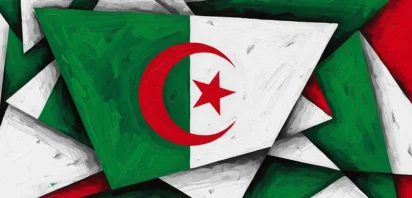
On the other hand, Morocco and Algeria could find their regional positions strengthened or weakened depending on how the conflict unfolds. Both countries vie for influence over the contested Western Sahara region, with Morocco claiming it as part of its sovereign territory and Algeria backing the Polisario Front which seeks independence. Recently, rumors have swirled of potential Iranian infiltration of the Front (although the Front vehemently denies these allegations) as part of its efforts to cultivate influence among regional proxy groups. If true, Morocco, who signed the Abraham Accords in 2020 formally siding with Western powers in the Middle Eastern theater, will eye with pleasure the potential downfall of the current Iranian regime. Algeria, by contrast, would view such developments with far less enthusiasm.
The views expressed in this article belong to the author(s) alone and do not necessarily reflect those of Geopoliticalmonitor.com.