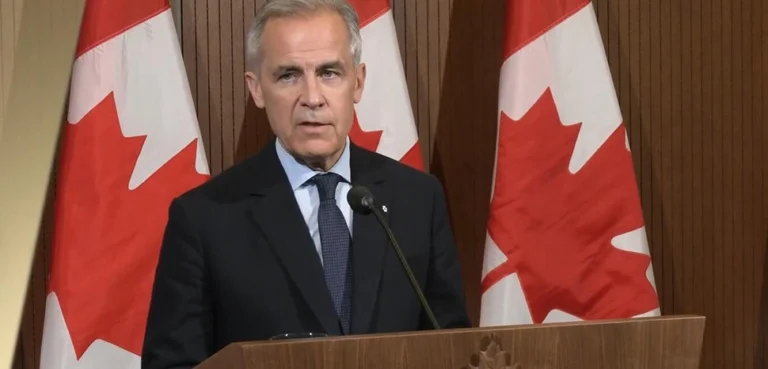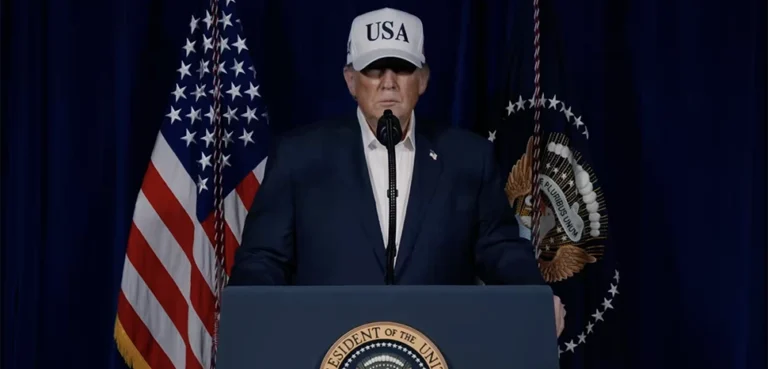

The killing of Supreme Leader Khamenei on February 28 shattered a long-standing pattern: authoritarian leaders used to fall at war’s end, not at their beginning. Now, regime decapitation is the opening move: from Assad’s flight to Maduro’s capture to Khamenei’s killing in his own residence.
What made the Khamenei strike so unnerving — to Tehran and to every other authoritarian capital watching — was not just its precision, but the method behind it. According to regional reporting, Israel appears to have tracked Khamenei through Tehran’s street surveillance cameras, a level of intelligence penetration that would allow real-time visibility into the movements of senior leadership. If a Supreme Leader can be tracked and killed in his own home, then any regime with an extensive surveillance infrastructure must ask whether its own cameras have been turned against it.
Moscow is asking. And its answers are written in its behavior.
For roughly two weeks in mid-March, Putin’s public visibility narrowed significantly. Appearances were largely confined to video calls from undisclosed locations and remote Security Council sessions, with a schedule that revealed little about his movements. Some official footage also appeared heavily curated, with observers noting inconsistencies suggesting pre-recorded segments.
Mobile internet in central Moscow has been periodically shut down on security grounds. The Federal Protective Service has proposed a three-square-kilometer security perimeter around Putin’s Sochi residence. These are not the actions of a confident government. They are the actions of a regime that has watched events in Tehran and sees its own fate in them.
The strategic stakes extend well beyond Putin’s personal security. Since 2022, the Caspian Sea has become a key smuggling corridor: Iranian and Russian vessels routinely switched off their tracking systems to ferry drones, missiles, and ammunition between ports. On March 18, Israel struck Iranian naval vessels at Bandar Anzali, home to Iran’s Northern Fleet headquarters, in the first Israeli operation ever conducted in the Caspian. The strike severed a supply artery, not just a symbol. That corridor had also been running in reverse, with Russia transferring advanced drone components and tactical expertise to Tehran. Both directions are now cut.
Simultaneously, a new axis of cooperation is forming that Moscow cannot ignore. Ukraine, shaped by years of intensive drone warfare against Iranian-designed Shaheds, is now exporting that hard-won knowledge. Netanyahu has requested talks with Zelensky on drone defense cooperation, and Zelensky has signaled openness to technology-sharing arrangements. Ukrainian military specialists have already deployed to the region, an indication that this cooperation is operational, not theoretical. But the question that should alarm the Kremlin runs in the other direction: what is Israel sharing with Ukraine in return? A country that penetrated an adversary capital’s surveillance infrastructure and used it to track and eliminate senior leadership is now deepening ties with the country fighting Russia. That the exchange flows both ways is not speculation — it is the logic of the relationship. And in Moscow, that logic must be keeping people awake.
For years, Israel calibrated its posture toward Russia, constrained by Moscow’s control over Syrian airspace. That constraint has now disappeared. With Assad gone, Russia has lost its foothold in Syria, and its alignment with Iran has stripped away the logic for Israeli restraint. Managed coexistence has given way to indirect competition—and the balance is now shifting against Russia.
Domestically, the cracks are visible. On March 17, Ilya Remeslo, a pro-Kremlin lawyer who built his career filing complaints against opposition figures, including Navalny, published a manifesto titled “Five reasons why I stopped supporting Vladimir Putin.” He described Putin as “becoming weaker and weaker” and identified “clear signs of an approaching collapse.” Within days, he was admitted to a psychiatric hospital. The Soviet reflex endures. What it cannot erase is the signal: when the Kremlin’s own enforcers start breaking ranks, the fear is no longer just top-down.
That fragility is structural, not incidental. Unlike Iran — which had ideology, institutional continuity, and mechanisms of clerical succession that allowed the apparatus to outlast the man — Russia has none of these. Putin did not build a system; he consumed one. There is no designated successor, no legitimating framework, no institution that derives its authority from anything beyond his continued presence. Iran was fragile but structured. Russia is fragile and hollow. Hollow systems don’t collapse slowly; they crack suddenly when the center can no longer project strength.
The battlefield trajectory offers no relief either. In the first two months of the year, Ukraine has recaptured 460 square kilometers. February was the first month since 2023 that Kyiv liberated more territory than it lost. Russian losses have exceeded new recruits for three consecutive months. Putin’s winter offensive failed. His spring campaign is now being planned against an adversary that has regained the initiative and exposed weaknesses in his defensive posture.
Regimes like this do not announce their collapse. They project confidence until the moment they cannot. The tell is always behavioral: the fortified residences, the severed communications, the psychiatric wards for bloggers who say what generals are thinking. Putin is not performing strength. He is managing fear. For a system built this way, survival—not victory—becomes the overriding priority, a shift that could make freezing the war in Ukraine a more attractive option than prolonging it.
That is a different kind of performance — and historically, it does not last long.
The views expressed in this article belong to the author(s) alone and do not necessarily reflect those of Geopoliticalmonitor.com.