A carefully choreographed diplomatic moment in Beijing last week may prove more consequential at sea than on land.
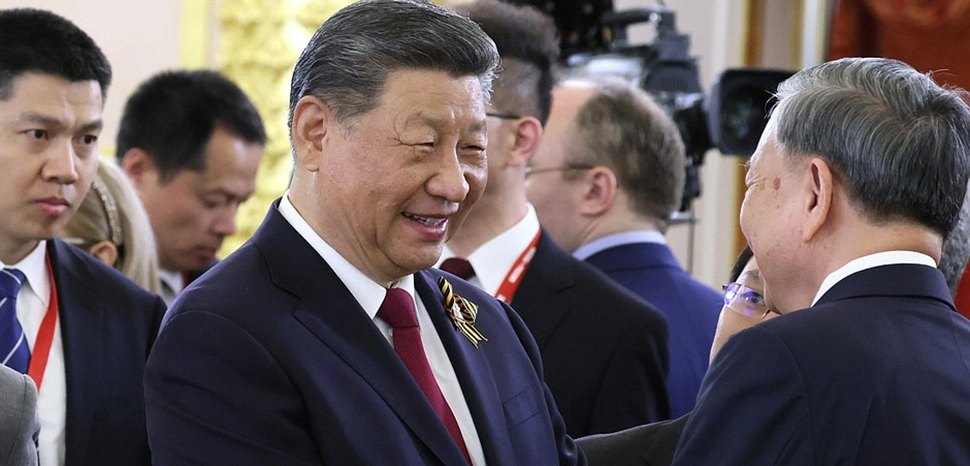
During Vietnamese leader To Lam’s April 14–17 visit to China, he and Chinese President Xi Jinping signed 32 cooperation documents and a forward-looking plan for 2026–2030. While headlines focused on political symbolism, the substance points to something more durable: a renewed push for practical marine cooperation in the contested South China Sea.
At a time of intensifying geopolitical rivalry and ecological decline, the timing is not accidental. It reflects a growing convergence between strategic necessity and environmental urgency.
Both sides pledged to “better manage and actively resolve disagreements at sea,” while expanding cooperation in search and rescue, marine scientific research and environmental protection — areas long described by officials as “less sensitive.” That phrase has become diplomatic shorthand for a pragmatic pathway forward: cooperate where sovereignty is not directly challenged, build trust incrementally, and insulate technical collaboration from political shocks.
The approach is not new. But the scale and timing are.
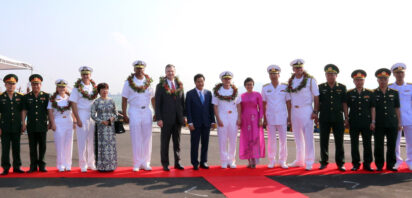
The joint communiqué emphasizes maintaining high-level dialogue to prevent maritime disputes from spilling into broader relations. It also highlights continued joint patrols and exchanges between navies and coast guards in the Gulf of Tonkin — a relatively stable maritime zone that has quietly functioned as a proving ground for cooperation.
If the Gulf of Tonkin is the laboratory, the South China Sea is the test.
Ecology Meets Geopolitics
The logic driving this renewed cooperation is increasingly shaped by science rather than slogans.
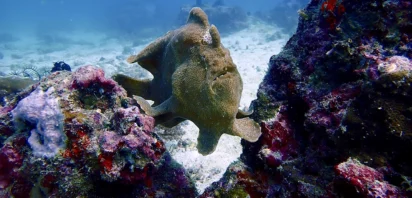
Fish stocks across parts of the South China Sea have declined sharply over the past two decades. Coral reef systems — the ecological backbone of the region — have suffered repeated bleaching events. Climate change, ocean acidification and coastal development are accelerating habitat loss, while illegal, unreported and unregulated fishing continues to strain already fragile ecosystems.
For both China and Vietnam, the implications are immediate and domestic as much as geopolitical. Fisheries support millions of livelihoods. Coastal economies depend on ecological stability. Food security is directly tied to ocean health.
These shared pressures are narrowing the space for unilateral approaches.
Marine protected areas (MPAs) are emerging as one of the few policy tools that align environmental necessity with diplomatic feasibility. Joint or coordinated MPA development is widely viewed by scientists and policymakers as a “non-threatening” mechanism — one that avoids sovereignty questions while delivering measurable ecological benefits.
In this context, cooperation on MPAs becomes more than conservation policy. It becomes a form of risk management.
A Treaty-Driven Opening
The entry into force of the High Seas Treaty on Jan. 17, 2026, adds a new layer of momentum.
The agreement — formally known as the Biodiversity Beyond National Jurisdiction (BBNJ) treaty — provides a global framework for establishing marine protected areas, conducting environmental impact assessments and coordinating scientific research beyond national waters. While it does not address sovereignty disputes, it introduces norms and mechanisms that can influence behavior even within contested regions.
Both China and Vietnam now operate within this emerging legal architecture.
For Beijing, the treaty aligns with its broader effort to reposition itself as a global ocean steward, emphasizing marine science, conservation, and governance leadership. For Hanoi, it offers an additional multilateral layer to balance national interests with international norms.
Together, it creates an opening — however narrow — for cooperation that is anchored in globally recognized standards rather than bilateral compromise alone.
The “Less Sensitive” Pathway
In the South China Sea, what diplomats call “less sensitive” cooperation is often written off as incrementalism. In reality, it is the strategy—small, practical steps that lower risk, build trust and keep tensions from tipping into crisis.
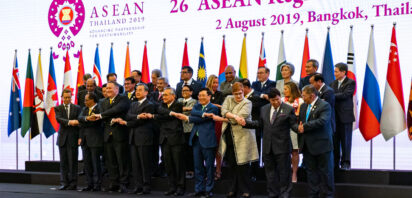
Joint marine scientific research, for example, has already taken place in limited forms, including typhoon monitoring and oceanographic data collection involving China and Southeast Asian partners. These initiatives demonstrate that technical collaboration can persist even amid political friction.
Search and rescue operations offer another avenue. They are humanitarian by definition, operationally necessary and politically low-risk — yet they require coordination, communication and trust.
Environmental protection, particularly pollution control and habitat restoration, provides a third track. These issues are transboundary and difficult to securitize, making them more amenable to cooperation.
Taken together, these “less sensitive” areas form a latticework of engagement — one that can gradually expand in scope and depth.
Strategic Restraint, Mutual Signaling
The Xi–To Lam meeting also carries a signaling function.
For China, it underscores a willingness to stabilize ties with a key Southeast Asian neighbor at a time when broader regional dynamics remain uncertain. For Vietnam, it reflects a calibrated approach that balances strategic autonomy with practical engagement.
Hanoi continues to diversify its partnerships, including with the United States and other regional actors. But it is also acutely aware that managing its relationship with Beijing is essential to maintaining stability along its maritime frontiers.
Marine cooperation becomes a space where both sides can demonstrate restraint without conceding core positions.
From Coexistence to Co-Management?
The question is whether this renewed momentum can evolve from coexistence to co-management.
That would require moving beyond ad hoc cooperation toward more structured arrangements — joint monitoring systems, shared data platforms, coordinated enforcement against illegal fishing and potentially even transboundary conservation zones.
Such steps remain politically sensitive. But they are not unprecedented. Semi-enclosed seas elsewhere, including the Mediterranean, have developed cooperative frameworks that manage shared resources without resolving underlying disputes.
The South China Sea is more complex. But the principle holds: functional cooperation can coexist with unresolved sovereignty claims.
A Narrow Window
The current moment may represent a narrow window of opportunity.
Geopolitical competition is intensifying, not easing. Domestic pressures in both countries are unlikely to diminish. And environmental degradation continues on a timeline that does not wait for diplomatic consensus.
Yet the convergence of leadership signaling, treaty frameworks and ecological urgency creates conditions that are unusually favorable for cooperation — at least in targeted domains.
The Xi–To Lam meeting does not resolve the South China Sea disputes. But it does something arguably more important: it reaffirms that cooperation remains possible, and perhaps necessary, even in contested waters.
In a region where miscalculation carries high risks, that alone is a meaningful shift.
Whether it translates into sustained action will depend on what comes next — not in summit halls, but in research vessels, patrol zones and protected reefs across one of the world’s most strategically vital seas.
James Borton is a non-resident senior fellow at Johns Hopkins SAIS Foreign Policy Institute and the author of Harvesting the Waves: How Blue Parks Shape Policy, Politics, and Peacebuilding in the South China Sea.
The views and opinions expressed in this article are those of the author alone and do not represent those of GeopoliticalMonitor.com