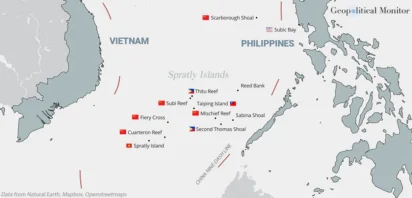
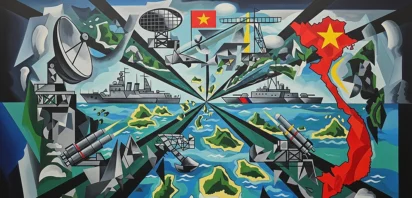
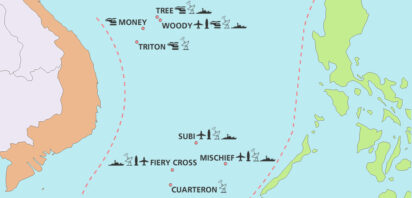
For years, the South China Sea narrative has been dominated by images of dredgers and military outposts—China building artificial islands, and Vietnam quietly following suit to secure its claims. Headlines have focused on sovereignty, militarization, and the looming specter of conflict. Yet, as great power rivalry deepens and climate change looms over maritime ecosystems, Vietnam is quietly reshaping its strategy. The newest storyline is not about reclaiming more islands, but about reclaiming legitimacy—through marine protected areas (MPAs).
Hanoi is now presenting itself as a steward of biodiversity, advancing a narrative of conservation and sustainability. It’s a notable pivot from the familiar optics of defense fortifications to those of coral reefs and sea turtles. In April, Vietnam announced plans to expand its system of MPAs in the East Sea—its official term for the South China Sea—aiming to safeguard vulnerable ecosystems and fisheries. The initiative, part of its broader Marine Strategy to 2030, has received little international attention, but its implications for geopolitics and global ocean governance are profound.
From Hard Power to Soft Power—With a Green Brush
Why the shift? Vietnam understands that brute-force tactics in the South China Sea come with diplomatic costs. While China has drawn widespread criticism for its sweeping island-building campaign, Vietnam has largely avoided the same degree of scrutiny—despite engaging in smaller-scale reclamation on disputed features. Now, with a green agenda, Hanoi seeks to bolster its image as a responsible actor aligned with global environmental norms. The Communist Party has embedded 27 new marine protected areas (MPAs) or ‘blue parks, spanning over 442,230 hectares, into its national Marine Strategy—part of a broader ambition to shield 6% of its marine areas.
Marine protected areas offer a convenient policy tool. They resonate with international commitments under the UN Convention on Biological Diversity, align with climate resilience goals, and appeal to ASEAN’s discourse on sustainable development. In theory, MPAs restrict extractive activities like fishing and drilling, signaling an ecological commitment. In practice, however, MPAs can reinforce sovereignty claims by extending a country’s regulatory footprint over contested waters.
This is not unprecedented. China has used similar tactics, designating “marine reserves” around its artificial islands in the Spratlys, ostensibly for ecological restoration. By adopting this playbook—albeit with more transparency—Vietnam gains both environmental credibility and strategic leverage.
Climate Diplomacy Meets Strategic Hedging
Vietnam’s conservation push cannot be separated from its security calculus. The South China Sea is one of the planet’s most bio-diverse yet most threatened marine ecosystems. Overfishing, coral bleaching, and maritime pollution have pushed it toward ecological collapse. Yet these same waters are also the frontline of regional geopolitics, hosting overlapping territorial claims, energy resources, and critical trade routes.
Hanoi has vowed to safeguard the future of its seas, promising to lock at least 6% of its marine territory under MPAs and launch sweeping efforts to restore critical habitats. The strategy also aligns with Vietnam’s climate commitments under the Paris Agreement and its recent net-zero pledge for 2050. But conservation initiatives require effective enforcement—a function that, in contested waters, inevitably involves coast guard patrols, surveillance systems, and maritime infrastructure. In short, environmental stewardship creates a pretext for enhancing Vietnam’s maritime presence without provoking accusations of militarization.
As Dr. Vu Hai Dang, a senior maritime law researcher, notes, in the book, Power, Law and Maritime Order in the South China Sea, that “Vietnam is walking a fine line—embedding sovereignty assertion within an internationally palatable narrative of sustainability.”
ASEAN and the Optics of Responsibility
Vietnam’s pivot could have ripple effects across Southeast Asia. Within ASEAN, where consensus on the South China Sea remains elusive, a green agenda offers common ground. By framing its actions as ecological, Hanoi pressures neighbors to follow suit, lest they appear indifferent to climate imperatives. This soft-power approach strengthens Vietnam’s voice in shaping regional norms—even as Code of Conduct negotiations with China drag on.
In the churning South China Sea, optics do matter. While China faces mounting criticism for environmental degradation caused by its island-building and giant clam harvesting, Vietnam can project itself as a contrast—a smaller power acting responsibly despite its vulnerabilities. This image plays well with Western partners eager to support climate leadership in the Global South.
Questions Behind the Green Curtain
Still, skepticism is warranted. Can Vietnam reconcile its conservation goals with its economic reliance on fishing, offshore energy, and maritime trade? Illegal, unreported, and unregulated (IUU) fishing remains a major challenge. Despite Hanoi’s crackdown to avoid a European Commission “red card,” enforcement at sea is inconsistent. Critics worry that MPAs risk becoming paper parks—useful in diplomatic talking points but weak in actual protection.
Moreover, by situating MPAs in disputed zones, Vietnam risks inflaming tensions with Beijing. China could interpret these moves as unilateral actions under the guise of environmentalism—fueling a new layer of legal disputes.
The Bigger Picture: Rewriting the South China Sea Story
Whether this green pivot reflects genuine ecological concern or strategic calculation—or both—it signals an evolution in how states contest space at sea. The South China Sea storyline has long been framed as a binary of force and fortification. Vietnam is now writing a more complex script, one that leverages global climate norms to advance national interest.
In an era where environmental governance and geopolitics are increasingly intertwined, ignoring this trend would be a mistake. Conservation may not eliminate conflict, but it reframes the battleground—shifting it from sand dredgers to sustainability plans, from the courtroom of sovereignty to the court of global opinion.
Vietnam’s play is subtle yet savvy: claim legitimacy through ecology, not just sovereignty. Whether this will ease tensions or introduce new fault lines remains to be seen. But one thing is clear: the next chapter in the South China Sea may be written in green ink.
James Borton is a non-resident senior fellow at Johns Hopkins Strategic Advanced International Studies (SAIS) Foreign Policy Institute and the author of Harvesting the Waves: How Blue Parks Shape Policy, Politics, and Peacebuilding in the South China Sea.
The views expressed in this article belong to the author(s) alone and do not necessarily reflect those of Geopoliticalmonitor.com.