For decades, Iran has been using the threat of closing the Strait of Hormuz as a coercive and deterring economic diplomacy tool. Today, this threat is a reality. As one of the world’s most critical energy chokepoints, through which 25% of world seaborne oil trade and 19% of global liquefied natural gas (LNG) trade transit, any disruption or closure of the Strait would send shockwaves across energy markets.
And it has. In just a few days following Iran’s de facto closure of Hormuz, Brent crude traded at $102 on March 12 while West Texas Intermediate was near $97. Flows through the region have dropped by 90% since February 28 with economic uncertainty impacting global demand. This is despite the IEA’s announcement on March 11 that it would undertake its largest ever release of 400 million barrels from emergency reserves, and the United States (US) releasing 172 million barrels from its strategic reserves.
The impacts of Hormuz closure are not evenly distributed, especially in the short to medium term. Some states, particularly those most dependent on Arab Gulf oil and gas flows, would witness the economic pressures within days and weeks. Others might temporarily benefit from oil and gas price hikes and shifting demand.
Framing the ongoing crisis as a binary of winners and losers obscures a more sober reality: in the long term, the ongoing closure and disruption of the Strait hurts everyone. In an inter-connected global economy, no one is insulated from the ripple effects that may disrupt global supply chains, financial systems and trade and investment flows. Even oil producing countries would still face market volatility and higher inflation down the line, as well as exchange rate repercussions.
Some Will Win…
Discussing ‘winners’ during a devastating regional war may sound paradoxical. Nonetheless, energy producers and exporters outside the Gulf region can experience immediate advantages, with sudden increases in demand and higher oil and gas prices. While they would not necessarily remain ‘winners’ should the war extend beyond the 4–6 weeks window echoed by President Donald Trump, they are in a relatively better position than the rest of the world.
Africa’s largest country stands to benefit from oil prices hovering around $100 per barrel. Algeria relies on its large oil and gas reserves to fund its budget and while a $70 to $80 price per barrel would help the country balance its budget, anything above that will allow Algeria to shore up its finances, at least in the short to medium-term. This is not new: European nations turned to Algeria for their own energy supplies following Russia’s invasion of Ukraine. A similar scenario is likely to happen again.
Other African oil exporters could also share the enlarged pie. Nigeria, for example, is estimated to win more than $21 billion from a prolonged conflict. Its geographical position insulates it from all major energy chokepoints and its minister of foreign affairs has already appealed to Gulf oil and gas companies to invest in Nigeria in order to diversify the global supply during crises.
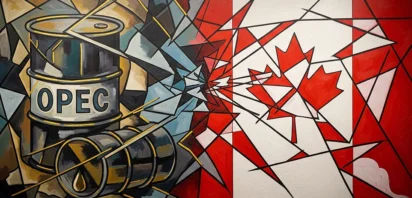
Being the world’s fourth-largest oil producer, the closure of the Hormuz Strait could make Canada a serious alternative source of oil and gas for countries in Asia and Europe who have been reliant on oil from the Arab Gulf. While Canada currently lacks the required infrastructure to fill the void, it is currently considering urgent measures that would allow it to increase its energy exports to Asia.
While the impact of the war on Iran will not look the same across all Latin America, energy exporters like Brazil are likely to gain from higher oil prices given that it produces around 3.7 mbd. Venezuela, who has distanced itself from former ally Iran, is also poised to win with its 1.2 mbd, which make it earn $400 million more in export revenues for each additional dollar in the average price of crude. Similar calculations for a smaller net exporter like Colombia suggest an additional $750 000 per day.
In Europe, Norway will benefit from the higher prices as one of the world’s major oil producers with an energy surplus of 19.1% of GDP.
Another clear winner from the ongoing war is Russia. With the Trump administration temporarily lifting sanctions over the Ukraine war, Russia can now sell to the US, India, and China any crude oil and derivatives on vessels stranded at sea through April 11, 2026. According to the Financial Times, Russia is poised to gain $150 million a day from its oil sales, allowing it to meet and even exceed its budgetary needs in March.
Nonetheless, Russia only produces less than 10 mbd and is already a major exporter to many Asian countries, so while it will benefit from the higher world prices, it will not manage to majorly alleviate the global energy crisis unless it is allowed to ramp up production and exports. For one, the European Union is vigorously opposed to the prospect, insisting that the G7 have to strictly enforce both the price cap on Russian crude and to potentially fully ban Russian maritime services to limit Russia’s expanded war chest.
Some Will Lose…
For many countries, the closure of the Strait translates into severe economic strain. Higher energy prices and insurance costs, inflationary pressures, and surging fertilizer costs are sending shockwaves through states dependent on Gulf energy flows.
The European Union could emerge as a main victim. As numerous nations rely heavily on gas for their power and industrial needs, and with very low reserve stockpiles after the demand-heavy winter months, the bloc, especially Germany, is affected by the halt in Qatari LNG exports. Meanwhile, gas prices in Europe surged by more than 70% since the beginning of the war. Various other EU countries, such as Italy, Greece, Spain and Belgium will also face acute pressures as they rely heavily on the Hormuz Strait for energy imports and refining. Croatia and Hungary have directly imposed price caps.
The United Kingdom is going to feel the pressure too, given that gas accounts for 30% of its electricity generation (compared with 17% in Germany and just 3% in France) and for 70% of household heating.
Refilling gas and heating oil stocks across Europe ahead of next winter might prove difficult because Asian buyers are likely to become fiercer competitors for the shrunken supplies, according to scenarios developed by Oxford Economics.
Indeed, most oil and gas transiting through the Strait of Hormuz is destined to the Asian markets, producing no small amount of panic in the region. While these states have accumulated strategic petroleum reserves estimated at over a billion barrels, these can be drawn down in less than a quarter based on current demand patterns, and reserves are unequally distributed.
Singapore is particularly vulnerable as it generates over 90% of its electricity from entirely imported natural gas, with Qatar being its second most important source. Thailand, which imports more than 85% of its crude oil consumption, has activated an emergency plan to secure alternative sources.
India has asked its refineries to increase the output of LNG to fill domestic needs. It was already granted a 30-day waiver from the Trump administration to purchase Russian stranded oil without incurring higher tariffs in its trade with the US. Pakistan, Bangladesh, South Korea, Japan and Vietnam are imposing emergency measures ranging from shifting to a four-day work week, advancing the Eid holidays for universities, closing schools, placing caps on domestic fuel prices, to releasing national oil reserves.
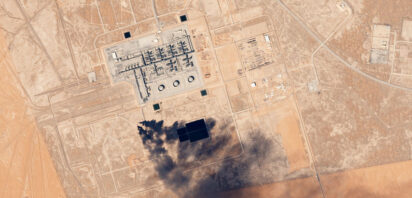
No region of the world is impacted more immediately and directly than the Gulf. While the six countries that make up the Gulf Cooperation Council (GCC) usually benefit from higher world oil prices to generate more export revenues, shore up their government finances, and top up their sovereign wealth funds, in the current situation, the price effect is unlikely to be the dominant force at play. Iran’s missile and drone attacks on physical energy infrastructure has forced Qatar, which supplies the world with 20% of its LNG needs, to halt exports. Together, Gulf states have lost an estimated $15 billion worth of revenue from energy since the war began.
In normal times, nearly 20 million barrels of oil transit through the Strait. Aware of the potential threat to their export capacities, some Gulf countries have been investing in bypass solutions. The UAE has built the Habshan-Fujairah pipeline that can carry around 1.5 million barrels from the refineries in Abu Dhabi to the eastern coast. In recent days, however, Iran’s attacks on the oil depots of Fujairah, have forced the UAE to temporarily suspend operations there. Saudia Arabia’s East-West pipeline, also known as Petroline, can transit around 7 million barrels following recent expansions according to Saudi Aramco’s CEO. Still, those bypassing solutions depend on the repositioning of oil tankers, on the proper functioning of other trade routes like the Suez Canal, and even at their full capacity, remain clearly insufficient.
Other major energy exporters in the region like Bahrain, Qatar, Kuwait or Iraq have no such alternative routes at all. This is likely to force many Gulf economies to halt oil and gas production altogether if the conflict continues past the point of storage saturation. Some critical facilities have also been shut down due to war-related damages or risks, namely Saudi’s main refinery Ras Tanura. The reduction in volumes sold is likely to largely outweigh the price gains.
Some Can Wait It Out (For Now)
Certain economies seem relatively Hormuz-proof, at least in the short term. It is noteworthy that the three main protagonists in the ongoing war are amongst them.
In stark contrast to the rest of Asia, China’s diversified energy suppliers (which include Angola, Brazil and Russia among many others), vast crude oil reserves (estimated between 851 million and 1.4 billion barrels), and domestic output can cushion any blowback from the Hormuz closure on the short to medium term. Another important consideration is that China only relies on oil and gas for a quarter of its energy needs, with demand falling for the last two years. Its breathing space is further enlarged with the use of electric vehicles and clean energy as major power sources.
Elsewhere, somewhat shielded from the crisis thanks to its nuclear energy production capacity, France imports its crude oil primarily from the United States, Nigeria, Kazakhstan and Algeria, so the Strait’s closure will not lead to an imports crunch. France is also attempting to build a coalition to protect shipping lanes moving through the Strait, yet this announcement, much like President Trump’s plan to escort tankers and ships, has had no discernible effect on surging energy prices.
When it comes to the three countries at the center of this war, Iran ships on average 2 mbd of crude per day, mainly to China. Its exports are currently at their pre-war level because seven of its own tankers have been able to safely exit the waterway that it controls since February 28, according to market intelligence platform Kpler. Nonetheless, the bombing of military targets on the Iranian island of Kharg on March 13, from which Iran exports 90% of its oil, may impact Iran’s ability to continue exporting.
While Israel has preemptively closed its two largest offshore gas fields – Leviathan and Karish – it gets most of its crude oil from Azerbaijan (via the Baku-Tbilisi-Ceyhan pipeline and then seaborne from Türkiye) and Kazakhstan (through Russia via the Caspian Pipeline Consortium and then seaborne through the Black Sea), with additions from Gabon and Brazil. None of those supply lines are directly affected by the Strait’s blockage.
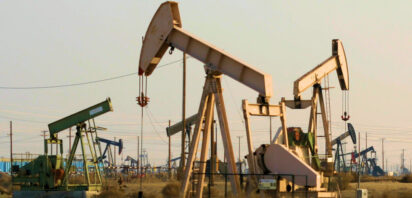
Lastly, the US, as the world’s largest oil exporter, can offset its decreased or more expensive oil imports by boosting its own fracking industry. As shale facilities would still need three to six months to increase output significantly, other buffers like the strategic reserves could be used to bridge that gap. The United States’ decision to loosen sanctions on Venezuela to allow it to sell fertilizers and other petrochemicals to the US will help shield US farmers and consumers from inflationary pressures, at least on the short term.
The US cannot remain Hormuz-proof for very long, however. With mid-term elections planned for November 2026, consumers feeling the impact of rising prices at the pump and on their grocery bills may hand Trump’s Republican party a major loss at the ballot box.
All Will Sing the Blues…
The closure of the Strait hurts the average world consumer the most, as usual. From higher prices at the pump to soaring fertilizer prices affecting farming products, more expensive travel and everything in between, expensive energy will affect everyone’s wallets. While the Western Hemisphere is luckily out of the toughest winter months, this is only a temporary respite.
In the end, with 500 energy tankers and 500 container ships stuck around Hormuz as of March 13 and no indication as to when the war will end, we look at the prospects for this oil and gas crisis to act as a catalyst for further diversification into renewable energy investments which would not depend on maritime chokepoints.