The Indo-Pacific has entered a more decisive phase. What once unfolded gradually at sea has now taken on sharper definition and intent. The January 2026 defense pact between Japan and the Philippines is more than another regional arrangement—it signals the formation of a new maritime front, linking two states that have learned, through sustained pressure, that shared security has become a strategic necessity.
At its core, the Japan–Philippines pact institutionalizes what had already become a lived reality at sea. The Reciprocal Access Agreement and the Acquisition and Cross-Servicing Agreement allow forces to train, refuel, co-locate and operate together. This is unprecedented for Japan outside its closest allies, and existential for the Philippines. For Tokyo, it signals a further step away from post-war strategic minimalism. For Manila, it reflects an unambiguous calculation: standing alone in the South China Sea has become untenable.
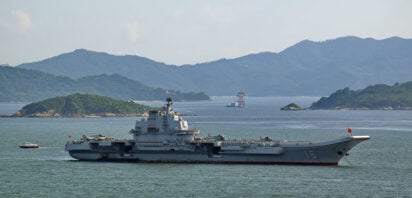
The numbers tell the story of why this shift matters. Chinese Coast Guard vessels have conducted more than 130 patrols around the Senkaku/Diaoyu Islands in the past five years alone, many of them lingering for days at a time, testing Japanese resolve. In the South China Sea, the tempo is even more intense.
A Filipino sailor sustained a ‘severe injury’ after the Chinese coastguard intentionally rammed a Philippines vessel in the disputed South China Sea, the country’s military has said. Another was a fisher who was forced to abandon his nets after a reported ramming near Thitu Island, described the moment to local reporters as sudden, violent and terrifying; a human reminder that these are not abstract maneuvers but daily risks to livelihoods and life.
Philippine authorities recorded dozens of ramming and water-cannon incidents in 2024–25, including near Second Thomas Shoal and Thitu Island, despite the 2016 Permanent Court of Arbitration ruling that found ‘no legal basis’ for China’s nine-dash line claims. These are not abstract disputes. They are daily, physical encounters that erode sovereignty one hull scrape at a time.
Quiet Deterrence
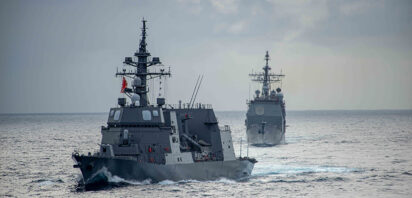
Against this backdrop, the pact reads less like provocation and more like accumulated fatigue finally translated into policy. Japan is already supplying the Philippines with coastal radar systems, patrol vessels and surveillance aircraft, alongside US$6 million in new infrastructure support for maritime facilities. Joint exercises involving Japan, the Philippines, Australia and the United States have multiplied, with four-nation drills held inside the Philippine exclusive economic zone in April 2024 reaffirming freedom of navigation and the binding nature of UNCLOS.
This is deterrence by paperwork, port visits and presence—quiet, legalistic, but unmistakable.
Beijing’s response has been predictably furious. State media warn of ‘quasi-alliances’ and accuse Tokyo of resurrecting militarism. Yet the irony is difficult to miss. It is Chinese behavior—blockades, collisions, coercive patrols—that has collapsed the political space for hedging. A decade ago, Southeast Asia prided itself on strategic ambiguity. Today, ambiguity is increasingly seen as vulnerability. The Japan–Philippines pact is not an outlier; it is a symptom.
An Uneasy New Normal
This moment does not belong to Australia alone. It resonates across the archipelagos and littorals of Southeast Asia, and far beyond them, because the language now shaping the region is no longer rhetorical—it is experiential. When Tokyo and Manila speak of a rules-based order, freedom of navigation, and resistance to unilateral change, they are articulating a shared anxiety felt from Jakarta to Hanoi, from Singapore to Seoul. The sea has become a measure of trust, and trust, once eroded, is difficult to rebuild.
For ASEAN states, the implications are deeply personal. The South China Sea is not a distant chessboard; it is a pantry, a passageway, and a promise of development. Vietnam’s energy security depends on offshore fields repeatedly shadowed by foreign vessels. Malaysia’s fishermen navigate contested waters with growing unease. Indonesia, long insisting it is not a claimant, now finds the edges of its exclusive economic zone tested near the Natuna Islands. Each encounter chips away at the assumption that economic growth and strategic calm can coexist without collective effort.
The Japan–Philippines alignment crystallizes a reality many in ASEAN quietly acknowledge: neutrality offers diminishing shelter when pressure becomes persistent.
Australia recognizes this pattern because it has lived it. The instinct to defend open sea lines, to anchor prosperity in law rather than power, has shaped Canberra’s strategic culture for decades. What is new is the speed with which regional partners are arriving at the same conclusion. Maritime order is indivisible not because treaties say so, but because supply chains, energy flows and food security now bind states together in ways that ignore geography.
A disruption of Scarborough Shoal does not stay there; it ripples through the Malacca Strait, unsettles insurance markets, raises freight costs, and quietly taxes households from Perth to Phnom Penh.
Beyond ASEAN, other allies are watching with sharpened attention. Japan’s deeper engagement with the Philippines sends a signal to Korea, India, and European partners increasingly present in the Indo-Pacific: the defense of maritime norms is no longer abstract. It is operational. It requires presence, coordination, and, above all, political will. For smaller states, this is both reassuring and unsettling—reassuring because they are not alone, unsettling because choices are becoming unavoidable.
The long-held belief that economic interdependence would temper strategic rivalry is being tested against steel hulls and water cannons. Yet there is also resolve here, a sense that dignity at sea matters as much as prosperity on land. The convergence of Australia, ASEAN partners and like-minded allies is not about containment or confrontation; it is about preserving the ordinary miracles of trade, travel and communication that underpin modern life.
If the Indo-Pacific is to remain a region of opportunity rather than anxiety, this shared understanding must deepen. Law must be matched with solidarity, and solidarity with restraint. The alternative—a fragmented maritime order governed by intimidation—would impoverish not only economies, but the very idea that cooperation can outlast coercion. In that sense, the current moment is not simply strategic. It is moral, and its outcome will shape the region’s future long after the present crisis has passed.
Historical comparisons are tempting, and dangerous. Talk of a ‘new Cold War at sea’ captures the mood but risks oversimplification. Unlike the ideological standoff of the 20th century, today’s maritime contest is deeply embedded in law, economics and legitimacy. Japan and the Philippines have gone to extraordinary lengths to their pact as lawful and transparent. Parliamentary ratification, explicit references to UNCLOS, and alignment with existing multilateral exercises are all designed to anchor deterrence within international society, not outside it. This is not containment by exclusion, but by accumulation of norms.
Breaking New Ground in Japan-Philippines Relations
Think tanks across the region have noted the significance. Japan’s National Institute for Defence Studies describes the arrangement as the gradual formation of a ‘quasi-alliance’ driven less by ambition than by threat perception. Analysts have warned that, as the Philippines assumes the ASEAN chair in 2026, expectations of a breakthrough South China Sea code of conduct are likely to be disappointed, given deep internal divisions and China’s reluctance to constrain its own behavior. In this environment, bilateral and minilateral security ties are filling a vacuum that regional institutions cannot.
The emotional undercurrent should not be ignored. Strategic documents rarely capture the sense of humiliation felt when fishing boats are chased from traditional grounds, or when resupply missions require armed escorts. Nor do they convey the psychological shift in Japan, where debates once framed around constitutional restraint now revolve around forward defense and shared risk. Identity is changing alongside capability.
Two states, shaped by very different histories, are converging around a shared narrative of legal entitlement under siege.
What emerges is a stark choice for the region’s future development. One path leads toward a dense web of cooperation—RAAs, joint patrols, shared logistics—designed to make coercion costly and escalation unattractive. The other leads toward fragmentation, where might steadily displaces right, and smaller states adjust through silence rather than resistance. The Japan–Philippines pact is a wager that the first path remains viable.
Whether that wager succeeds depends on restraint as much as resolve. Deterrence only stabilizes when it is credible and bounded. For all the steel and signatures now in place, diplomacy remains the missing ballast. Regional stability will not be secured by alliances alone, but alliances may yet buy the time needed for diplomacy to breathe.
The seas of East and Southeast Asia have long been highways of exchange rather than frontlines. The tragedy would be to allow them to become permanent theatres of confrontation. The opportunity—still fragile, still contested—is that law, partnership, and measured strength might yet hold the line.
In that sense, the Japan–Philippines pact is not simply about defense. It is about whether the Indo-Pacific’s future is written by collision reports or by rules that still mean something when tested.
The views expressed in this article belong to the author(s) alone and do not necessarily reflect those of Geopoliticalmonitor.com.