What happens when the principal architect of the post-war order begins quietly dismantling the scaffolding it once built?
On 7 January 2026, Washington signed an executive order withdrawing the United States from 66 international organizations and treaties, many anchored in the United Nations system. Climate, health, development, labor, education, and human rights — entire pillars of global cooperation were swept aside in a single stroke. The justification was blunt: these institutions were redundant, wasteful, and at times incompatible with US sovereignty. The consequences, however, extend far beyond US domestic politics. They are already reshaping the strategic weather across the Indo-Pacific.
For Southeast Asia, this moment lands like a sudden pressure drop. The region has long relied not on raw power but on rules, predictability, and institutions that soften asymmetry. ASEAN’s centrality, for all its imperfections, is built on the assumption that great powers show up, invest, and play by broadly agreed norms. When the largest power retreats from multilateralism, the ground beneath that assumption begins to shift.
The scale of the retreat is historically striking. Since 1945, US power was deliberately embedded in institutions — the UN, Bretton Woods bodies, the global trade regime — not as an act of charity, but as a strategy. It’s well documented how this architecture amplified US influence by giving smaller states a stake in the system, making US leadership appear legitimate rather than coercive. That bargain is now being unpicked. Even during earlier bouts of American unilateralism, withdrawals were selective and reversible. This time, the review extends to almost every treaty and organization on the books, including those foundational to climate governance and global health.
Climate change is where the shockwaves are likely to be felt first in Southeast Asia. The United States was central to the UN Framework Convention on Climate Change and a major driver of the Paris Agreement. Its exit leaves a vacuum, not just in funding but momentum. Based on data from the WHO and UN, the US accounted for roughly 18 per cent of the WHO’s budget and over a quarter of assessed climate-related contributions across UN bodies. It’s been warned that this withdrawal risks delaying global emissions reductions, as it provides large emitters with political cover to slow their own transitions.
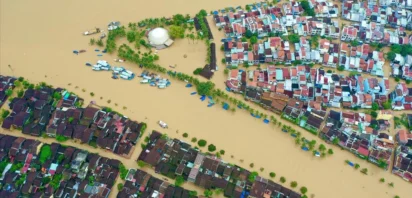
For Southeast Asian states already grappling with rising sea levels, extreme heat, and food insecurity, this is not an abstract concern. Vietnam, Indonesia, and the Philippines face projected GDP losses of several percentage points annually by mid-century due to climate impacts alone. Multilateral climate finance and coordinated adaptation frameworks were designed precisely to prevent these costs from becoming destabilizing. Without US participation, the burden shifts unevenly — often onto those least able to bear it.
Health security tells a similar story. The US withdrawal from the World Health Organization in January 2026 removes its largest single donor at a moment when pandemic preparedness remains unfinished business. During COVID-19, Southeast Asia benefited directly from the WHO coordination on surveillance, vaccines, and data sharing. Fragmenting that system increases the risk that the next outbreak spreads faster, further, and more chaotically. Chatham House has already noted that other donors, spooked by US disengagement, are trimming contributions, compounding the funding gap.
Strategically, the retreat also carries a quieter but more profound signal. It suggests that rules and institutions are now conditional — honored when convenient, discarded when politically costly. For a region accustomed to hedging rather than choosing, this creates uncomfortable pressure. When multilateral forums weaken, influence gravitates toward bilateral deals and power-weighted arrangements. That terrain favors the largest players.
China has been quick to recognize the opening. Beijing already funds roughly 15 per cent of the UN’s regular budget and is the largest contributor to UN peacekeeping among the permanent Security Council members. Through the Asian Infrastructure Investment Bank and Belt and Road projects, alternatives to US-backed development finance are readily available. None of this automatically translates into benevolent leadership, but absence creates opportunity. Southeast Asian states may find themselves navigating a system where institutional buffers thin and strategic bargaining becomes sharper.
For Australia, the implications are deeply personal as well as strategic. Prosperity has been built on an open, rules-based system where middle powers punch above their weight through institutions. It’s been argued that assuming automatic US leadership is no longer tenable. That assessment now looks less like caution and more like realism.
The question is not whether multilateralism survives — it will, in some form — but who carries it. Research from the Political Economy of International Organizations network shows that when hegemons withdraw, institutions rarely collapse outright. Instead, other members adapt, reform, and attempt to keep the framework alive, sometimes in hopes of eventual return. In Southeast Asia, that adaptation may mean deeper ASEAN coordination on climate resilience, stronger regional health mechanisms, and closer alignment with partners such as Japan, the EU, and Australia.
There is also a moral dimension that cannot be ignored. Multilateral institutions are imperfect, often slow, and frequently frustrating. Yet they exist because some problems cannot be solved alone. Pandemics do not respect borders. Carbon does not carry a passport. When the language of sovereignty crowds out the logic of cooperation, the costs are eventually paid by those far from the decision-makers.
This moment, unsettling as it is, may yet prove catalytic. It may push Southeast Asia to strengthen its own institutions, to demand more from partners still committed to rules, and to articulate more clearly what kind of regional order is worth defending. It may also force Australia to step forward more confidently — not as a substitute hegemon, but as a convenor, investor, and advocate for the institutions that keep power in check.
History suggests that great powers often return to the tables they abandon, chastened by crises that refuse to be managed alone. Until that happens, the Indo-Pacific enters a period of strategic thinning — fewer guardrails, more improvisation, higher stakes.
The future of Southeast Asia will be shaped not only by who wields power, but by who is willing to stay, fund, and believe in the slow, unglamorous work of cooperation. In that contest, absence speaks as loudly as presence.
The views expressed in this article belong to the author(s) alone and do not necessarily reflect those of Geopoliticalmonitor.com.