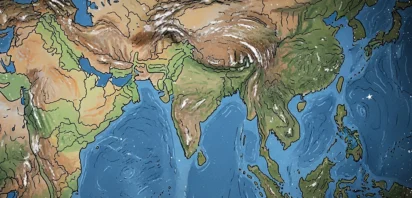
The map of the Indo-Pacific has begun to feel tight, as if the region itself is holding its breath. On one edge sits Taiwan, a flashpoint that has slipped from hypothetical to disturbingly plausible. On the other, the ten nations of Southeast Asia watch the horizon with a kind of disciplined anxiety. Wars are loud. But in ASEAN, the real drama is the quiet—the kind that says everything.
For decades, Southeast Asia has lived by an instinct for survival refined through colonization, Cold War division, and the relentless churn of global power cycles. The art of staying out of other people’s wars has become not just a diplomatic posture but a cultural reflex. It is what Indonesia once enshrined as bebas-aktif, free and active, and what the region formalized in 1971 when it declared itself a “zone of peace, freedom and neutrality.”
Yet neutrality today does not feel like a doctrine; it feels like a shield.
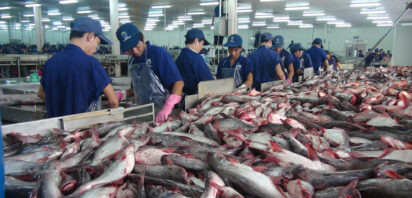
Across ASEAN, the Taiwan issue is not filtered through ideology but through exposure. China is ASEAN’s largest trading partner, with two-way flows worth US$469 billion in 2023 alone. Six Southeast Asian economies—Vietnam, Malaysia, Indonesia, Thailand, Singapore, and the Philippines—carry most of this weight, linking their prosperity to Chinese demand and investment.
The infrastructure is unmistakable. Chinese financing runs through the arteries of Southeast Asia—the Laos–China railway, Indonesia’s Jakarta–Bandung high-speed line, Malaysia’s vast East Coast Rail Link, and the billion-dollar corridors of industrial parks and nickel refineries in Indonesia, where Chinese firms now dominate roughly 75% of the nickel refining sector.
These figures do not just represent economic ties; they map out dependencies. And dependencies shape fears.
A conflict in the Taiwan Strait would instantly threaten the shipping lanes of the South China Sea, through which a third of global trade flows and upon which ASEAN depends for everything from semiconductors to fuel. Carnegie’s modelling warns that even a blockade would freeze supply chains and shake global markets; ASEAN, positioned at the center of Indo-Pacific trade, would absorb the shock first.
It is not only goods that would be caught in the crossfire. More than 700,000 Southeast Asian migrant workers and 30,000 students living in Taiwan would be trapped between superpowers. For Manila, Hanoi, Jakarta and Kuala Lumpur, a crisis would not begin with military mobilization—it would begin with frantic evacuations.
Behind ASEAN’s diplomatic neutrality sits a quiet dread: a Taiwan war would not be a distant conflict but a regional disaster. Southeast Asian leaders have mastered the choreography of calming language. “Maximum restraint,” “dialogue,” and “non-provocation” are the familiar refrains whenever cross-Strait tensions spike. The vocabulary is intentionally bland, but the logic behind it is razor-sharp.
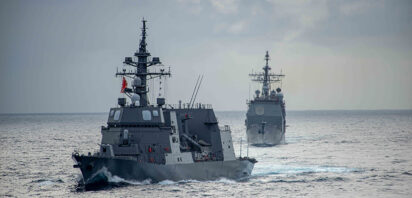
Singapore, for instance, hosts rotational US naval aircraft yet repeatedly affirms a “clear and consistent” one-China policy. Its seasoned diplomats have said openly that joining a war against China is unthinkable.
Indonesia preserves its free-and-active stance while deepening defense ties with Washington and welcoming Chinese capital into its infrastructure and new national capital. Vietnam and the Philippines harden their deterrence positions in the South China Sea but avoid any hint of endorsing Taiwanese independence. Cambodia, Laos, and Myanmar sit firmly in China’s orbit.
ASEAN’s unity does not lie in consensus, but in a shared instinct: stay out of the fight. But think-tanks are clear about the limits of this stance. A major Carnegie study warns that a full-scale conflict—especially one perceived as “unprovoked”—could force Southeast Asian nations to realign overnight. Neutrality under pressure has a way of fracturing. And ASEAN, built on soft norms and voluntary consensus, has little to withstand a geopolitical earthquake.
A Taiwan conflict would pry open every seam in Southeast Asia’s strategic logic. For realists, the region is hedging—balancing between China’s power and the United States’ security guarantees with deliberate ambiguity. For liberal institutionalists, the immense flow of trade and investment is the best deterrent to conflict. For constructivists, ASEAN’s identity as a neutral convenor shapes its behavior as much as power politics.
But for policymakers in the region, theory is less important than survival. One Southeast Asian official once remarked privately that the best policy is whatever keeps the nation whole.
In the strategic hush that defines Southeast Asia’s diplomacy, the choices narrow with unsettling clarity: confronting China carries the specter of economic shockwaves; leaning toward Taiwan invites the possibility of punitive retaliation; drawing closer to the United States risks being swept into the undertow of major-power rivalry; and remaining silent buys the precious seconds needed to breathe, to assess, to endure. In this fragile equilibrium, quiet diplomacy ceases to be a preference and becomes a necessity—a gentle shield held up against the storms of geopolitics, allowing space for caution, dignity, and the faint hope that restraint may yet prevent the region from being forced into decisions it is not ready to make.
There is a melancholy realism in ASEAN’s stance. This is not a region seeking to influence the Taiwan question—only to survive it. The hope is that restraint, dialogue, and neutrality can keep the region from being dragged into a calamity it neither wants nor can prevent. The fear is that in the event of war, all these tools will crumble like paper shields.
Yet beneath that caution sits something resolute. Southeast Asia has weathered invasions, coups, financial collapses and great-power rivalries. It has learned that stability is built slowly and lost suddenly. Its leaders know what is at stake. As the cross-Strait winds rise, ASEAN stands in its familiar posture—watchful, anxious, determined to remain whole. Neutrality is its armor. But neutrality is also a plea. A plea that the storm does not break.
Because if it does, the first lands shaken will not be in the East China Sea. They will be in Southeast Asia.
The views expressed in this article belong to the author(s) alone and do not necessarily reflect those of Geopoliticalmonitor.com.