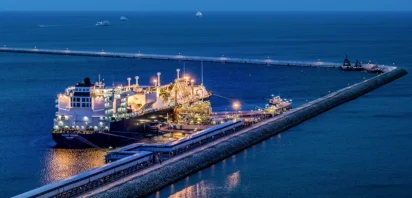
Mauritania has just crossed a threshold that could redefine its place in the global energy order. With first gas from the Greater Tortue Ahmeyim (GTA) project flowing on 2 January 2025, a frontier state has moved into the ranks of energy producers at the very moment when supply chains, market access, and regulatory standards are being renegotiated.
The symbolism extends beyond energy production. Mauritania’s shift from prospect to participant marks its arrival as a geoeconomic actor, where advantage is measured less in output than in positioning. In contrast to older geopolitical competition centered on reserves and scale, the geoeconomic turn emphasizes the strategic value of regulatory compliance, corridor access, and room for maneuver in fluid markets.
Nigeria’s LNG capacity, at about 22 million tonnes per annum (mtpa), is roughly ten times the output expected from GTA Phase 1 at 2.3 mtpa, yet it suffers from chronic instability and infrastructure decay. Senegal, GTA’s partner, has actively positioned itself to attract foreign investment in energy. Mozambique, once a rising LNG star, illustrates the risks of insurgency and investor retreat. Against this backdrop, Mauritania’s strength lies not in size but flexibility. With offshore reserves at GTA and BirAllah, significant solar and wind resources, and a coastline within days of European terminals, the country can leverage energy as a portfolio of choices that extend beyond volumes.
The question is how Mauritania will use this advantageous position. Gas revenues could stabilize public finances, fund electrification, and expand infrastructure, but they can just as easily create volatility and dependence. Europe offers market access but also imposes emissions standards that may limit competitiveness. Regionally, Mauritania must balance cooperation with Senegal against competition with larger neighbors. The GTA milestone is therefore more than a production event. It marks Mauritania’s entry into a geoeconomic contest where timing, geography, and governance will shape outcomes.
From Prospect to Production
The Greater Tortue Ahmeyim project, operated by BP with partners Kosmos Energy, SMH (Mauritania) and PETROSEN (Senegal), represents an investment of about $4.8–5 billion for Phase 1. By relying on floating liquefaction technology, Mauritania and Senegal avoided the long delays associated with onshore terminals and brought exports online earlier than would otherwise have been possible. The first cargoes will not transform state finances overnight, but revenues are expected to increase through the decade, providing fiscal space for a budget still heavily reliant on iron ore and fishing, which together account for more than half of export earnings.
The shift from discovery to production changes Mauritania’s credibility across several arenas. For investors, it signals the capacity to manage a technically complex offshore venture with a major operator. For lenders and external partners, it demonstrates an ability to meet contractual obligations and sustain cross-border cooperation with Senegal. Domestically, the event provides political legitimacy for a government that has long promised energy transformation. In this sense, credibility is not symbolic but a form of capital that can be deployed in finance, diplomacy, and regional politics.
Attention now turns to BirAllah, a field located entirely within Mauritanian waters, where estimates range from around 50 trillion cubic feet (Tcf) of gas initially in place (Kosmos) to as much as 80 Tcf, making it significantly larger than GTA. Its development would shift Mauritania from joint producer to autonomous operator, strengthening Nouakchott’s bargaining position with buyers and financiers. BirAllah is therefore not just an economic opportunity but a test of whether Mauritania can consolidate sovereignty in energy governance.
Risks remain considerable. Technical incidents during commissioning highlight the vulnerability of offshore systems. Revenues will remain exposed to global price swings, complicating fiscal planning. Governance risks are equally significant: without transparency and spending discipline, early receipts could reinforce dependency rather than finance diversification. Production provides initial standing, but sustaining it will require institutional resilience.
The decisive test will be whether Mauritania can secure long-term markets where credibility is judged not only on molecules delivered but also on emissions compliance and contractual reliability. For Europe, Mauritania will be evaluated less as a volume supplier than as a credibility case, where transparency and low-carbon alignment determine access.
Europe’s Energy Diversification Slot
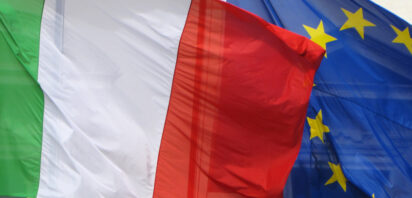
The Ukraine war has forced Europe to reconfigure its gas imports almost overnight. The EU has relied on the United States, Norway, Qatar, and Algeria to replace Russian volumes. Mauritania’s initial gas deliveries enter the landscape at a moment when European buyers remain open to new suppliers. Cargoes from Nouakchott or Nouadhibou can reach Mediterranean and Atlantic terminals in just a few days, providing a short-haul option that adds flexibility to a market where supply chain security remains fragile. In 2023, the EU imported about 46 percent of its LNG from the United States, underscoring both the intensity of competition and the challenge for new entrants like Mauritania.
Competitiveness, however, will not be decided by distance alone. For European buyers, every cargo now carries a dual identity: energy and emissions. Carbon intensity and methane leakage have become decisive metrics, monitored under the EU’s new methane regulation. From 2027, new import contracts must comply with EU-equivalent methane reporting rules, and from 2030 maximum methane-intensity values will apply to fossil fuel imports. The Carbon Border Adjustment Mechanism, moving from its transitional phase into full operation in 2026, will not apply to LNG but will cover hydrogen, a sector where Mauritania seeks a future role. For Mauritania, this means that credible monitoring systems and abatement strategies are prerequisites for securing durable contracts.
Beyond LNG, Mauritania is also presenting itself as a potential hydrogen supplier. International firms such as CWP and Chariot have announced large-scale projects under the Green Hydrogen Code adopted in October 2024. These initiatives are directed at the European Green Deal, which under the REPowerEU plan targets up to 10 million tonnes of renewable hydrogen imports annually by 2030. Morocco and Algeria are already established competitors, but Mauritania’s comparative advantage lies in its abundant renewable resources and regulatory flexibility. Challenges remain significant, including desalination costs, certification requirements, and infrastructure rollout.
Given these dynamics, Europe is likely to treat Mauritania as a secondary supplier: modest LNG volumes in the near term, with the possibility of low-carbon molecules in the longer term. This status entails short-term contracts, limited commitments, and close scrutiny of standards. For Mauritania, Europe is both a lifeline and a regulator, shaping national policy through compliance requirements as much as through market access. Meeting these conditions will demand not only technical adjustments but also institutional capacity in monitoring, certification, and fiscal management.
Europe’s standards represent only one dimension of impact. The more decisive measure will be whether Mauritania can link its gas and renewable resources to regional power markets, turning export potential into broader developmental gains.
Regional Spillovers and Rivalries
West Africa’s population is projected to approach 800 million by mid-century, with electricity demand rising between 4-6 percent annually. The region continues to face severe supply deficits: over half of households in Mali and Guinea lack reliable electricity, and even Senegal depends heavily on fuel oil for peak generation. In Mauritania itself, only about 50 percent of the population has access to electricity, underscoring the domestic stakes of energy allocation. In this context, gas-to-power initiatives linked to GTA could extend Mauritania’s influence beyond exports by lowering tariffs, stabilizing grids, and delivering visible benefits to neighbors.
For Mali, access to cheaper Mauritanian gas would reduce one of its main constraints on industrial and household growth. For Senegal, shared infrastructure offers a path toward gradual power-system integration and lower generation costs. Reliable electricity at a competitive price could improve industrial competitiveness and encourage new investment across the sub-region. Energy integration would not only improve industrial competitiveness but also strengthen Mauritania’s political capital in regional organizations such as ECOWAS, where energy security is an emerging priority.
Cross-border cooperation at Greater Tortue Ahmeyim is itself a rarity. While natural resource projects in Africa have often generated disputes, Mauritania and Senegal have established joint operating structures and revenue-sharing frameworks that distribute both risks and benefits. If maintained, this model could become a stabilizing precedent in the region; alternately, if weakened by disputes over employment, contracts, or fiscal allocation, it could instead turn into a source of tension.
Competition further complicates Mauritania’s position. Nigeria remains Africa’s largest exporter, but instability in the Niger Delta and ageing infrastructure reduce its reliability. Senegal is expanding production in its own fields, and Mozambique has attracted tens of billions of dollars despite persistent security risks. Mauritania cannot compete on scale, but it can differentiate itself through reliability, contractual discipline, and environmental performance. Success in emissions monitoring and delivery consistency would position it as a supplier valued for predictability rather than volume.
The long-discussed Nigeria–Morocco pipeline adds another dimension. If realized, it would connect West African gas to Europe across 13 states, giving Mauritania a direct northward corridor and reinforcing its bargaining power. Even if delayed, the project highlights the geopolitical stakes of pipeline politics and the need for Mauritania to situate itself within evolving regional corridors.
Ultimately, Mauritania’s regional influence will depend not on reserves alone but on its ability to sustain cooperation with Senegal, deliver affordable power to neighbors, and establish governance credibility strong enough to translate external opportunity into internal and regional stability.
A Test of Governance
The decisive factor for Mauritania’s energy trajectory will not be reserves but institutions. Nearly 30 percent of the population lives below the poverty line, and youth unemployment remains high. Gas revenues could expand infrastructure, support electrification, and strengthen social protection, but poorly managed receipts risk reinforcing inequality and dependence. Early fiscal decisions will determine whether first gas is remembered as a foundation for transformation or as the beginning of a missed opportunity.
International investors are monitoring governance signals closely. Mauritania’s membership in the Extractive Industries Transparency Initiative provides a starting point, but credibility requires additional measures. Publishing contracts, establishing a sovereign wealth fund with clear withdrawal rules, and maintaining fiscal discipline would reassure lenders and external partners that revenues are being managed responsibly. The reputational damage from mismanaging early receipts would outweigh any short-term fiscal gains.
Environmental management adds further complexity. Offshore activity intersects with fragile marine ecosystems that underpin the fishing sector, which contributes nearly 10 percent of GDP and sustains coastal employment. Methane leakage or oil spills would damage livelihoods and undermine export credibility in Europe, where compliance with emissions and biodiversity standards is increasingly a condition of market access. Environmental stewardship is therefore both a domestic necessity and an international requirement.
Geopolitical dynamics sharpen these governance pressures. Asian buyers, particularly in China and India, view Mauritania as a potential source of supply diversification and as a foothold in West Africa’s emerging energy corridor. Europe, in contrast, is likely to condition access on strict regulatory compliance. Mauritania must therefore navigate between two demand centers: one offering market flexibility, the other requiring institutional alignment with environmental and transparency standards. Managing this balance without eroding credibility on either side will be a central challenge.
Looking Ahead: Three Scenarios
Mauritania’s Greater Tortue Ahmeyim project is a milestone, but its significance will be defined by how the country converts this opening into durable advantage. Three possible trajectories illustrate the range of outcomes:
- Trusted Niche. GTA stabilizes, BirAllah advances toward development, and green hydrogen projects secure offtake under the European Green Deal. Revenues are channeled through a sovereign wealth fund with clear rules, ports are upgraded, and transparency strengthens investor confidence. Mauritania builds a reputation as a reliable if modest supplier, with influence derived less from scale than from trust. In this scenario, disciplined fiscal management consolidates stability at home, cooperative energy ties strengthen its role in West Africa, and credibility as a dependable low-volume exporter earns it recognition in global markets.
- Lost Moment. Revenues flow but prove volatile, governance reforms stall, and fiscal decisions are driven by short-term pressures. European buyers shift attention to Algeria, Qatar, or the United States, while hydrogen projects lose momentum amid certification challenges. Domestically, electricity costs remain high, inequality deepens, and the broader benefits of GTA are limited. Mauritania exports gas but fails to transform, leaving fiscal fragility at home, strained partnerships in West Africa, and weakened credibility in international markets.
- Managed Balance. The most plausible outcome lies between these poles. LNG secures a niche role, hydrogen projects progress cautiously, and revenues fund incremental improvements in infrastructure and electrification. Governance does not reach the discipline of the Trusted Niche path but avoids the drift of the Lost Moment. Mauritania achieves modest but durable gains, marked by fiscal stability at home, incremental integration with West African partners, and a measured reputation for reliability in global markets, even without emerging as a hub.
Which scenario prevails will depend less on geology than on governance: the transparency of contracts, the credibility of revenue management, and the enforcement of environmental standards. The balance between Europe and Asia will also be decisive. Europe offers market access conditioned by compliance and transparency, while Asia offers scale and flexibility with fewer regulatory requirements. Mauritania’s ability to navigate between these two poles will define its leverage.
Regionally, influence will be magnified if Mauritania delivers affordable power to neighbors and positions itself within transnational corridors such as the prospective Nigeria–Morocco pipeline. Internationally, credibility in the eyes of investors and buyers will determine whether first gas anchors long-term integration into global markets.
Mauritania’s volumes are modest, but the implications for Europe’s diversification and West Africa’s energy integration are significant. The GTA milestone will be remembered as more than a technical event if Nouakchott can translate gas into fiscal stability at home, influence in West Africa, and credibility in global markets.