In the 1990s, dramatic shifts in technology and the United States’ quick, decisive victory over the Iraqi army in Kuwait popularized the term ‘revolution of military affairs’ (RMA) among defense experts. Thirty years later, the overlapping deployment of unmanned systems and artificial intelligence (AI) are giving rise to a new two-dimensional revolution in warfare. As unmanned systems have proven effective in changing warfare from the bottom up–tactics to strategy– AI is cutting across all dimensions of warfare simultaneously. As a result, AI-powered unmanned systems stand to converge two revolutions into one groundbreaking RMA. To achieve decisive victory in future wars, the United States must master both developments and speedily integrate them into existing doctrine.
Unmanned Systems Changed Warfare from the Bottom Up
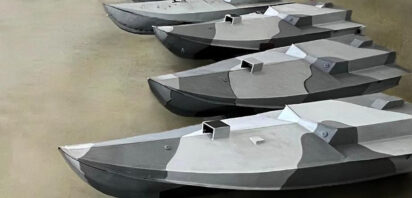
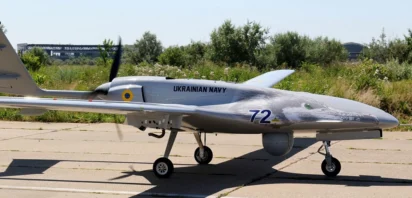
As the Ukraine war shows, the use of unmanned systems has changed the warfare paradigm from the tactical level upwards. First, the tactical deployment of unmanned systems has enabled Ukraine to force Russia to change its overall strategy. The skilled use of drones allowed Ukraine to obtain “asymmetric parity” against Russia’s mass offensive over time. Indeed, in the span of three years, Ukraine’s use of drones has eroded Russia’s quantitative advantages in systems and personnel and multiplied its operational and tactical deficiencies, forcing Russia into a strategic dilemma. Contrasted with its rapid and low-cost seizure of Crimea and parts of Donbas in 2014, Russia’s progress since 2022 has been slow and bloody. At the current rate, Russia will reach one million casualties by the end of 2025, while being on pace to control Ukraine in 118 years. The tactical effectiveness of Ukrainian drones has turned Russia’s war of annihilation into a war of attrition.
Second, as Operation Spider Web illustrated, unmanned systems can turn daring tactical operations into striking strategic victories. After 18 months of preparation, Ukraine penetrated Russian territory and activated a swarm of drones that destroyed between 20 and 40 Russian aircraft, including A-50 surveillance planes and Tu-95 and Tu-22M3 strategic bombers. This is a crucial turning point in the unmanned systems RMA: Operation Spider Web showed how unmanned systems can overcome spatial and temporal constraints at the tactical level to achieve significant strategic victories. Although Ukraine’s unmanned systems had already forced Russia to move its bombers deep into the nation’s heartland, the operation proved that no place is too far for drone warfare. This demonstrates how unmanned systems have revolutionized the overall war paradigm from tactics to strategy ⎯ in other words, from the bottom up.
The war in Ukraine has also prompted an inside-out revolution from military forces to industry. The success of Ukraine’s unmanned systems at the tactical level has shown how high-precision, low-cost equipment can topple the strategic value of high-cost military technology. The Red Sea crisis has further cemented this reality. The Houthis have heavily relied on unmanned systems to strike down US attacks from land. At the recent Sea Air Space conference, acting Chief of Naval Operations, Admiral James Kilby, expressed “regret” for not thinking enough about using lesser-powered weapons to confront the unmanned aerial vehicle (UAV) threat. These considerations reflect how tactical examinations drive strategic thinking about how to best invest in defense resources, especially as unmanned weapons are significantly cheaper to produce. It is no longer industry that offers the most cost-effective solutions to military forces; rather, the tactical successes of military forces spur industry to invest in the most cost-effective solutions.
How AI is Changing Warfare Horizontally
On top of the unmanned revolution comes AI innovation. From targeting to ethical debates, AI is revolutionizing warfare across every level. In a recent interview with War on the Rocks, Chief Technologist of the United States Navy, Justin Fanelli, termed AI as “horizontal capability.” AI is revolutionizing strategy, operations, and tactics. At the tactical level, Israel’s deployment of AI has served as a force multiplier for Israeli efforts to efficiently target and lethally destroy adversaries. AI has not changed Israeli strategy ⎯ it has only enhanced its execution. Contrastingly, increased investments in military AI enhance deterrence, thereby making significant progress at the strategic level.
If innovation in unmanned systems flows from operators to industry, in AI innovation flows in the opposite direction. Before the October 7 attack, the Israeli defense industry was already ahead of the AI innovation curve. This dynamic has allowed Israel to insert AI into its military tactics and thus leverage its ready defense industrial base from the get-go. This shows how unmanned systems and AI are two different RMAs. If unmanned systems prompted transformation from battlefield to industry, AI revolutionized warfare from industry to battlefield. Investment patterns also reflect this trajectory. As AI is the most sought-after tactical edge for future warfare, the Department of Defense (DoD) is already investing heavily into it. Between 2022 and 2023 alone, DoD requested funding for AI Research, Development, Test, and Evaluation (RDT&E) increased by 26.4 percent. But, most importantly, these investments built up on the booming commercial AI industry, which can now apply its most innovative discoveries to warfare. The input of commercial investments into the AI defense sector shows how the defense industry and the military are no longer waiting for tactical developments to affect their strategies.
Lesson for the United States: Managing Unmanned and AI RMAs at Speed and Scale
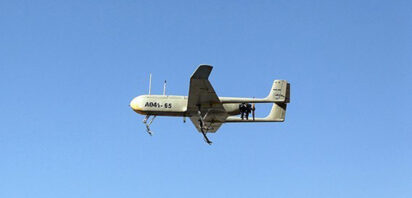
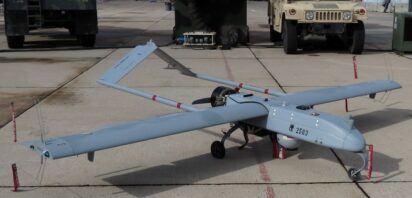
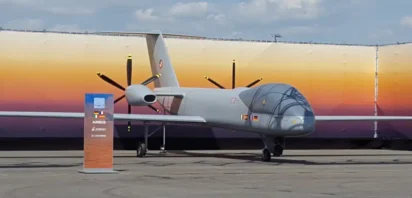
Despite their differences, unmanned and AI RMAs are not divorced from one another. The wars in Ukraine and Gaza have become incubators for the convergence of the unmanned and AI RMAs. So far, AI has been a prominent feature of Israel’s targeting and surveillance through unmanned systems. But the aspiring AI superpower has yet to field a fully AI-driven unmanned system. Likewise, a recent Institute for the Study of War (ISW) report assessed that both Ukraine and Russia have already begun to integrate AI into their drone capabilities in hopes to develop full AI-powered unmanned systems. Although the race for AI-powered drones is on, military adaptation has more-so chased than mastered the fast evolution of both these RMAs, with critical consequences for great power competition. Implementing the compounding unmanned and AI RMAs at their speed and scale of development and deployment is the only way the United States can master this evolving landscape. China is already ahead of this curve. Despite the strategic blow of Operation Spider Web, Russia is catching up to Ukraine in drone production and development thanks to China’s support. Further, the People’s Liberation Army Air Force is preparing to launch the test flight of its new ‘drone mothership,’ a carrier that can release a swarm of 100 drones at a time. This commitment to the development of unmanned systems follows China’s ambitious AI agenda for 2030. As the US lead in AI rapidly shrinks, the United States must reconsider how to scale up and accelerate its defense investments in both unmanned systems and AI. The United States should not only further invest in its support for Ukraine to gain insightful lessons from the battlefield, but also reconsider how its supply chains are interwoven with China’s innovation machine. As this era of precise mass warfare shows, surprise is a far more dangerous enemy than risk. The United States cannot afford to stay behind the innovation curve, lest it wishes the 1991 victory over Iraq to be the last in its military history.
The views expressed in this article belong to the author(s) alone and do not necessarily reflect those of Geopoliticalmonitor.com.