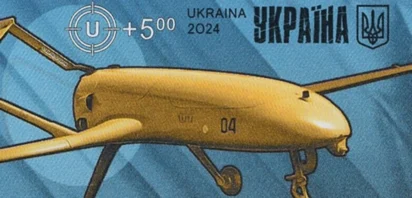
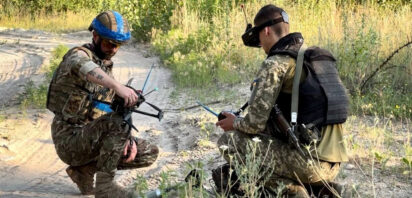
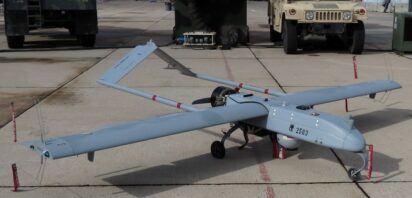
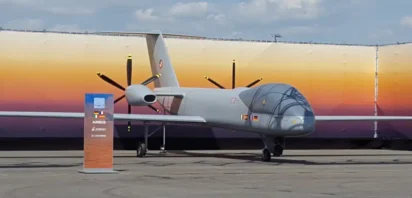
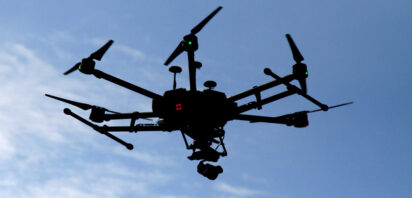
The Ukraine war stands out for the widespread use of unmanned aerial vehicles (UAVs), or drones. From the initial strikes on Russian formations with Bayraktar TB2 medium-altitude long-endurance (MALE) drones to various first-person view (FPV) drones rigged with explosives to take down enemy vehicles, troops, and fortifications, the Ukrainians are leading the way in transforming modern combat via drone warfare.
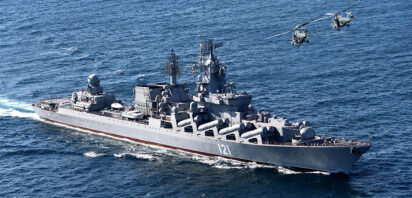
The presence of the TB2 in Ukraine became so widespread so as to become public knowledge in and out of the country in 2022. TB2s were used in airstrike and ISR (intelligence, surveillance, and reconnaissance) operations, targeting Russian vessels including the sinking of the Moskva, the flagship of Russia’s Black Sea Fleet (BSF). By 2023, civilian FPV drones based on racing quadcopters were widely used in the battlefield, being modified to drop RPG rockets and grenades. These drones were mainly used in kamikaze operations. The use of these drones traces all the way back to 2014 in the immediate aftermath of Russian troops invading and seizing control of Crimea. Commercial off-the-shelf (COTS) drones, including those made by DJI, were typically used by Ukraine for surveillance and reconnaissance.
Drone innovation did not stop in the use of civilian FPV and military drones. Ukraine became one of the first countries to manufacture drones used for maritime operations. Examples of these sea drones include the Sea Baby, used by the Security Service of Ukraine (SBU) and the Magura V5, used by the Main Directorate of Intelligence of the Ministry of Defence of Ukraine (GUR or HUR). These drones were useful in confronting the Russian Navy through missile or kamikaze attacks, inflicting substantial damage, and ultimately taking out a third of the Black Sea Fleet. This resulted in the BSF being unable to conduct normal maritime operations in the Black Sea.
In what was judged to be one of the most significant drone operations by Ukraine, Operation Spider’s Web was launched on June 1, 2025 by the SBU with multiple drones used to target Russian Air Force (VVS) bases in Murmansk, Irkutsk, Ivanovo, Ryazan and Amur. Among the targets taken out by the drones were bomber planes used as strategic cruise missile carriers. There are reports that Ukrainian planners used decommissioned Soviet aircraft to train AI systems to target weak points like fuel tanks or underwing pylons. The destruction of these planes hampered the Russian Air Force’s ability to launch cruise missile attacks on Ukraine, and it reflected Ukraine’s willingness to use low-cost and low-tech solutions as a way to counter Russia’s deep resources and large drone numbers.
More recently, Ukraine has been developing a new FPV fiber-optic drone that is immune to electronic warfare jamming and has a range of up to 100 kilometers. According to the co-founder of a Ukrainian drone company known as Fold, range upgrades to the FPV drones are needed in order to strike high-value targets located far from the frontlines. The innovation is just the latest manifestation of the decades-long Revolution in Military Affairs (RMA), which Chris Bray defines as the “use of information and automation on the battlefield… to allow networked, integrated forces to become more lethal.”
Ukraine’s Minister of Digital Transformation reported that in 2025, around 500 drone manufacturers were in operation. This is in contrast to only seven drone manufacturers at the outbreak of the war. Kyiv encouraged this growth of drone manufacturing sector by providing incentives, including the “Army of Drones” program, launched in 2022 to crowdfund and indigenize drone production, and the Brave1 defense tech incubator, launched in 2023 to provide both grants and R&D support to drone innovators. It is thanks to government support that the private sector is able to innovate more in drones and shape long-term deterrence and defense. However, the real secret to Ukraine’s success in mobilizing and deploying drones was to prioritize affordability, adaptability, and scale. The decentralized approach to defense innovation allows start-ups, engineers and volunteers to join and help develop and deploy indigenous drones. By October 2024, Ukraine claimed that four million drones were manufactured annually for military use.
Ukraine is and will continue to influence other countries in the field of drone warfare, regardless of whether they are MALEs or COTS-type drones. Kyiv’s willingness to innovate with new technology and tactics to integrate drones into regular military units play a key role in resisting Russian aggression. And other global militaries are now watching closely. Valerii Zaluzhnyi, Ukrainian ambassador to the UK and former commander-in-chief of the Armed Forces of Ukraine, remarked during the Ukraine–United Kingdom Defense Technology Forum that Ukrainian battlefield innovations are consistently outpacing US defense contractors and that these companies and Silicon Valley are reaching out to Ukrainian drone makers for insight.
The views expressed in this article belong to the author(s) alone and do not necessarily reflect those of Geopoliticalmonitor.com.