Mark Soo

Mark Soo is a Philippine-based freelance research consultant with research interests in Japanese defense/foreign policy, non-traditional security (North Korean sanctions) and emerging military technology (drones). He has a BA in Political Science from Simon Fraser University and a Masters in Strategic Studies from the S. Rajaratnam School of International Studies at Nanyang Technological University. He is currently writing a journal article that is being supported by the Brunel Centre for Intelligence and Security Studies, inspired from a presentation done at the Knock in the Night — Intelligence, Security and Special Services in Authoritarian States event, where he argued that the Japanese intelligence community post-World War II continues to face difficulties in implementing serious reforms to face new security challenges.

South Korean Sub Docks in Canada as Decision Looms on RCN Procurement

ROKS Dosan Ahn Changho class submarine, modified, https://commons.wikimedia.org/wiki/File:ROKS_Dosan_Ahn_Changho_class_submarine.png

A port visit at CFB Esquimalt by a Dosan Ahn Changho-class submarine is meant to demonstrate strategic and industrial benefits of the Hanhwa Ocean bid ahead of Ottawa’s final decision on who will supply the next generation of RCN submarines.

Canada Looks to Join Global Combat Air Program
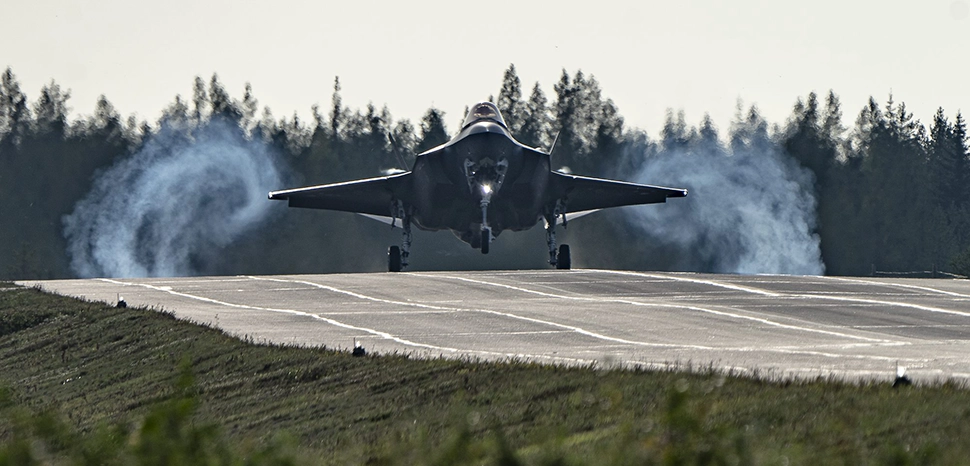
Canada is reportedly joining the Global Combat Air Program (GCAP) and seeking permanent observer status. The reported status was based on a meeting that took place on March 6 in Tokyo between Japanese Defense Minister Shinjiro Koizumi and Canadian Defense Minister David McGuinty. According to GCAP policy, observer status allows a nation “to obtain information from the three core countries to consider deeper involvement later, which could include manufacturing, procurement or even joining the development phase.” A meeting is planned for June 2026, involving defense ministers from Britain, Italy, and Japan, where an announcement on Canada’s inclusion as an observer is expected. Canada’s participation in GCAP would allow them to potentially procure and develop more advanced aircraft for the Royal Canadian Air Force (RCAF) in the likely case that the RCAF would pursue acquiring GCAP-based aircraft. Ottawa’s participation comes on the heels of tensions over security and trade between Canada and the United States, where a procurement review of Canada’s first batch of F-35A fighters has figured prominently. To this end, joining GCAP as an observer would allow Ottawa to expand its military and defense relations with Tokyo, London, and Rome, thus diversifying security relations while modernizing the RCAF. News of Canada’s planned observer status in GCAP did not come out of the blue. On March 13, Minister of National Defence David McGuinty said that Canada is considering fully joining GCAP when asked by reporters in Ottawa during a press conference. Back in January, Minister McGuinty and Japanese Ambassador to Canada Kanji Yamanouchi signed the Agreement between the Government of Japan and the Government of Canada Concerning the Transfer of Defense Equipment and Technology. The agreement serves as legal bilateral framework for transferring defense equipment and technology in order to “implement projects to be jointly determined, including those contributing to international peace and security.” In a Politico news report from December 2025, Canadian High Commissioner to London Ralph Goodale stated that Canada was trying to find ways to participate and contribute to the GCAP project. He also mentioned that Canada’s potential participation would not replace their planned acquisition of the F-35, but instead would represent a “progression.” Confidential information from the project will also be shared once Canada has been conferred with observer status. As far as Ottawa is concerned, the appeal is clear. Through the signing of agreements and diplomatic engagements, Canada can position itself to become deeply involved in next-generation defense initiatives while maintaining previous commitments to the F-35 program. Even if Canada joins GCAP without becoming a full partner, Canadian defense companies can benefit from the R&D aspect of the program, notably in aerospace engineering. This can even help Canadian companies that manufacture F-35 components, as there are similar economic and industrial benefits to be gained should they manufacture and sell GCAP fighter components for partner nations. In turn, this involvement creates opportunities for the Canadian defense industry to build its reputation over time. Moreover, even a limited presence from Canada can be of benefit to the overall program, as reduced airframe costs can benefit GCAP when GCAP fighters are manufactured and delivered. Lower costs increase the chances of GCAP realizing its full potential. Finally, membership in GCAP allows Canada to enhance interoperability status between the RCAF and allied air forces for joint operations in future conflicts. There are however concerns in Japan that adding new full partners like Canada risks dragging out program timelines. Japanese officials are already worried about GCAP meeting its current 2035 deadline for deploying its first jets. More members means more views that must be aligned regarding how the aircraft should operate. Whatever the ultimate extent of involvement in the program, Canada’s engagement with GCAP represents a strategic step toward diversifying security partners and modernizing the RCAF. It signals new momentum toward replacing the RCAF’s fleet of CF-18s with modern sixth-generation fighter jets amid shifting geopolitical dynamics. In addition, it advances domestic Canadian fighter development and strengthens security ties with Japan, the UK, and Italy, creating new opportunities for the defense industry without jeopardizing previous commitments to acquire the F-35. When Canada is given observer status, it will likely serve as both a test of long-term defense priorities and a signal of intent to play a more active role in next-generation military collaboration.

Canada’s reported engagement with the Global Combat Air Program (GCAP) would strike a balance between developing domestic defense industries while keeping F-35 procurement intact.

Manila Turns to Minilateralism to Shore Up Security

Philippine president Bongbong Marcos and Singaporean prime minister Lawrence Wong in Manila, 4 June 2025. , modified, https://commons.wikimedia.org/wiki/File:Bongbong_Marcos_and_Lawrence_Wong_in_Manila_%282025%29_05.jpg

The ‘ASEAN Way’ has failed to protect Philippines sovereignty in the South China Sea, so Manila is taking matters into its own hands and pursuing minilateral agreements with likeminded powers.

Japan Eyes Entry into Global Small Arms Market

cc Hunini, modified, https://commons.wikimedia.org/wiki/File:JGSDF_Type_20_rifle_at_Camp_Itami_October_2,_2022_04.jpg

Japan’s longstanding ban on arms exports has been slowly dismantled since the Shinzo Abe era, with the conspicuous exception of small arms exports. That may be about to change.

Ukraine War Ushers in New Era of Drone Warfare

cc Армія Інформ, modified, Військово-Морські Сили України отримали перший розвідувально-ударний безпілотний комплекс Bayraktar TB2 від турецької оборонної компанії Baykar Defence. / https://fr.m.wikipedia.org/wiki/Fichier:Bayraktar_TB2_Ukrainian_Navy.jpg

The near-constant stream of innovations in drone warfare on the battlefields of Ukraine has permanently changed the nature of modern combat.

Philippines-Japan Deal to Boost PN Presence in South China Sea

Abukama class destroyers; cc MOD Japan, modified, https://en.wikipedia.org/wiki/File:JS_Abukuma%EF%BC%88DE-229%EF%BC%89%EF%BC%86BAP_Guise%EF%BC%88CM-28%EF%BC%89.jpg

A pending transfer of six Abukama-class destroyers would ease operational attrition in the South China Sea. It could also serve as a template for Japanese defense deals elsewhere.

North Korea’s Choe Hyon Destroyer: Start of a Modernizing Trend?
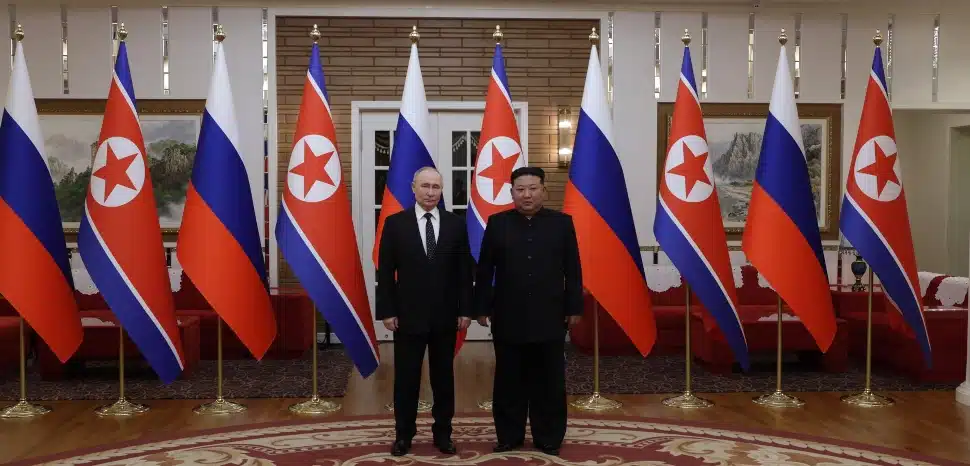
Vladimir Putin has arrived in Pyongyang on a friendly state visit at the invitation of Kim Jong-un. / cc kremlin.ru, modified, https://commons.wikimedia.org/wiki/File:Vladimir_Putin_and_Kim_Jong-un_(2024-06-19)_11.jpg

The launch of North Korea’s Choe Hyon destroyer reflects a broader modernization of the DPRK armed forces, with potential ramifications for regional security.

Canada and Philippines Ramp Up Military Cooperation

cc U.S. Navy photo by Canadian Armed Forces Sgt. Matthew McGregor, modified, https://en.m.wikipedia.org/wiki/File:HMCS_Calgary_%28FFH-335%29_leaves_Pearl_Harbor_in_July_2014.JPG

Ottawa and Manila have signed a visiting forces agreement as both seek new ways to diversify their security relations in the Trump era.

Japan’s Start-ups Play Catch-up in the Defense Sector

cc Japan Maritime Self-Defense Force https://commons.wikimedia.org/wiki/File:Japan_Maritime_Self-Defense_Force_butai01_-_01.jpg

After years of inaction, the Japanese government has begun to nurture high-tech start-ups with an eye on dual-use military technologies.

CYBERCOM: Canada’s CAF Gets Serious About Cyber Defense

JOINT BASE PEARL HARBOR-HICKAM, Hawaii -- Canadian Armed Forces members teamed up with U.S. Airmen to work together with allies, partners and five U.S. service branches on the multinational space operations team in support of Valiant Shield 2024 (VS24), June 10, 2024, at Joint Base Pearl Harbor-Hickam, Hawaii. Throughout Exercise VS24, U.S. Space Command will plan, execute, and integrate military space power into multi-domain operations. Exercises such as VS24 provide Indo-Pacific Command Joint Forces an opportunity to integrate with allies and partners to conduct precise, multi-axis, multi-domain effects that demonstrate the strength and versatility of the Joint Force., https://www.pacaf.af.mil/News/US-Space-Forces-Indo-Pacific-News/Article/3806910/canada-joins-multinational-team-for-valiant-shield-24/

With the establishment of the Canadian Armed Forces Cyber Command (CYBERCOM), Canada joins eleven other global militaries with a cyber-based command.

More Stories
Back to Top
Keep Pace with a Changing World
Sign up to our mailing list for weekly reports and discounted subscription rates.
Use Code:
0
0
0
0
Act now for a limited-time deal on an annual subscription.
GPM99
: