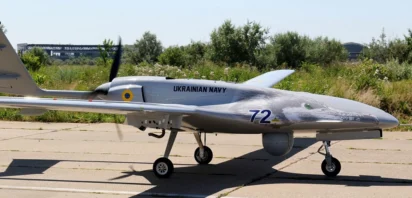
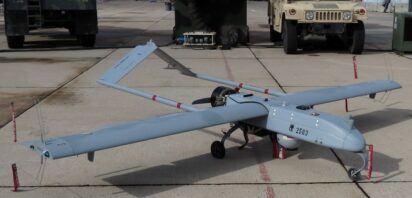
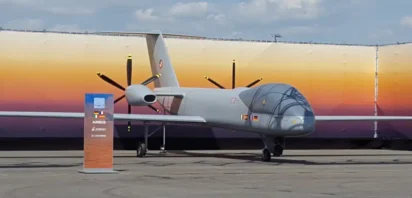
The fight for control of the air littoral is a pivotal domain in the Ukraine war, one where success brings advantages in battlefield awareness, artillery suppression, maneuverability, and attrition. The conflict can be viewed as a struggle on the part of both sides to adapt to this new reality: deploying and testing new drone technologies and techniques to gain any possible edge in a rapidly evolving drone-centric battlefield.
Air Littoral Redefines Control in Modern Warfare
In the architecture of modern warfare, verticality has traditionally been divided into two distinct operational spheres: the ground domain, contested by land forces, and the aerial domain, dominated by high-altitude manned aircraft such as fighter jets, bombers, and reconnaissance planes. Between these two spheres lies a once-overlooked stratum of airspace, extending from ground level up to approximately 10,000 feet (what military analysts now identify as the air littoral).
Historically, this zone was considered tactically negligible due to the absence of durable, survivable systems capable of operating meaningfully within it. However, the proliferation of small, unmanned aerial systems (UAS) – drones – has transformed this space into one of the most actively contested zones on the modern battlefield.
Drones operating in the air littoral are typically low-cost, electrically powered, and relatively simple in construction. They include commercially available quadcopters, custom-built first-person view (FPV) drones, and loitering munitions, or “kamikaze drones,” capable of autonomous or semi-autonomous target engagement. These systems function at altitudes too low for traditional air defense radars to detect easily and too numerous and inexpensive to justify engaging with high-value air-to-air munitions.
What makes the air littoral strategically significant is not the technological sophistication of its combatants, but their mass, persistence, and the degree of tactical influence they exert on ground operations. Drones in this layer provide constant surveillance, facilitate rapid target acquisition for artillery units, and deliver precision munitions to targets that were once shielded by terrain or distance.
Control of this zone enables a force to deny the enemy concealment and apply continuous attritional pressure at minimal cost. The inability of conventional aircraft to dominate this layer renders traditional doctrines of air superiority incomplete. As a result, mastery of the air littoral has emerged as a foundational determinant of battlefield success. Its rise is not a mere byproduct of innovation, but a structural response to the demands of modern combat.
Ukraine Rebuilds Its Military Structure around Drones
By early 2024, Ukraine’s battlefield performance was being severely tested by a combination of material shortages and tactical overstretch. Delays in the delivery of artillery shells from Western partners created a critical deficit in Ukraine’s capacity to conduct sustained fire missions, forcing a shift in operational emphasis. Confronted with the escalating tempo of Russian attacks, particularly in the Donetsk and Luhansk sectors, Ukraine turned decisively toward the one domain in which it had a transient advantage: unmanned systems.