In early September, it emerged that China Southern Power Grid (CSPG), a state-run firm, had signed a deal with state-controlled counterpart Electricite du Laos (EDL) to take a majority stake in Laos’ electricity grid. The deal is the latest indication of Beijing’s rising economic influence in its debt-ridden southern neighbor, which is struggling under financial pressures linked to the COVID-19 pandemic and large infrastructure projects.
Last month, Fitch Ratings downgraded Laos’ rating from B- to CCC, meaning it faces ‘substantial credit risk’ and a ‘real possibility’ of sovereign default, which would make Laos the first Southeast Asian country since Myanmar in 2002 to fail to meet its debt obligations. Laos, which joins only Angola, the Republic of Congo, Gabon and Zambia in Fitch’s CCC category, may have little option but to turn once again to China for help.
Chinese Influence in Laos
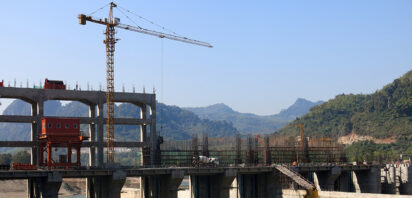
China’s economic presence in Laos has grown since the launch of the Belt and Road Initiative (BRI) in 2013, with Laos forming a key node in Beijing’s efforts to build infrastructure and expand its overland trade links southward. In addition to financing hydroelectric dams along the Mekong, the centerpiece of China’s plan in Laos is a 414-km high-speed railway, currently under construction and set to be completed in late 2021, snaking through the mountainous terrain from Kunming, in China’s south, to the Laotian capital Vientiane.
The projects are part-financed by loans taken out by the government in Vientiane, albeit at favorable rates of interest. For the railway project, Laos is reported to have borrowed $465m, equivalent to 3% of its GDP, from the Export-Import Bank of China. Total Chinese investment in Laos is over $10bn, more than double that of next-largest investor Thailand, with Chinese firms involved in the power and transportation sectors in addition to construction projects along the northern border. China is also Laos’ primary foreign creditor.
The strategic vision of the ruling Lao People’s Revolutionary Party (LPRP) is to go from ‘landlocked to land-linked’ and become the ‘battery of Southeast Asia’ by exporting electricity to its fast-growing neighbors. China is keen to promote the supposed ‘win-win’ element of its Belt and Road projects, yet some analysts have invoked the possibility of ‘debt-trap diplomacy’ and claimed poorer countries will see minimal benefit. In Laos, much will depend on whether the railway can link domestic markets, and the future profitability of hydropower in a competitive market, with environment-friendly wind and solar power coming online across the region.
Economic Hit from COVID-19
Laos has escaped the health impacts of COVID-19 – with just 23 cases and zero deaths – but the pandemic has hit its tourism-dependent economy hard, compounding existing debt issues and pushing Laos toward a financial cliff-edge. With its credit rating downgraded, Fitch Ratings and Moody’s Investors Service have both downgraded their outlook for Laos to ‘negative.’ Laos faces annual debt payments of $1bn each year until 2024, while its foreign currency reserves have fallen to less than $900m, placing the country in a precarious position. Fitch estimates that Laos’ total sovereign debt amounts to $12.6bn, representing 65% of its GDP.