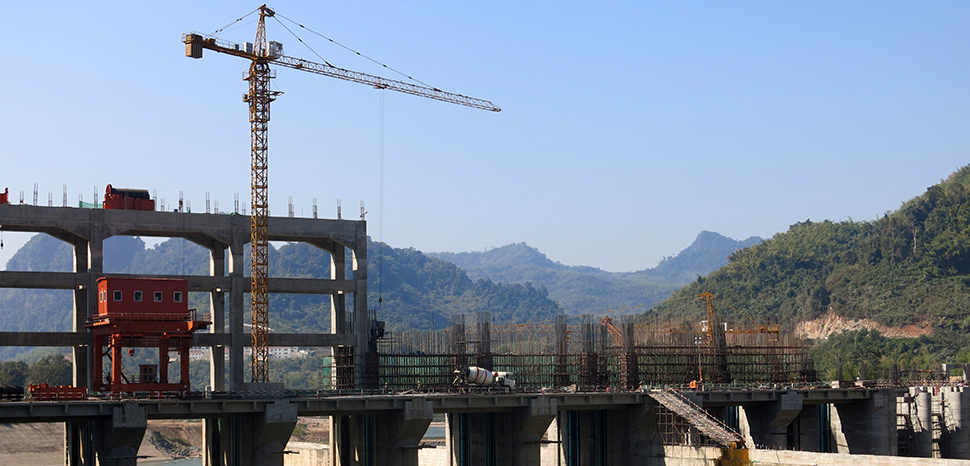
On 5 November, Thailand’s National Energy Policy Committee (NEPC) agreed to buy electricity from three hydroelectric dams in northern Laos. Electricity will be exported from the Nam Gneum III dam, currently being built by Chinese firms in Xiengkhouang province, and another two proposed dams to be constructed on the Mekong River at Pak Beng and Pak Lay, both within 100 km of the Thai border. A Lao official has said work can begin now that Thailand has committed to purchase the electricity.
The hydropower projects are among many in Laos, which already has 78 dams in operation and has signed agreements for another 246 projects, according to Radio Free Asia. Laos has the potential to produce up to 28,000 megawatts of power by 2030, and aims to become the “battery” of Southeast Asia and export electricity to neighbouring markets in Cambodia, Thailand and Vietnam, and further afield to Malaysia and Myanmar, despite fears of environmental harm from damming the Mekong.
It is also uncertain whether demand for electricity really exists to justify Laos’ hydropower gamble on such a grand scale. Thailand, the main customer, has not yet committed to buy power from the planned dams at Luang Prabang and Sanakham. In September, the Electricity Generating Authority of Thailand (EGAT) said the decision would depend on “the needs of Thailand” and prices, which in the future will face growing competition as wind and solar projects come online across the region.
Dam-building on a mass scale
For decades, Laos has built dams on tributaries of the Mekong, but is now moving onto the river’s main channel. Xayaburi, which started commercial operations in 2019, was the first to open on the mainstream, while six more are at various stages of planning or construction with completion dates up to 2028. Flooding is a major concern of residents in nearby villages, as evidenced by the collapse of the Xe-Pian Xe-Namnoy dam in July 2018 in Attapeu province, which left 6,000 people homeless.