Asia is expected to lead the way in a post-COVID global economic recovery, but a new upsurge in COVID-19 cases highlights how the region is not out of the woods yet. Outbreak conditions differ by country, but broadly speaking spiraling caseloads are being fueled by the same dynamics as hotspots in the West: winter weather, new and highly transmissible variants, lockdown fatigue, and a premature overconfidence in vaccines as a game-changer.
Background
China
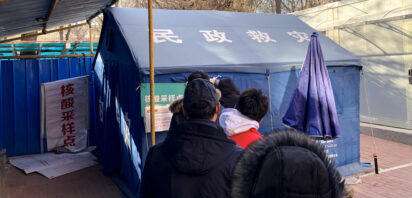
China reported 109 new cases on January 17, marking six consecutive days of triple-digit increases. Another 115 asymptomatic cases were detected on the same day, which isn’t included in the official tally owing to the country’s reporting standards. Though the recent outbreak has been largely confined to the northeast and has yet to impact economic centers along the coast, it comes at a critical time as hundreds of millions of people plan to travel home for Lunar New Year celebrations. Moreover, judging by the severity of the lockdown measures being implemented in Hebei and Heilongjiang, the outbreak could be far more extensive than is being revealed in state media disclosures.
Japan
The dream of the summer Olympics is fading once again as Japan fights a third wave of COVID-19. On January 16, 7,013 new cases were recorded; one day later, Tokyo recorded a record 1,592 new cases. Last week, the Japanese National Institute of Infectious Diseases announced that it had detected a new variant which, similar to those detected in the United Kingdom and South Africa, seems to be more communicable than other strains.