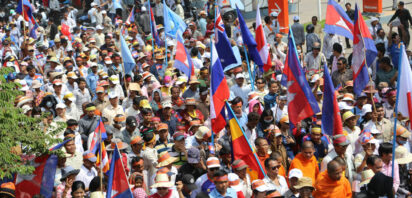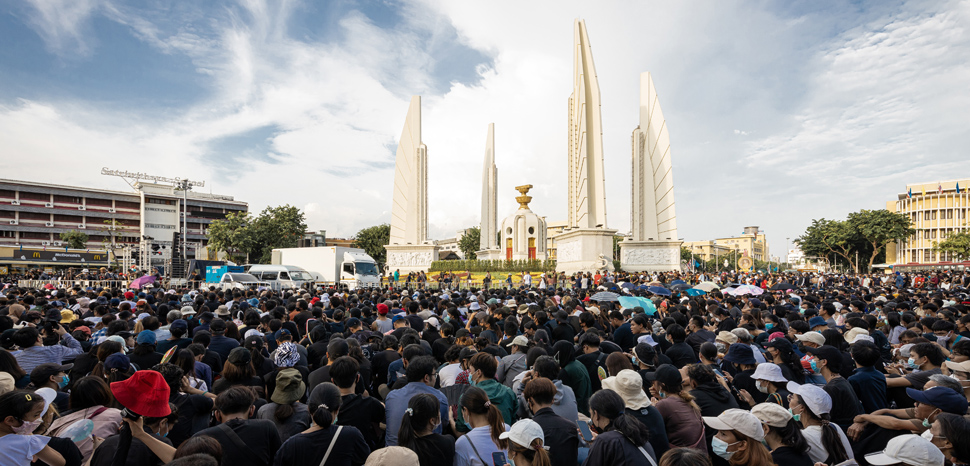
On 24 June, pro-democracy protestors returned to the streets of the Thai capital, Bangkok, after a three-month hiatus due to rising COVID-19 infections. The demonstrators called for Prime Minister Prayuth Chan-ocha to resign amid rising anger over his handling of the economy and the pandemic. These issues threaten to reenergize mass protests that erupted last year, taking aim at Prayuth but also broaching a traditionally taboo topic by questioning the place of the monarchy in Thai society.
Anger is now directed primarily at the government—led by Prayuth since the military seized power via a coup in 2014. After his five-year stint as a Junta chief, national elections in March 2019 paved the way for Prayuth to be selected as prime minister by 250 military-appointed senators. They had been assigned that task by a new constitution, introduced in 2017. Lawmakers recently voted on a series of amendments to that controversial charter, most of which were proposed by a raft of opposition parties.
Proposed charter changes
Of 14 changes initially proposed, only 13 were voted on. The most radical proposal, to re-write the constitution entirely, was dropped before the vote took place by house speaker Chuan Leekpai. It had been proposed by Pheu Thai, but was interpreted to go against a decree by the Constitutional Court in March that said the public must first be asked, in a referendum, whether they desire a new charter. However, the ruling did not specify at which stage in the process such a poll should be held.
A re-write of the constitution is also backed by the Move Forward Party – the successor to the Future Forward Party, which was dissolved over a disputed loan in 2020 having performed well in elections. The Move Forward Party aims for constitutional changes to go further than envisaged by Pheu Thai, looking at Chapters 1 and 2, which define Thailand as an ‘‘indivisible Kingdom’’ with the monarch as its head of state. Other parties have been more restrained when it comes to these sensitive issues.
What all opposition parties were able to agree upon was a proposal to strip senators of the right to vote alongside members of the House to choose the prime minister. This was even backed by three parties in the ruling coalition—the Bhumjaithai Party, the Chartthaipattana Party, and the Democrat Party. These parties, from across the political spectrum, share an interest in seeing a fairer selection process, as after the 2019 election Prayuth secured votes from 249 of 250 army-appointed senators.