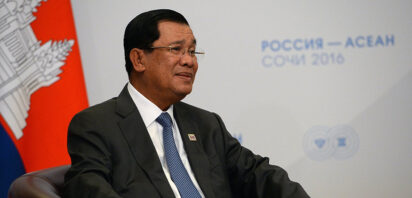
In June, after visiting the site of the new $30 million headquarters of the ruling Cambodian People’s Party (CPP) in Phnom Penh, Prime Minister Hun Sen remarked his opponents would have to ‘wait for the next life’ for a shot at power. He said the new building was a sign the CPP, which has been in power since a Vietnamese invasion in 1979 toppled Pol Pot’s Khmer Rouge, would lead Cambodian politics for the next century. Hun Sen has been at the helm since 1985, making him the fifth longest-serving current world leader. The main opposition Cambodia National Rescue Party (CNRP) was dissolved in 2017 after making big electoral gains.
Over the past year, speculation has mounted that Hun Manet, the 43-year-old eldest son of Hun Sen, is in line to one day replace his father as CPP leader and prime minister. Hun Sen has stated he believes his son is already ‘adequately qualified’ for the top job, but maintains he will stay on for another decade. Looking to downplay the subject, Hun Sen has been careful to tell journalists that an internal selection process and national election would be required to choose his successor. Yet Hun Manet’s public profile has risen of late, and given Hun Sen’s reputation as a ruthless political operator, little will be left to chance.
Crackdown on opposition
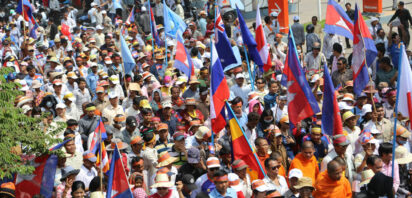
The CNRP was founded in 2012 by veteran politicians Ram Rainsy and Kem Sokha. The two men sought to appeal to disenfranchised youths and factory workers, campaigning on an anti-corruption platform. While Hun Sen’s supporters praise him for bringing relative peace, stability and economic growth to Cambodia after the horror of the Khmer Rouge years, critics cite rising inequalities between rich and poor, growing Chinese influence, and environmental destruction as reasons for voter frustration with the CPP. The CNRP tapped into this, accruing broad support and running the CPP close in 2013 national and 2017 local polls.
Yet in late-2017 the CNRP machine was dismantled. Kem Sokha was detained by police on treason charges in September and placed under house arrest, while co-founder Sam Rainsy had already fled to live in exile in Paris. In November 2017, Cambodia’s Supreme Court voted to dissolve the CNRP, stripping its 55 elected parliamentarians of their seats in the National Assembly and banning more than 100 party members from involvement in politics for five years. The opposition rejected the decision as politically motivated. Senior CNRP official Mu Sochua decried the ruling to close the party as the ‘end of true democracy in Cambodia.’
The crackdown of that year also targeted the press. The day after Kem Sokha was detained, The Cambodia Daily, a popular independent English-language newspaper, was shut down after failing to meet a deadline to pay a $6.3 million backdated tax bill, allegedly levelled at short notice by the authorities. Its final front page reported on Kem Sokha’s dramatic arrest and ran with the headline: ‘Descent into Outright Dictatorship’. In the 2018 general election, the CPP won a landslide victory, taking all 123 seats in the National Assembly. Sam Rainsy has since been accused of plotting a coup abroad and prevented from returning to Cambodia.
Hun Manet’s rapid rise
Hun Sen’s crackdown on the CNRP appears to have cleared the path for CPP dominance, after decades of internal political struggle. In 1993, Hun Sen negotiated his way to becoming co-Prime Minister when a poll organized by the United Nations (UN) resulted in a hung parliament, with the CPP coming in second place to royalist party Funcinpec. In 1997, he ousted his co-premier and rival, Norodom Ranariddh, by force. For now, with the CNRP dissolved, Hun Sen appears to have once again thwarted attempts to defeat the CPP.