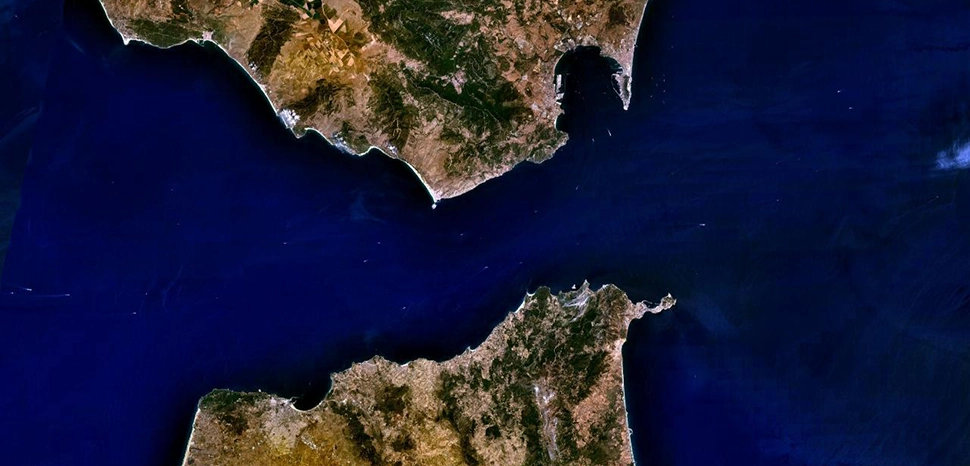
2026 marks a new stage in the Spain-UK dispute over Gibraltar, a small British Overseas Territory of 6.8 square kilometers and approximately 40,000 inhabitants perched on the southern edge of the Iberian Peninsula. After five years of uncertainty and strenuous post-Brexit negotiations, London, Madrid, and the European Commission have sealed a 1,018-page agreement on the free movement of people between the Rock and Spain.
Provisionally taking effect on July 15, 2026, the deal provides for the dismantling of the land barrier with the neighboring Andalusian town of La Línea and the lifting of controls on goods and the approximately 15,000 cross-border workers, the majority of whom are Spanish. Gibraltar, which voted 95.9% to remain in the EU in the 2016 Brexit referendum, will not join the bloc but will implement Schengen border rules and join a new customs union.
Brexit endowed Spain with newfound leverage at the table of negotiations. As early as 2020, Gibraltar (colloquially known as el Peñon or la Roca in Spanish) was excluded from the final EU-UK Trade and Cooperation Agreement (TCA) to allow for tailored negotiations that address Madrid’s regional concerns.
At a time when Keir Starmer’s Labour Party is negotiating the handover of the Chagos Archipelago to Mauritius, some opposition MPs from the Conservative Party (Tories) and Reform UK are characterizing the new Gibraltar deal as a “ridiculous disaster” and a “capitulation”. Amidst this new reality, one might reasonably wonder whether Spain really possesses the will and wherewithal to erode British sovereignty over Gibraltar.
A Rocky History: Between Pressure and Resistance
It was during the 18th century, at the height of the War of the Spanish Succession, that an Anglo-Dutch fleet captured Gibraltar. By the terms established in the Treaty of Utrecht of 1713, Spain was required to permanently surrender to the United Kingdom ownership of the city of Gibraltar, its castle, its port, its fortifications, and the adjacent forts attached to it. From that date until 1783, Madrid mounted numerous sieges to reclaim the exclave, all in vain. The Great Siege of Gibraltar (1779-1783), also the longest siege in British history, remains deeply rooted in the collective consciousness of Gibraltarians.
In 1946, Madrid successfully inscribed the territory onto the United Nations list of Non-Self-Governing Territories awaiting decolonization. Leveraging successive General Assembly resolutions describing the dispute as a “colonial situation,” Spain sought to compel London to enter into bilateral negotiations to relinquish the Rock. In response, the UK maintained that any territorial shift necessitates upholding the right to self-determination for the people of Gibraltar. Spain objected to this prerequisite, claiming that such a stipulation was absent from the 1713 Peace of Utrecht.
In 1969, outraged by a near-unanimous referendum where 99.64% of Gibraltarians voted to remain British, General Franco laid down an economic blockade, closed its border, and severed all communications with the Rock. London retaliated by implementing different measures such as rolling out preferential economic subsidies, substituting Spanish workers with Moroccan personnel, and enhancing air connectivity with the UK. Following the fall of the dictatorship, London and Madrid established the groundwork for negotiations, culminating in the Lisbon Declaration (1980) and the Brussels Agreement (1984), which ultimately enabled the border to reopen and restored the freedom of movement.
Notwithstanding Spain’s democratization and subsequent bilateral rapprochement with the UK, the people of Gibraltar maintained a steadfast allegiance to the British Crown. During his tenure as Gibraltar’s fourth Chief Minister, Joe Bassano championed the “give Spain no hope” policy, which advocated that the British government should make absolutely no territory or sovereignty concessions to Madrid. In 2002, Gibraltarians delivered a 98% rejection to a proposed United Kingdom-Spain joint sovereignty scheme. Since then, the relation between London and Madrid has been marked by cyclical tensions regarding territorial waters, the rock’s economic status and the operation of the airport – a facility located on the isthmus of Gibraltar Spain claims Britain built beyond the stipulations of the 1713 Utrecht treaty.
Border Control: Streamlined Transit or Trojan Horse?
The post-Brexit agreement on Gibraltar prevented the scenario of a rigid border and stricter identity checks for its cross-border workers, who comprise approximately 50% of the workforce. Without the agreement, the impasse would have triggered endless queues at the border and substantial economic losses for the Rock and its Spanish hinterland.
Although Article 2 of the treaty safeguards British sovereignty over the territory, London has yielded some authority over external controls to Madrid. Henceforth, all arrivals in Gibraltar by air or by sea will now be subjected to a dual checkpoint, requiring clearance from both a Gibraltarian officer and a Spanish officer handling Schengen formalities. Breaking three centuries of precedent, Spanish authorities will now hold the power to block a British national from entering Gibraltar.
Some British officials are comparing this shared management model to the protocol at St Pancras station in London, where French personnel screen Eurostar’s passengers directly from British soil. However, this analogy is questionable. Unlike Gibraltar, St Pancras has never been the object of French territorial claims, nor is it classified by the UN as a non-self-governing territory. Should tension arise between Spain and the UK, Spanish authorities will have the capacity to leverage stringent border controls to delay travelers, thereby prompting them to use the neighboring Costa del Sol airport. Although both nations are staunch NATO allies, the deployment of Spanish officers close to Royal Navy facilities could spark apprehension within a territory still marked by an ongoing dispute. As border controls with Spain are lifted, Gibraltar must also tackle new security challenges, including the regulation of irregular migration and drug trafficking.
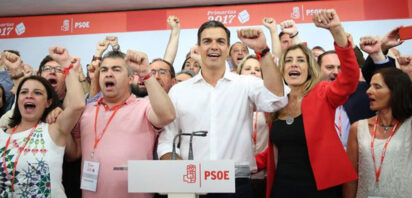
With Spain’s 2027 general elections looming, HM Government of Gibraltar is bracing for the potential exit of the socialist administration of Pedro Sánchez and the rise of a less sympathetic coalition in Madrid. By way of illustration, the far-right VOX Party – a crucial ally to the election-favored Popular Party (PP) – rejects any deal that fails to secure Spanish sovereignty and demands applying maximum pressure on British interests in Gibraltar. Moving past the electoral rhetoric, this threat is taken seriously by Gibraltarian authorities. In 2019, the government of Gibraltar lodged a hate speech complaint in Madrid against VOX party officials Santiago Abascal, Javier Ortega Smith, Jorgé Buxadé Villava, and Augustín Rosety Fernández de Castro. The complaint cited inflammatory remarks calling the Rock a “parasite,” a “leech,” a den of “money launderers” and “criminals.”
The Economy: Prosperity for All or Delayed Suffocation?
Gibraltar is a low-tax jurisdiction. It does not levy taxes on inheritance, wealth, capital gains, or bank interest. With a competitive standard corporate tax rate of roughly 15%, the Rock hosts more than 6,000 entities specializing in online gaming, financial services, and insurance.
Following the UK’s accession to the EU in 1973 – four years after General Franco closed his border with Gibraltar – the British government secured a unique political status for the territory. It was determined that the Rock would not be subjected to value-added taxes (VAT) and would remain outside the scope of both the Common Agricultural Policy and the Common External Customs. Spain has long denounced these policies, labelling Gibraltar a tax haven.
The absence of VAT in Gibraltar means that several products, such as tobacco, alcohol, and gasoline, are much more affordable than in the Campo de Gibraltar region, its Andalusian hinterland and one of Spain’s most impoverished regions. By complying with EU customs and tax rules, the Rock could lose its economic appeal. Despite promises of a shared prosperity zone, should Gibraltar fail to reduce its competitive edge vis-à-vis nearby Andalusian towns, Spain will enforce tighter custom regulations. The geopolitical tables have turned since the Franco era: this time Madrid will be backed by the EU, whereas London has opted out.
The Boomerang Effect: Spain Faces Its Own Challenges
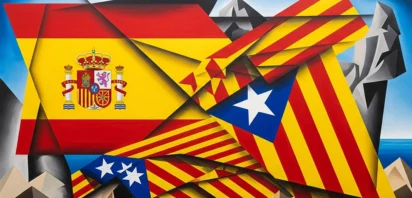
For Madrid, utilizing the new post-Brexit agreement to negotiate a new framework for co-sovereignty or a handover under special status could ignite calls for greater autonomy in regions like Catalonia, the Basque Country, or Galicia. These regions, traditionally supportive of self-determination, are unlikely to accept Gibraltar enjoying greater autonomy or preferential treatment. Spain could also plunge into an institutional crisis, as the 1978 constitution does not foresee such a scenario.
Just across the Strait, Madrid also faces Moroccan claims to the exclaves of Ceuta and Melilla, plus a string of Mediterranean islets and a Lilliputian peninsula: the Chafarinas, Alhucemas, Perejil/Leila and Alboran islands, as well as the Peñon de Vélez de la Gomera. While Spain rejects the premise of any dispute in this region, Morocco asserts that the decolonization of Gibraltar will inherently compel a similar resolution for the two contested exclaves and surrounding small territories.
The views and opinions expressed in this article are those of the author alone and do not represent those of Geopoliticalmonitor.com