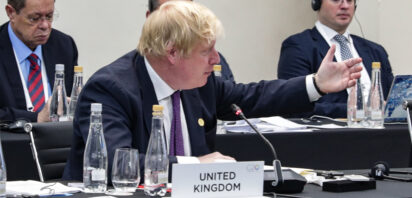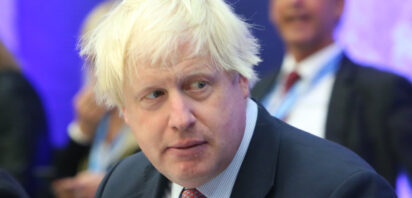
On the surface, the appointment of Boris Johnson as prime minister of the United Kingdom seems to signal the arrival of endgame in the Brexit saga, if nothing because a ‘hard Brexit’ is finally out in the open as a viable if not preferred option to be pursued by the new government. Johnson’s first moves in office did nothing to dispel the idea, like his blunt rejection of the backstop deal, which produced the expected result of freezing out any potential new talks with the European Union.
But now, as before, news of the impending death of Britain’s epic, slow-motion political train wreck may be premature. There are still plenty of electoral and parliamentary knife fights to play out before this is all finished.
Here’s what to expect from the opening months of a Johnson premiership:
Analysis
Hard Brexit is the goal. All signs are pointing to a government preparing for a hard Brexit (the UK leaving the European Union without an exit deal). Johnson himself has been one of the highest profile critics of his predecessors attempt at a ‘soft Brexit,’ and he now owes his position at the apex of British politics to this one issue. He has surrounded himself with advisors and a cabinet of fellow travelers: Dominic Cummins (strategist behind the Vote Leave campaign) is his chief of staff; Dominic Rabb (former Brexit minister) is foreign secretary; Michael Gove is cabinet office minister; Theresa Villiers is environment secretary, etc. The relatively moderate, soft Brexit, voices like Jeremy Hunt and Philip Hammond have all been pushed out. Moreover, the goal of a hard Brexit is no secret; it has been explicitly stated by members of the Johnson cabinet. Michael Gove recently told the Sunday Times that his government was “working on the assumption” of a no-deal Brexit.
…But this goal has a lot to do with electioneering. There’s an unambiguous electoral logic in Johnson’s hard line, and that is to capture as much of the Brexit Party’s support as possible. European parliamentary elections revealed a groundswell of conservative anger toward how the Tories were handling the Brexit process. Johnson wants to capture this portion of the vote – all of the dissenters who abandoned the Conservatives for the Brexit Party, and use the resulting majority to take parliamentary control (providing the legal basis for a hard Brexit). Early polls have borne out this interpretation, as the Conservatives have seen a ‘Boris bump’ at the expense of the Brexit Party.
The premier’s behavior thus far has put to rest any question of his preparing for a general election. Whether it’s playing hard ball with the Europeans, announcing a new high-speed link between Manchester and Leeds (sans funding details), visiting the Labour stronghold of Manchester, or playing up his personal advantage in any future US-UK trade deal, it’s crystal clear that Prime Minister Johnson is preparing to make his case to the people. All that’s missing is an announcement that Britain will be sending humans to Mars by 2050.
Back to square one. With the final parliamentary math a mystery, focus shifts to the inevitable election. Here are some key factors to consider:
- It will be billed as an up-or-down decision on a hard Brexit. The election will be called for autumn, ahead of the current October 31 deadline, and it will come in response to the EU’s rejection of any attempts to renegotiate the backstop or divorce bill.
- Johnson will attempt to form a new coalition of supporters. The Conservatives will shift away from trying to scoop up Labour voters who support Leaving and instead double-down on the UKIP cohort, which will be highly motivated in terms of organization and turnout. This shift in focus will resonate in messaging, away from the ambiguity of the May era and toward the leave-at-all-costs approach that we’re now seeing. One of the risks in this approach is that it might alienate more soft Brexiters than it does pick up new hard Brexiters.
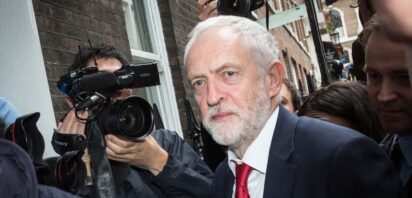
- Will the Remain bloc follow suit? Another risk is that, by uniting the Leave component, Johnson might precipitate a similar consolidation on the other side of the divide. However, this would take either a sea change in Jeremy Corbyn’s approach to Brexit or his removal as leader of the Labour Party. At present, a Liberal Democrats-Labour electoral pact similar to the Conservatives and Brexit Party seems quite unlikely, and this is exactly why a snap vote is such an appealing prospect for the Johnson government.