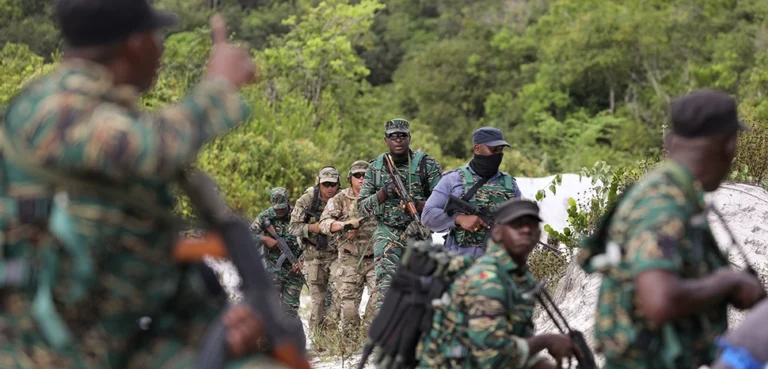
Tensions between the United States and Venezuela are surging, and the situation presents a critical opportunity for Guyana to deepen its relationships with major powers beyond energy, especially in defense and security. Small and oil-rich, the country now finds itself navigating a dangerous standoff as Washington and Caracas compete for influence in the region.
The disputed Essequibo region, a longstanding territorial flashpoint comprising nearly two-thirds of Guyana, has remained central to Venezuela’s rhetoric, but more as a convenient rallying symbol in President Nicolás Maduro’s campaign against US influence rather than source of conflict in itself. Maduro painted Guyana’s resistance to Venezuelan claims as an outgrowth of American imperialism, tying the Essequibo dispute to a larger struggle against the Washington.
In effect, Guyana’s fate is now tied to external power dynamics. Further, the country’s growing partnership with Washington and the presence of Western oil firms in its waters are even more relevant in the wake of the Trump administration’s recent regime change in Venezuela.
Guyana’s strategic position is shaped by the danger of a clash it cannot control. Both Caracas and Washington view the country through a wider lens. For Venezuela, Guyana represents not just disputed territory or oil, but a proxy in its campaign against US pressure. For the U.S., Guyana is an emerging partner and a potential node for regional security, particularly in an enduring engagement with Venezuela. As a result, the U.S. has stepped up military engagement with Guyana, leaving it better placed to respond to future contingencies across the border in Venezuela.
Asymmetries & Alliances: Guyana’s David vs Venezuela’s Goliath
When comparing the two militaries, the defense imbalance between Guyana and Venezuela is stark. Guyana’s small, lightly equipped force faces a much larger and better armed Venezuelan military. Though comparisons are difficult due to issues with confirming Venezuela’s military budget, estimates compiled from a variety of sources reveal just how lopsided the matchup is:
| Category | Guyana (GDF) | Venezuela (FANB) |
|---|---|---|
| Active Personnel | 3,400 | 123,000 |
| Annual Defense Budget | $202 million USD | $670 million USD* |
| Main Battle Tanks | None | ~173 |
| Armored Vehicles | Fewer than 10 | 400-430 |
| Combat Aircraft | None | 15-16 Operational |
| Naval Vessels | 1 OPV and patrol craft | Frigates, OPVs, missile boats, patrol craft |
| Submarines | None | 2 Total – 1 Operational & 1 Inactive |
| Air Defense Systems | Soviet-Made MANPADS | S-300, Buk-M2E, Pechora-2M, Igla-S MANPADS |
| Special Forces | 1 Special Forces Battalion | Multiple SF units, including airborne and naval forces. |
Source: Compiled from listed citations
Allied Support for Guyana
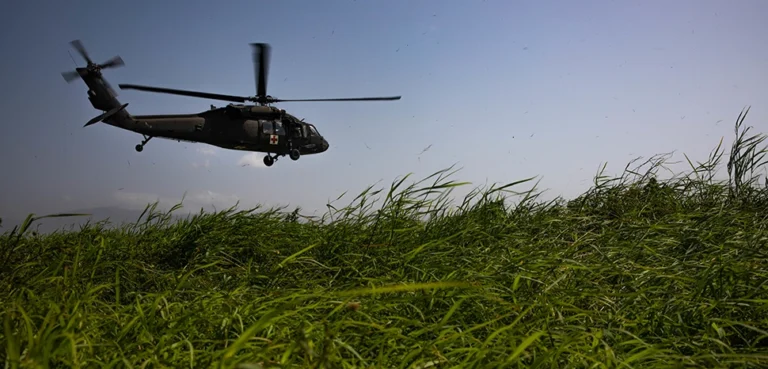
To offset its disadvantage, Guyana has deepened its security relationships with key partners. The United States has become its top military ally, supplying maritime assets, helicopters, and training through Southern Command and joint exercises. India has donated aircraft and is in talks to provide additional patrol boats and weapons. Brazil provides training, and CARICOM backs Guyana diplomatically and through the Regional Security System, which Guyana’s National Assembly approved engagement with earlier this summer. While the GDF remains lightly equipped, this growing network of partnerships helps raise the cost of any potential aggression by Venezuela and reinforces Guyana’s broader geopolitical relevance.
Members-Only Analysis
Subscribe now to finish reading
$99/year — Save $21 on unlimited, ad-free access
- Weekly newsletter on geopolitical risk factors worldwide
- Thousands of archived articles on global geopolitics
- Premium reports with conflict maps and economic indicators