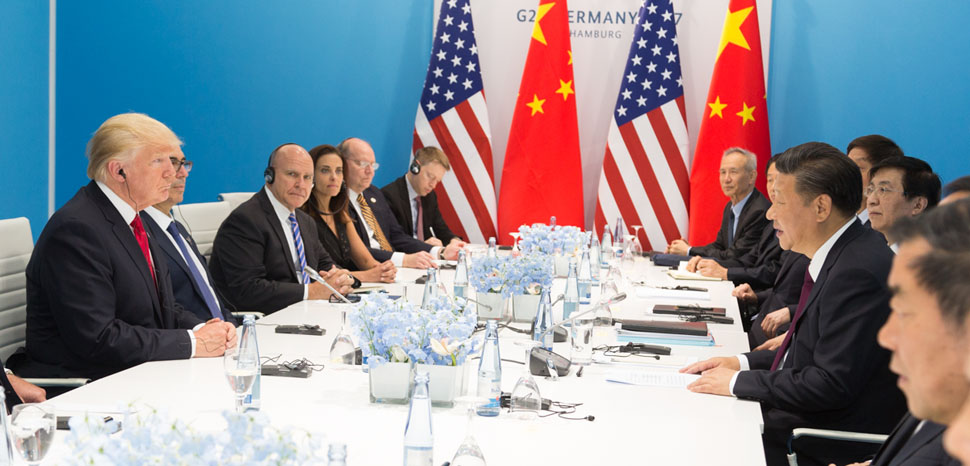
China and the United States are hurtling toward an unprecedented trade war, with both sides taking turns escalating threats of new sanctions on the other.
Although as yet none of the targeted tariffs have actually gone into effect, they represent a potential shock to both economies, one that has investors on both sides of the Pacific alternating between dread, incredulity, and relief with every new headline.
It was under this kind of scrutiny that President Xi Jinping delivered his speech at Bo’ao earlier this week. The speech included many conciliatory pledges, including that China would lower tariffs on vehicle imports, boost enforcement on intellectual property, deregulate the financial industry, and broaden market access in a several key sectors.
The promises were welcomed by media outlets and investors alike, who regarded them as new concessions that would help to deescalate trade tensions. But a look back at recent history reveals that the pledges are not new; they have been made before, frequently, and remain unrealized.
Will this time be any different?
Impact
The Bo’ao Forum for Asia: circled on the calendar of every reform optimist. The Bo’ao speech did not come in response to the brewing trade war between the United States and China. Rather it has long been a scheduled appearance for President Xi Jinping, and many reformers were pinning their hopes on it well before these recent trade tensions erupted. For the optimists, the Bo’ao appearance was going to lay out President Xi’s approach to reform now that he is secure in his position at the very top of Chinese political power, perhaps now for the rest of his life. For the pessimists who have concluded that ‘what you see is what you get’ with President Xi, it was going to produce nothing more than flowery broad strokes on the need for globalization, with the details, timelines, and implementation of specific reforms left to a vague oblivion.