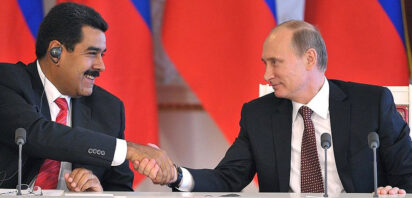
One week after Nicolás Maduro’s capture, ExxonMobil CEO Darren Woods told President Trump at a White House meeting that Venezuela is “uninvestable.” Woods specified: “There are a number of legal and commercial frameworks that would have to be established to even understand what kind of returns we would get on the investment.” Trump had promised oil executives “total safety, total security” and stated they would be dealing with Washington rather than Caracas. Hours after the meeting, however, administration officials acknowledged no major investment commitments had been secured.
The gap between what Trump promised and what oil executives were willing to commit reveals a fundamental tension between how political authority operates and how capital allocation decisions are made. On the surface, the operation succeeded tactically. Maduro was extracted and removed from governance. But what ensued could be labelled as strategic incoherence. The operation removed the head of state but left the regime intact. The interim government under Vice President Delcy Rodríguez retains the security apparatus and institutional structures of the previous regime. No credible transition framework has been established. Most critically, no mechanism exists for insurance markets to underwrite the political and commercial risks that oil investment requires.
This matters because insurance functions as a primary vehicle through which great powers project economic influence in modern markets. Without insurance companies willing to cover Venezuelan risks, tactical military success faces obstacles translating into sustained economic engagement.
Tactical Success, Strategic Incoherence
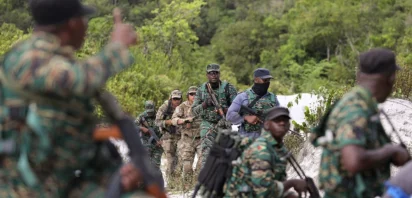
The operation removed Maduro but left institutional architecture in place. Rodríguez is a longtime Maduro ally with deep ties to security services and the political elite that managed Venezuela’s collapse. The judiciary remains unchanged. The same bureaucrats who administered asset expropriations still run the ministries. Trump stated the United States would “run” Venezuela, but the institutional mechanism for this arrangement remains unspecified. Questions about governance authority, duration, and legal framework have not been publicly clarified.
The governance ambiguity extends to competing claims about control. Vice President JD Vance stated that “we control the energy resources, and we tell the regime: you’re allowed to sell the oil so long as you serve America’s national interest.” Rodríguez responded that “no foreign agent [is] governing Venezuela.” When senior American and Venezuelan officials publicly contradict each other about governance authority, investors face uncertainty about who holds decision-making power. This uncertainty reflects Rodríguez’s position: she must balance competing demands from the Trump administration and Venezuelan hardliners who control security forces and paramilitaries, attempting to hold together a fragile coalition without a strong electoral mandate.
Beyond governance confusion, Trump’s January 9 executive order declaring a national emergency to protect Venezuelan oil revenue created another layer of legal complexity. The order nullifies existing arbitration judgments. ConocoPhillips holds a $2 billion award. ExxonMobil secured $1.6 billion. When ConocoPhillips CEO Ryan Lance raised his company’s $12 billion claim at the White House meeting, Trump responded: “We’re not going to look at what people lost in the past because that was their fault.” The executive order declaring such judgments “null and void” demonstrates executive authority overriding legally binding international awards. For insurers attempting to price expropriation risk, this creates new uncertainty. If legally binding arbitration judgments can be nullified when strategically convenient, the question becomes what legal protections will be honored going forward.
When evaluating Venezuelan exposure, investors price risk according to institutional predictability. Political assurances factor into analysis but cannot substitute for verifiable institutional frameworks. Yet the operational questions investors require remain unanswered. Who holds legal authority over contracts? What dispute mechanisms exist? How are property rights enforced? These questions currently lack clear answers. The operation removed Maduro but created new uncertainties about governance legitimacy and legal continuity.
The Oil Factor
The governance problem compounds a more fundamental challenge. Venezuela’s oil reserves are repeatedly invoked as the strategic prize. But what this framing obscures is the distinction between oil in the ground and oil that can be economically extracted. Venezuelan crude is predominantly heavy and extra-heavy, requiring specialized refining. Infrastructure has deteriorated comprehensively. Production collapsed from over three million barrels daily in the 1990s to under one million recently. Meanwhile, the state-owned oil and gas company, Petróleos de Venezuela S.A. (PDVSA) operates under massive debt and faces arbitration claims now nullified by executive order.
Recovering Venezuelan oil production requires billions in sustained investment over years. That capital flows when legal and regulatory conditions provide predictability. Oil projects operate on 10 to 20 year horizons. ConocoPhillips CEO Ryan Lance told Trump that the banking sector will need to help restructure Venezuela’s debt and provide billions of dollars in financing and called for restructuring the entire Venezuelan energy system, including PDVSA. Lance was describing comprehensive institutional reconstruction. His requirements (debt restructuring, PDVSA rebuilding, new commercial frameworks) extend beyond political reorientation to fundamental economic reorganization.
This explains the cautious response from US oil majors. The White House meeting revealed a split between company types. Small independent producers expressed interest. Hilcorp Energy’s chairman declared his firm “fully committed and ready to go.” Yet Treasury Secretary Scott Bessent acknowledged a different reality: “The big oil companies who move slowly, who have corporate boards, are not interested.” This distinction matters. On the one hand, small independents lack capital for transformative investment. On the other hand, the companies with capacity to deploy $100 billion require sophisticated political risk insurance that current conditions make difficult to obtain. Energy Secretary Wright acknowledged the $100 billion investment target remains aspirational: “That’s not next week, that’s not next month, but that’s the trajectory we’re aiming to get on.”
The temporal mismatch runs deeper. The administration promised investments “up and running” in 18 months. However, industry experts estimate 18 to 36 months for brownfield restart of existing facilities, and 3 to 7 years for larger rebuilds. As Aníbal Páez highlighted, “Big projects don’t live on election cycles, they live on 10 to 20 year timelines for ROI.” The temporal divergence suggests different assumptions about reconstruction scope and timeline.
Insurance: The Invisible Architecture of Power Projection
Political risk insurance functions as a structural prerequisite for oil investment, not an optional supplement. The capital deployment chain operates through multiple checkpoints: Banks require insurance covering collateral before providing project finance. Equity investors require coverage protecting ownership stakes before committing capital. This creates a sequential dependency – without insurance approval, financing arrangements cannot be finalized, and without financing, investment cannot proceed at scale. Presidential assurances of “total safety” address political concerns but do not satisfy the actuarial requirements that banks and investors use for capital deployment decisions. For Venezuelan projects, however, no such policies have been announced.
The Final Investment Decision process makes this requirement explicit. Companies must prove reserves, price reconstruction costs, and run scenarios covering oil prices, delays, tax changes, accidents, and expropriation. Lawyers examine contracts, but contract enforceability depends on functional court systems. Physical asset protection requires clarity about security force control and reliability. Investment boards evaluate whether risks can be insured or controlled within acceptable parameters before approving projects. Insurance approval determines whether investment proceeds. For Venezuela, insurance companies face conditions that make approval difficult – courts whose reliability is contested, security forces whose command structure remains unclear, and governance arrangements whose duration is undefined.
Insurance underwriters evaluate political and legal environments, determine whether risks can be quantified, and either offer coverage or decline entirely. Post-Maduro Venezuela presents conditions that make underwriting structurally difficult. The absence of announced coverage reflects these structural obstacles.
The problem begins with basic prerequisites. Insurance underwriters require stable reference points to measure risk against. They need functioning institutional frameworks, predictable legal systems, assessable security conditions, and governance stability. Venezuela currently offers limited clarity on any of these parameters.
Governance structure stability is the first prerequisite. Venezuela lacks constitutional clarity about the interim arrangement. The legal basis for Rodríguez’s authority is disputed domestically by opposition figures and contested internationally by governments that don’t recognize her legitimacy. The interim arrangement has no defined duration, no specified succession mechanism, no articulated process for establishing permanent governance. As a result, Rodríguez faces pressure from the Trump administration on one side and Venezuelan hardliners controlling security forces on the other. From an underwriter’s perspective, this creates a governance environment where authority appears divided between US control of revenue streams and Venezuelan hardliners’ control of coercive apparatus. Insurers struggle to price political risk when power distribution remains unclear and potentially unstable.
Legal framework continuity presents equal challenges. Venezuela’s bilateral investment treaties remain nominally in force, but their enforceability under interim governance of contested legitimacy creates fundamental ambiguity. The executive order asserting sovereign immunity over Venezuelan funds indeed compounds this complexity. When executive orders can nullify court judgments and invoke sovereign immunity selectively, the legal framework itself becomes difficult to quantify for risk purposes. For insurers pricing expropriation coverage, basic questions lack answers: Who holds authority to issue operating licenses? Under what standard can contracts be modified? How are disputes adjudicated when governmental legal standing is contested? In conventional emerging markets, these questions have established answers. In post-Maduro Venezuela, however, the frameworks themselves remain contested. Insurance underwriters cannot price risks when the legal system’s basic parameters are undefined.
Physical security infrastructure presents additional obstacles. State Department advisories urge Americans to leave Venezuela, citing paramilitary activity and security threats the interim government cannot fully control. Oil infrastructure requires physical protection across dispersed geography. Yet Venezuela’s security apparatus remains institutionally unchanged but operates under interim governance whose authority is contested and whose duration is undefined. For underwriters assessing kidnapping, sabotage, and terrorist attack risks, clear answers are needed about who controls security forces and how reliably they respond to threats against insured assets. Venezuela cannot currently provide those answers.
Beyond these immediate concerns, long-term predictability may be the most fundamental requirement. Venezuela currently lacks it. Energy projects operate on 10 to 20 year horizons. Yet Venezuela’s interim governance explicitly lacks temporal stability. No transition timeline has been specified. From an actuarial standpoint, underwriters pricing twenty-year political risk coverage need reasonable confidence about governance continuity across that period. Venezuela’s current arrangement provides none.
The State’s Hands Are Tied
Even state-backed insurance mechanisms face these constraints. The US International Development Finance Corporation could theoretically provide guarantees, but such guarantees typically require host governments with clear legal standing. Private insurance markets impose stricter standards. Lloyd’s syndicates and multilateral institutions like MIGA underwrite according to frameworks prioritizing institutional clarity. These entities regularly price elevated risks in conflict zones and fragile states. What they require is that risks be quantifiable based on stable structural parameters. Post-Maduro Venezuela presents conditions that make underwriting structurally difficult. No political risk insurance coverage for major Venezuelan oil investments has been announced.
The underwriting challenge reveals a dimension that remains unresolved. Insurance mechanisms function as primary vehicles through which great powers project economic influence. The Marshall Plan succeeded partly because American insurance backing made European reconstruction bankable despite post-war devastation. Similarly, China’s Belt and Road Initiative operates through Sinosure, providing coverage for infrastructure projects that Western commercial insurers typically decline.
The distinction between political systems matters here. In China, top-level political directives can translate into capital deployment despite elevated risk. In the United States, by contrast, as Aníbal Páez noted, “you can’t order private companies to sink tens of billions into a country and just hope they salute. There are shareholders, lawyers, insurers, boards, and risk people involved.” In market economies, insurance companies impose requirements that political authority cannot override through executive decision alone.
The operation captured Maduro, but the insurance architecture that would enable major oil investments is still missing. No public guarantee program has been announced, and there has been no visible mobilization of multilateral political risk insurance capacity to support commercial entry at scale. If engagement with underwriters is happening, it has not been translated into a credible framework that banks and boards can rely on. Until it is, the capital required to rebuild Venezuelan production remains structurally constrained.
Power Without Projection
The Venezuela operation exposes a fundamental asymmetry, where two forms of authority operate according to different logics. Political authority that removes leaders through military force. Market authority that allocates capital through institutional assessment and risk underwriting. They operate by different rules and timescales. Executive orders can protect oil revenue from creditor claims. However, they cannot create legitimate governance, establish clear legal frameworks, ensure predictable security conditions, or provide long-term institutional stability. The executive order demonstrated that legal protections can be modified through executive discretion. That flexibility makes insurance risk assessment more complex, not simpler.
This matters because in contemporary great power competition, control over insurance mechanisms may matter as much as military force for achieving lasting economic influence. China structured Belt and Road around insurance capacity provided by Sinosure. Likewise, the United States created post-World War II reconstruction architecture around American insurance backing. The operation in Venezuela succeeded at its tactical military objective while exposing challenges in establishing the institutional mechanisms required for sustained economic engagement.
The operation achieved military objectives but has not yet translated into economic access to Venezuelan oil. The interim government faces constraints in facilitating major investment because institutional foundations remain contested or absent. The capture demonstrated what military force can accomplish. It simultaneously revealed what military force alone cannot create: stable governance with constitutional legitimacy, clear legal frameworks with enforceable property rights, predictable security conditions, and insurable risk environments.
One week after Maduro’s capture, Venezuela remains strategically visible but economically difficult to access. US military power proved sufficient to extract a head of state. Converting that tactical success into sustained economic engagement requires institutional architecture that executive authority alone cannot establish – the insurance mechanisms that enable capital deployment, the legal frameworks that make risks quantifiable, and the governance stability that allows twenty-year commitments. The operation succeeded at what military force does well. What follows requires different instruments operating on different timescales.