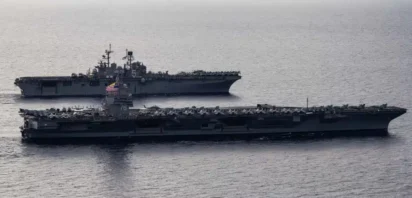
The Indo-Pacific region has emerged as one of the most geopolitically important regions in the world in the 21st century. China’s growing assertiveness over Taiwan and rising tensions in the South China Sea have made the strategic importance of military exercises here more critical than ever. Talisman Sabre 25, the largest joint military exercise between the United States and Australia, represents a powerful signal of allied readiness, technological advancement and regional deterrence. With participation from 19 nations, the deployment of advanced weapons systems such as HIMARS and next-generation ATACMS missiles, and an emphasis on multi-domain warfare, Talisman Sabre 25 demonstrates not just military might but also the growing resolve of the international community to secure free and open Indo-Pacific.
Scale and Scope of Talisman Sabre 25
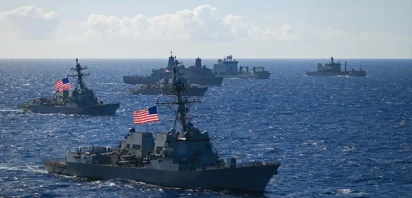
Talisman Sabre, conducted biennially since 2005, is the keystone of US-Australia defense cooperation. The 2025 iteration has grown significantly since its initial form in 2005. This cycle will see more than 35,000 military personnel from 19 nations participating across air, land, sea and cyber domains. These nations include key Indo-Pacific players such as Japan, South Korea, Canada and India, as well as the major European powers namely France, Germany and the United Kingdom. This broad participation will not only enhance interoperability among allied forces but also send a clear message that the Indo-Pacific security architecture is a collective responsibility.
The scale of the exercise clearly demonstrates the strategic importance of the region. Talisman Sabre 25 is designed to simulate complex, multi-domain combat scenarios that mirror the geopolitical tensions facing the region today. While past iterations were more focused on conventional warfare scenarios, this year’s exercise introduces new aspects, such as cybersecurity, space-based capabilities, and information warfare – areas that are increasingly important in contemporary conflict.
Advanced Weaponry in 2025 Exercise
One of the key features of Talisman Sabre 25 is the deployment of cutting-edge military technologies that are reshaping the nature of war. Among the most notable systems being deployed is the High Mobility Artillery Rocket System (HIMARS), a mobile artillery system capable of launching precision-guided rockets over long distances. The presence of the system, which has proved itself on the battlefield (e.g., the Ukraine war), showcases the growing significance of the exercise over the years. HIMARS is particularly important in countering the anti-access/area-denial (A2/AD) capabilities of potential adversaries, especially China, whose growing missile presence in the South China Sea poses a significant threat to regional stability.
In Talisman Sabre 25, HIMARS will be integrated into joint strike operations, demonstrating its ability to quickly neutralize key targets, such as enemy air defense systems or command and control hubs. This capability provides a level of flexibility and rapid-response capability that enhances the operational effectiveness of US-Australia forces.
The exercise also features the deployment of next–generation ATACMS missiles, further extending the range and lethality of allied forces. These missile systems are designed to hit high-value targets with unprecedented precision, offering a significant strategic advantage in any regional conflict, particularly in scenarios involving Taiwan or the South China Sea.
Strengthening Alliances and Regional Security Cooperation
Talisman Sabre 25 is also a demonstration of the strength of the US-Australia alliance, which is central to the broader Indo-Pacific security architecture. Through this exercise, the U.S. and Australia continue to deepen their defense relationship, enhancing their ability to operate seamlessly in high-stakes environments. The integration of cutting-edge technology, shared logistical support, and military interoperability provides both nations with a heightened sense of readiness and strategic flexibility.
Furthermore, the exercise underscores the importance of broader regional security cooperation. The participation of India, Japan, and South Korea highlights the growing ties between Indo-Pacific democracies and the shared commitment to countering China’s growing influence. For instance, Japan’s involvement strengthens the ability to coordinate responses to a potential conflict in the East China Sea or Taiwan Strait, while India’s participation reflects a shared interest in maintaining freedom of navigation in the South China Sea. Participation of France and Germany also underscores the role of NATO partners in addressing the evolving security threats of the Indo-Pacific.
Talisman Sabre 25, therefore, is not just a military exercise; it is a symbol of commitment—a demonstration that these nations are united in their resolve to uphold the rules-based international order in the region.
Implications for the Future of Warfare and Alliances
Looking forward, the Talisman Sabre exercise is likely to evolve in response to emerging technologies and changing security dynamics. The growing emphasis on cyber defense, space operations, and AI integration will become more pronounced in future exercises as these technologies play an increasingly significant role in modern warfare.
Moreover, as the US-Australia alliance continues to strengthen, the impact of AUKUS (the trilateral security pact between Australia, the US and the UK) will likely expand the scope of future exercises, incorporating even more advanced systems like AI technology and autonomous vehicles.
Talisman Sabre 25 thus provides an essential platform for not only preparing forces for current threats but also for shaping the future of military cooperation in the Indo-Pacific. It could serve as a critical benchmark for how multinational forces can work together to address evolving geopolitical challenges, particularly those posed by China.
The views expressed in this article belong to the author(s) alone and do not necessarily reflect those of Geopoliticalmonitor.com.