The governments of the United States, United Kingdom, and Australia have announced a new defense partnership, dubbed “AUKUS.” The deal foresees “deeper information and technology sharing… [along with] deeper integration of security and defense-related science, technology, industrial bases, and supply chains… in particular, we will significantly deepen cooperation on a range of security and defense capabilities.” The joint declaration also commits to “triliteral collaboration… to enhance our joint capabilities and interoperability” and closes with the mission statement of “[helping] to sustain peace and stability in the Indo-Pacific region… to protect our shared values and promote security and prosperity.”
While China does not appear in the official statements, it’s clear who this new defense agreement is aimed at.
Analysis
The AUKUS pact continues the trend of democratic states banding together to voice their concern over issues such as China’s militarization of the South China Sea, the political situation in Hong Kong, and mass-incarceration of ethnic Uighurs in Xinjiang. This trend was most recently evident during the Quad’s virtual summit in March and the G7’s June summit in the United Kingdom. However, this latest AUKUS pact is arguably more impactful than previous examples for a number of reasons:
The tone of the pact and a newfound willingness to antagonize Beijing
Though China isn’t mentioned directly in the text, it’s clear who the pact is aimed at, and unsurprisingly AUKUS is being attacked as a dangerous example of “geopolitical games” by the Chinese foreign ministry. There are clear potential trade repercussions for Australia and, to a greater extent, the United Kingdom as well, but both governments opted to proceed with the pact regardless. This represents a new development over the past year, and it’s a sharp break from the past. Consider that the Rudd government pulled Australia out of the Quad in 2008 for fear of antagonizing Beijing and jeopardizing the bilateral trade relationship. Fast-forward to 2021 and said trade relationship is now under immense strain, with the most resilient Australian exports being only those strategic commodities that China cannot source elsewhere (i.e, iron and to a lesser extent bauxite). The same period has witnessed a transition from caution to eager acceptance in Canberra’s approach toward the US security umbrella.
Acquisition of nuclear submarines mirrors a changing geopolitical landscape
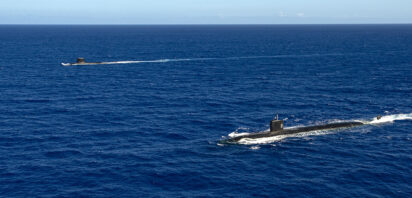
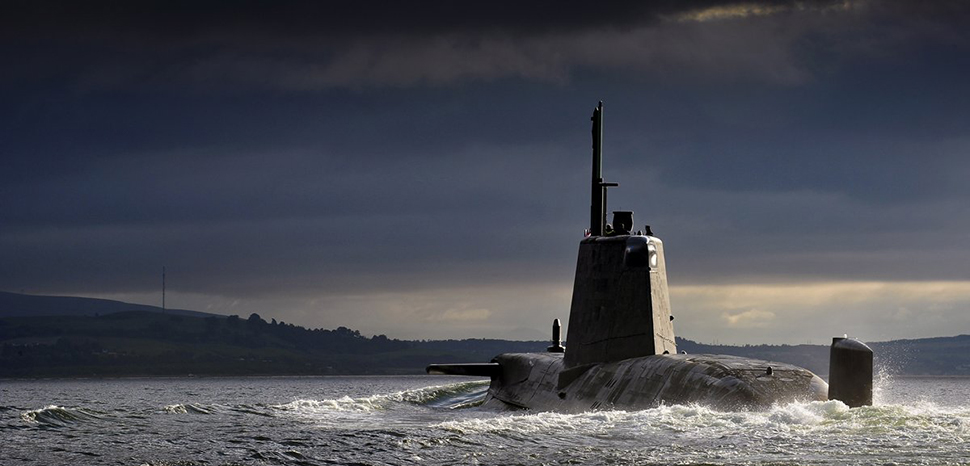
Australia’s acquisition of US technology is the natural result of new geopolitical dynamics, as nuclear-powered submarines are the logical choice for establishing a deterrent against China: 1) they have a much wider range than diesel submarines; 2) they can remain submerged for much longer durations and are thus harder to detect; and 3) they can theoretically mitigate some – though not all – of China’s rapidly-evolving anti-submarine warfare capabilities. The vessels would also be interoperable with the UK and US fleets and their support systems (i.e, target acquisition/threat detection), which could well prove invaluable in the event of a future conflict. The technology transfer and stress on interoperability are significant in that they represent a more substantive move to counter China in the Indo-Pacific, rather than the rhetorical and ultimately empty posturing of most diplomatic statements. Such a technology transfer has happened only once before, in 1958, when Britain acquired nuclear submarine propulsion technology from the United States.
France and the European Union take the ‘L’
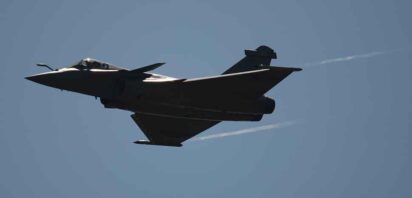
Inherent to Australia’s embrace of AUKUS is the subtext that only the United States has the military weight and political will to provide Canberra with leverage vis-à-vis China. The move comes at the direct expense of France, whose state-owned DCNS lost a $90-billion contract to produce conventional submarines in Australia. The French deal was originally signed in 2016 and had suffered a series of delays, cost overruns, and disputes over where the subs would be built. Nonetheless, Paris has described the pivot toward AUKUS as a “stab in the back.”
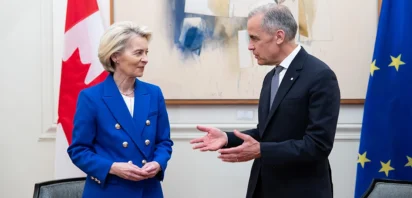
The move comes as a blow to the EU’s defense industries, which have been targeted for support and consolidation by the European Commission. It also lays bare Brussels’ conspicuous absence as a strategic player outside of its immediate neighborhood, such that the bloc can apparently be totally sidelined from security planning in the Indo-Pacific. Needless to say: the optics are bad, and they will inevitably produce a new round calls for the EU to reduce its military (and thus diplomatic) overreliance on the United States.
The timing is also unfortunate as Brussels is expected to unveil its own Indo-Pacific strategy in the next few days.
What will the blowback be?
China’s response to the AUKUS pact will be telling. Numerous sanctions have already been slapped on Australian exports, and taking aim at the remaining top export of iron ore would be an act of self-harm for Beijing. The UK on the other hand, which back in 2015 was boasting of a ‘golden era’ in UK-China ties, has also seen its relationship with Beijing erode on the back of Hong Kong, the Huawei ban, and public criticism of mass incarceration in Xinjiang. London seems to have trapped itself in a contradiction whereby realizing the idea of “global Britain” comes at the expense of its once-amenable relationship with China (just today the Chinese ambassador was banned from speaking in Parliament over China’s sanctioning of parliamentarians).
Ultimately, the AUKUS pact is significant in that it symbolizes a shift from style to substance in countering China’s rise in the Indo-Pacific. However, expect Beijing’s response to be less focused on punishing individual AUKUS members – all of which are navigating various levels of antagonism in their bilateral relations with China – and more about pushing ahead with its own military modernization and, if possible, driving a wedge between the United States and the European Union in their commitments to the Indo-Pacific region.