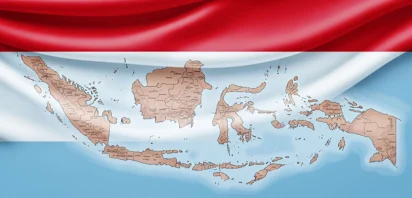
When the cameras keep finding the same pattern — vague online laws used to punish critics, journalists threatened with violence, civic protests met with heavy policing — it is no longer enough to lament democratic backsliding. Indonesia must be challenged with an argument it cannot ignore: free expression and a robust press are not optional civic luxuries but the very architecture that sustains accountable government, public health, investment and social cohesion. Recent years have seen a disturbing narrowing of that architecture.
Between 2019 and 2024 Amnesty documented more than 530 instances where online expression was criminalized under the ITE framework; Reporters Without Borders placed Indonesia 127th out of 180 countries on its 2025 Press Freedom Index; and watchdogs logged a sharp rise in attacks on journalists covering protests and sensitive issues. These are not abstract rankings — they are warning lights that require immediate policy redress.
Press Freedom in Indonesia: Theory and Reality
Indonesia’s legal commitments are broad and admirable on paper. The 1945 Constitution guarantees the rights to associate, assemble, and express opinions, and the Press Law (UU No. 40/1999) forbids prior censorship and affirms media independence. Indonesia is party to the ICCPR and has embraced the UN Sustainable Development Goals, including SDG 16’s call for effective, accountable and inclusive institutions. Yet, a cluster of overlapping laws and hurried amendments has eroded these guarantees. The Electronic Information and Transactions Law (ITE), especially in its revised form, criminalizes amorphous offences — from ‘violating propriety’ to ‘causing hostility’ — and has been repeatedly used to prosecute social-media speech that in democratic norms would be protected political expression.
The cumulative effect is chilling: ordinary citizens, activists and journalists face legal uncertainty; platforms and outlets practice pre-emptive self-censorship; and public conversation narrows at precisely the moment Indonesia needs it to widen.
Legal change has been accompanied by an expansion of state control over digital space and a worrying normalization of surveillance. Ministerial rules that obligate platforms to register and remove content, patchy privacy protection under the Personal Data Protection Act, and reports that authorities have acquired commercial spyware to track critics together create an environment in which online dissent can be criminalized, tracedm and punished. In practice, ‘virtual police’ patrol social media while draft police and military laws threaten to widen surveillance and blunt judicial oversight. These are not merely technical problems for IT specialists; they are constitutional and human-rights problems that alter citizens’ expectations of privacy and safety online, and they empower coercive responses to legitimate dissent.
The pressure on journalists is intense and growing. Independent unions and monitoring groups record an uptick in physical attacks, legal harassment, and death threats. In early 2025 AJI documented dozens of assaults and legal threats against reporters covering protests; media offices received grotesque intimidation — from severed animal heads to death threats — tactics that aim to terrorize reporters and degrade public discourse. Impunity compounds the damage: crimes against journalists frequently go unresolved, reinforcing a culture in which violence deters scrutiny. When the watchdogs are muzzled, corruption and malpractice flourish in the shadows — a direct threat to the public interest and to the sustainable development Indonesia claims to pursue.
The flashpoint of August 2025 made these trends painfully visible. Investigative revelations about MPs’ extraordinary housing allowances — reported at roughly ten times the Jakarta minimum wage — combined with the viral footage of a 21-year-old motorbike taxi driver crushed by an armored police vehicle to generate nationwide protests. Tens of thousands took to the streets; police reported more than 600 arrests; and, tragically, at least one protester was killed while hundreds were injured. Journalists covering demonstrations were targeted, their footage deleted or confiscated, and authorities moved to limit livestreaming on platforms. International observers from UN human-rights mechanisms and civil-society networks characterized some police responses as excessive, calling for independent inquiries and stronger protections for press workers. These events were not isolated incidents but the public manifestation of a legal and operational system that currently privileges order over rights.
The costs are neither symbolic nor confined to the political sphere. An inhibited press and shrinking civic space have measurable development consequences: they undercut anti-corruption efforts, reduce governmental transparency on procurement and budgeting, and erode investor confidence. The UN’s SDG framework explicitly ties media freedom and institutional transparency to sustainable development outcomes; when civic scrutiny is constrained, public services suffer and inequalities deepen. Conversely, where free expression is protected and journalists can work safely, governance improves, corruption indicators fall, and policy outcomes are demonstrably better.
Toward Policy Solutions
This is not a theoretical trade-off — it is evidence from comparative governance research and development practice. Policy change must be immediate, comprehensive, and measurable.
First, revise the ITE and related criminal-defamation provisions so that mere insult, vague ‘propriety’ claims, and non-violent online commentary are removed from the criminal code and dealt with through civil remedies. The International Commission of Jurists and Amnesty have made the point starkly: prison is never an appropriate punishment for defamation. Legislative revision should be accompanied by a statutory commitment that any remaining restrictions meet the ICCPR’s strict tests of legality, necessity and proportionality.
Second, strengthen and resource the Freedom of Information framework so that proactive disclosure of budgets, contracts and legislative drafting becomes routine; Komisi Informasi must be empowered to enforce FOI decisions with sanctions for non-compliance, and government agencies should publish machine-readable data to enable journalistic and civic analysis. These steps will make secrecy more difficult and governance more legible to citizens.
Third, protect journalists through concrete protections and enforcement mechanisms. Adopt and implement the UN Plan of Action on the Safety of Journalists: create emergency hotlines, rapid-response legal aid, and a national tracking mechanism for attacks on media workers that is publicly reported. Investigate assaults and death threats promptly and transparently, ensuring that perpetrators — including any state agents implicated — are prosecuted. Provide funding streams for regional and community journalism so independent reporting is not concentrated only in Jakarta but distributed across provinces, reducing the vulnerability of regional reporters who often work without institutional backing.
Fourth, reassert judicial and parliamentary safeguards against overbroad surveillance and unchecked police powers. Any expansion of police or military authority must be accompanied by prior judicial authorization, sunset clauses, and independent oversight. Pending bills that grant broad surveillance powers or expand military roles in civilian functions should be tabled for public consultation and independent review. Equip courts, ombudsmen and Komnas HAM with the technical and forensic capacity to review digital-surveillance warrants, and require transparency reports on surveillance use, grounds and outcomes. These procedural guardrails preserve security interests while protecting civil liberties.
International partners have a clear, constructive role — not to lecture but to support institutional resilience. Multilaterals and bilateral partners, including UNESCO, UN OHCHR, and the World Bank, should align assistance behind a results framework: legal reform milestones (ITE amendments passed, removal of criminal defamation), operational protections for journalists (hotline, rapid response teams), and data-transparency outputs (open budgets and FOI enforcement). Conditional technical cooperation — judicial capacity building, forensic training for independent investigations, support for public-interest legal defense funds — will multiply domestic efforts. Careful diplomacy can also support constructive space for civil society, ensuring that assistance strengthens accountability rather than enabling professionalized impunity.
The stakes are critical for Indonesia’s democratic future. Restoring civic space is not a soft-power luxury; it is a strategic necessity for building trust, fostering development, and enhancing regional credibility. The reforms suggested here are practical and politically achievable: repeal criminal defamation laws, modernize the ITE, fully implement FOI, safeguard journalists from violence, and support decentralized public-interest media.
Collectively, these measures will halt the decline of press freedom and revitalize the public sphere. For a nation whose constitution and international commitments already safeguard speech rights, these actions are about respecting the law and renewing a shared civic commitment. The choice is stark but simple — to allow a narrowing public sphere that weakens institutions and stifles development, or to act decisively and restore the conditions for open debate, accountability and a healthier democracy.
The views expressed in this article belong to the author(s) alone and do not necessarily reflect those of Geopoliticalmonitor.com.