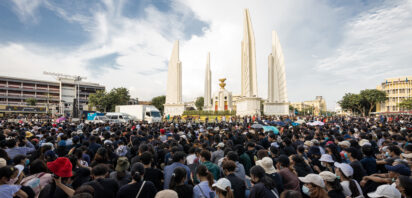
Jakarta is burning with a new kind of fury — one that tastes less of ideology and more of raw, civic betrayal. On 25 August thousands of mostly young people poured into the city’s central precincts after it emerged that members of the House of Representatives had been receiving a monthly housing allowance of roughly Rp50 million (about US$3,075), a sum that landed like an insult in a country where many survive on a few dozen thousand rupiah a day. What began as outrage at perceived parliamentary excess quickly became a broader rupture: shops shuttered, toll roads were blocked, trains rerouted, and for hours the city’s ordinary rhythms — schools, markets, commutes — were held hostage to the spectacle of protest. The confrontation at Senayan, where police deployed more than 1,200 officers and used water cannon and tear gas to repel demonstrators, was a blunt reminder that Indonesian democracy still looks to the streets when formal channels feel opaque.
This is not merely theatre. The anger on Jakarta’s streets is anchored in real grievance and real pain. The protest came on the back of a wave of localized fiscal shocks — most famously a 250 per cent land-tax hike in Pati Regency that ignited mass demonstrations in Central Java — and amid broader economic fragility as manufacturing jobs continue to vanish. Indonesia lost some 42,000 manufacturing posts in the first half of 2025 as firms retrenched and investment reoriented toward capital-intensive commodity sectors, squeezing the pathways that once absorbed large cohorts of school and university grads. Youth unemployment remains high by regional standards: roughly 13 per cent of young people were out of work in 2024, a structural pressure that gives these protests a distinctly economic edge. When citizens see lawmakers enjoying steep perks while public services face cuts, protest becomes a direct expression of fiscal indignation.
There is an important historical arc to this rage. Indonesia’s post-1998 Reformasi taught a generation that citizens can topple entrenched power and demand accountability; that lesson lies behind the moral urgency of today’s demonstrators. But the 1998 legacy is doubled: it created institutional openings for plural politics while also setting lofty expectations for public probity that successive governments have struggled to meet. Freedom House and human-rights monitoring groups continue to flag corruption, shrinking civic space in some areas, and legal changes since the pandemic that have tilted power toward the executive — facts that help explain why ordinary citizens still see the street as the ultimate check on elite behavior. Protest culture remains a democratic asset only so long as it returns citizens to stronger institutions rather than eroding them; that balance now looks perilously thin.
The shape of mobilization has changed. These recent actions were leaderless in the old sense: Whatsapp threads and X posts seeded mobilization faster than campus caucuses or trade unions could either endorse or disown them. That digital speed is double-edged. It lowers the barriers for legitimate civic action and provides breathing space for genuine grievances to find expression. But it also creates coordination problems that make negotiation harder, and it increases vulnerability to capture by agitators or disinformation. When mainstream student bodies and unions publicly dissociate from a demonstration, it is often not because they oppose the underlying grievance but because leaderless mobs are harder to steer toward durable outcomes. In that ambiguity lies the risk that raw protest will be recycled into cycles of disruption rather than routed into reform.
Lessons Learned from the Jakarta Protests
If we view these events through a policy lens, three linked deficits stand out: transparency, voice, and economic opportunity. Transparency is the clearest: parliamentary and municipal fiscal decisions that affect everyday lives must be made visible in real-time. Indonesians are right to ask why an allowance that would radically outstrip most salaries was debated and implemented without a public accounting of the trade-offs. Voice matters because, when institutional avenues for redress feel closed or performative, citizens will find other routes. And economic opportunity matters because the best short-term antidote to street volatility is steady, widely shared livelihoods: the deep structural challenge is to create decent, accessible jobs that leave fewer youngsters alienated and angry. These are not abstract prescriptions; they are practical priorities that can be translated into clear policy measures.
Governments can and should act on all three fronts immediately:
- Transparency: full, machine-readable disclosure of MPs’ compensation packages and any additional allowances should be standard practice, accompanied by an obligation to publish impact assessments before adjustments that materially change public expenditure. A simple legal requirement — mandating a 30-day public comment period and an independent audit for any new or enlarged benefit above a set threshold — would substantially reduce the sense of arbitrary elite enrichment.
- Voice: institutionalize youth and community advisory councils at municipal and national levels, backed by legislative standing so they cannot be ignored as mere optics. These councils would not replace representative democracy but would create structured pathways for school and university delegates, gig workers, and informal-sector leaders to air grievances and shape policy before frustration turns to the street.
- Jobs: redirect urgent fiscal and industrial policy to revive labor-intensive manufacturing and services sectors that can absorb young people — targeted tax credits, rapid-training vouchers, and small-firm procurement clauses can move thousands from precarity to stability within a political cycle. UN and multilateral partners — from UNDP to the ILO — stand ready with technical tools and financing windows that can be deployed for such efforts; constructive engagement here is both feasible and necessary.
Security responses also need a rethink. Maintaining public order is the state’s job, but the methods matter. Policing tactics that emphasize de-escalation, community liaison officers and independent monitors reduce the risk of confrontation spiraling into violence; tactics that prioritize containment and crowd suppression often deepen grievance. International best practice advises designated protest corridors, advance liaison arrangements between organizers and authorities, and quick-response mediation teams to prevent flashpoints from erupting into broader civic crises. The UN’s guidance on civic space and peaceful assembly — and the OHCHR’s concerns about rights protections in Indonesia more broadly — underline the need for policing that protects liberties as well as order. Ensuring that police practice aligns with those international standards will signal to citizens that the state is serious about both security and rights.
Civil society has a central role to play in rebuilding trust. Media organizations and NGOs should prioritize rapid fact-checking, legal aid for arrested peaceful demonstrators, and community mediation programs that turn tumult into conversation. Universities can do far more to institutionalize channels for student input: rather than merely policing campus activism, university administrations should grant formal liaison status to representative student bodies and create curricular spaces for civic deliberation grounded in Pancasila and local traditions of musyawarah and gotong royong. These cultural concepts — deliberation and mutual aid — are not romantic relics; they are practical civic tools that Indonesia can adapt to modern governance if institutions are willing to translate them into formal practice.
Donors and regional partners, including Australia, have a careful but constructive role. Multilateral assistance should prioritize capacity building for municipal transparency systems, support for rapid-response youth employment programs, and technical cooperation for police training in rights-based crowd management. Such support should be explicitly conditional on demonstrable safeguards: open procurement, independent oversight of funds, and participatory budgeting pilots that give communities a direct say in local projects. These are not punitive measures; they are practical enablers of resilience, designed to reduce the likelihood of future upheaval by making governance less opaque and more responsive.
Looking Ahead
If Indonesia’s leaders want to convert the moral energy of the street into durable reform, they must act with speed and with humility. A narrow political defense, dismissing protests as the work of troublemakers, or treating them as purely security problems, will only widen the trust deficit. Instead, leaders must acknowledge the legitimacy of civic anger, commit to immediate transparency measures around public finances, and announce tangible short-term job and training initiatives targeted at the most vulnerable cohorts. That kind of response would not end dissent — it should not — but it would reframe the conversation from rupture to repair.
Indonesia’s protest tradition is an expression of a people who insist on being heard. That insistence has been a force for democratic renewal before; it can be again, but only if the state meets it with instruments that build rather than break trust.
The choice now is stark: governments can treat street movements as temporary nuisances to be suppressed, or they can treat them as signals demanding systemic fixes. For Jakarta and its partners in the region, responding to those signals with radical transparency, expanded civic pathways, and a program to restore economic opportunity is not only politically prudent, but also morally necessary. The alternative is a cycle of confrontation that will corrode institutions and squander the hard gains of Reformasi.
The views expressed in this article belong to the author(s) alone and do not necessarily reflect those of Geopoliticalmonitor.com.