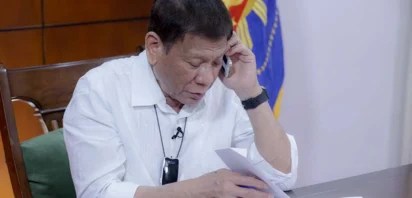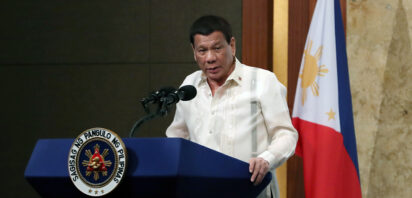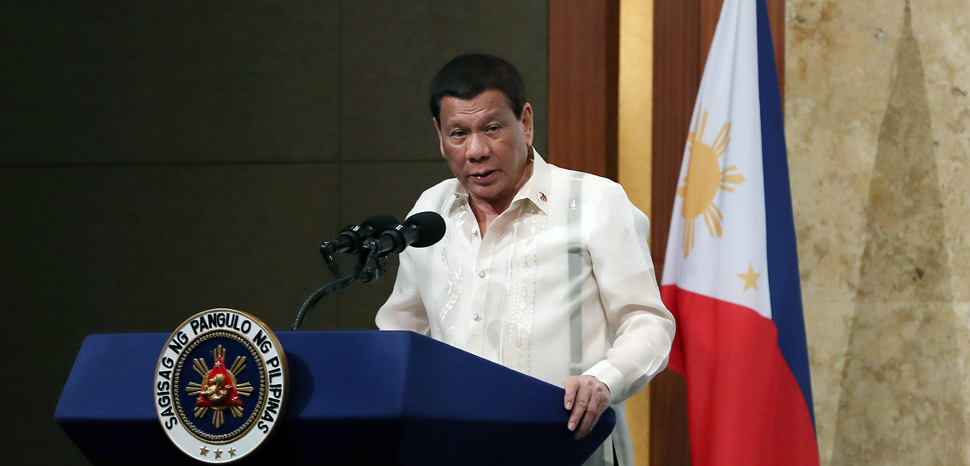
Late last year, Philippine President Rodrigo Duterte indicated a willingness to reverse his prior decision to terminate the peace process with the New People’s Army (NPA) – a communist rebel group at odds with Manila since the 1960s. On 26 December, Duterte appealed to Jose Maria Sison – the exiled head of the NPA’s political wing, the Communist Party of the Philippines (CPP) – to return home from exile in the Netherlands for one-on-one talks in an attempt to revive the peace process. Sison replied that while he was open to dialogue, he would only be prepared to meet Duterte in a neighbouring country.
This initial positive exchange was followed by a sense of growing momentum, when a 16-day ‘holiday truce’ agreed by the NPA and the Philippine military – covering the Christmas and New Year period – largely held firm despite several reported violations. In the early weeks of 2020, informal discussions have taken place and the government’s former chief negotiator, Silvestre Bello III, has even suggested Sison could return to Manila to sign an interim peace accord ahead of the resumption of formal talks. Duterte has sought to allay Sison’s fears over returning, stating on 11 January: ‘I guarantee his safety.’
Yet despite these steps forward, the window of opportunity for peace talks to resume may be limited. At the start of Duterte’s administration, talks with the NPA appeared to be moving forward until the peace process collapsed in early 2017 amid a dispute over a prisoner amnesty. All attempts to restart dialogue have since proven fruitless amid an atmosphere of rising hostility between the government and the CPP, typified by repeated tirades of insults exchanged in public between Duterte and Sison. This chequered history suggests the current receding of tensions may turn out only to be temporary.
A history of failed talks
The NPA and CPP have been led by Sison since he founded the rebel movement in the late 1960s. For five decades, the NPA has fought government troops in rural areas across the country, with the stated aim of overthrowing the Philippine state and replacing it with a political system predicated on Maoist ideology. While the insurgency reached its height in the 1980s during the dictatorial rule of Ferdinand Marcos, the rebel movement has since held peace talks with six successive democratic-era presidents.
The National Democratic Front of the Philippines (NDFP) – the negotiating body of the NPA and CPP – participated in failed talks during the administrations of Aquino, Ramos, Estrada, Arroyo and Aquino III before entering dialogue with Duterte upon his election in 2016. Talks initially progressed well, with a ceasefire being declared and four rounds of dialogue being held in Amsterdam, Oslo, and Rome. Yet the peace process collapsed in 2017 amid Duterte’s refusal to release political prisoners and renewed rebel attacks. NPA activity has since rebounded in rural central and southern areas of the Philippines.