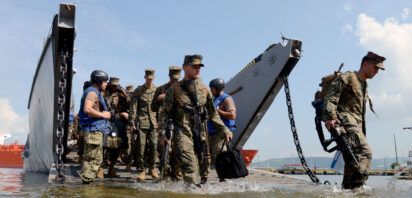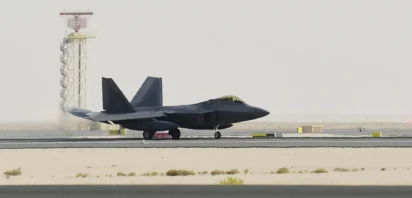
On 11 February, exactly one year after Philippine president Rodrigo Duterte announced his intention to terminate the Visiting Forces Agreement (VFA) with the United States, both sides began talks to salvage the troop deal. The VFA—in place since 1998—allows American troops to be stationed in the Philippines and is key to implementing the mutual defence treaty signed by the two Pacific allies in 1951. Duterte, a fierce critic of past American colonial rule over the Philippine archipelago, aimed to reduce its influence; yet concerns over Beijing’s actions in the South China Sea have brought Manila to the negotiating table.
The new administration of Joe Biden, looking to reinforce American military presence in the Indo-Pacific as a counter to China, has reassured the Philippines of its commitment to their bilateral security alliance. Yet Duterte, speaking the day after talks began at Clark Air Base in Luzon—once a vital American staging post in the region—said the United States should “pay” to renegotiate the VFA. This apparently referred to American military aid for Philippine forces, with presidential spokesperson Harry Roque clarifying “to continue using our territory, we want just compensation…not loose coins, not dilapidated equipment.”
Chinese maritime encroachment
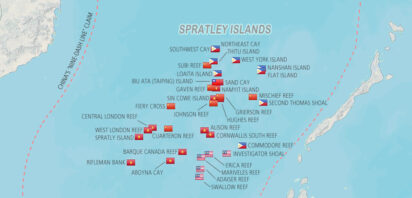
The maritime threat from China has focused minds. Even Duterte—who has cultivated closer trade ties with Beijing while pursuing a “neutral” foreign policy—warned at Clark Air Base of the “exigency of the moment” as tensions rise in the South China Sea, noting that the disputes might “require the presence” of American soldiers as a deterrent. Duterte’s initial termination of the VFA was due to take affect after 180 days, but this timeline has twice been pushed back, with a deadline to rework the deal now set for August 2021. In the meantime, Duterte’s administration has adopted a more critical tone on China.
Two recent developments in particular have caused concern, aside from the usual complaints over land reclamation and Beijing’s building of military assets and artificial islands. First, a Chinese law allowing its coast guard to open fire on foreign vessels to protect its territorial claims in the South China Sea, drew a strong diplomatic rebuke from Manila. Second, the sighting of more than 220 Chinese vessels moored at Whitsun Reef—175 nautical miles west of Palawan, within the Philippines’ Exclusive Economic Zone—in early-March was described as a “provocative action” by Philippine Defence Secretary Delfin Lorenzana.