Geopolitics Weekly contextualizes emerging geopolitical trends around the world, distilling the cacophony of global events into one easy reader. It lands in the inbox of Geopolitical Monitor subscribers every week. This edition has been made available to all our readers.
Global
OPEC+ Signals More Pain for Global Oil Industry
What Happened
OPEC+ has decided to speed up its oil output hikes with a target of 2.2 million additional barrels per day (bpd) by November 2025. The decision comes on the heels of a similar action taken at the cartel’s April meeting, which hiked May output by a projected 400,000 bpd. The combined effect is to push oil prices down at a time when global economic uncertainty is already exerting significant downward price pressure. The $56 per-barrel price for West Texas Intermediate (WTI) recorded on Monday was its lowest level in over four years.
Why It Matters
- OPEC+ Dysfunction or US Gift? Saudi officials cited Kazakh and Iraqi overproduction as the reason for the output boost. And while it’s true that both countries have been testing Riyadh’s patience over the past year, the timing of the move is very interesting, as these voluntary production cuts were supposed to remain in place until September of 2026. President Trump is expected to travel to Saudi Arabia on May 13, marking the first formal overseas trip of his second term. News of advanced weapons sales is already coming out, with more expected once the visit is underway, along with a possible civil nuclear agreement. What the Saudis may be offering – in addition to the eye-watering investment deals being dangled – is some deflationary insurance that mitigates tariff-related price increases with cheaper energy costs in the short-term.
- Losers Abound in Low Price Environment: Another potential layer of calculation is that, looking longer term, Saudi oil producers are trying to put higher-cost US producers out of business to secure greater market share. This tracks with past experience as well as the ongoing struggles of the US oil industry in the present context, where the industry is broadly down 11% post-‘Liberation Day,’ with new lows now possible in the wake of this OPEC+ announcement. Globally, higher-cost oil producing states also stand to lose, particularly those which are already experiencing fiscal strain. Some notable ones include Nigeria, Iraq, Iran, and Venezuela. TheRussian economy is also vulnerable here, having just tripled its deficit forecast after adjusting its 2025 per-barrel oil cost from $70 to $56.
Europe
Political Fallout from the Iberian Blackout
What Happened
On April 28, a cascading failure in the energy grid caused a widespread blackout across Spain and Portugal. The immediate causes are still under investigation, but various speculation points to unstable oscillations in the interconnected grid, failure of the French-Spanish interconnector, the absence of nuclear baseload power, and/or a high reliance on intermittent renewable energy sources. The disruption affected major urban centers, halted economic activity, and raised concerns about the overall resilience of Europe’s energy infrastructure.
While sabotage was ruled out, investigations highlighted systemic vulnerabilities in Europe’s highly interdependent grid system. Once viewed as a solution to energy isolation, Iberia’s integration into the broader European grid was revealed to be a double-edged sword, as disruptions beyond national borders cascaded into domestic failures.
Why It Matters
The blackout exposed fundamental tensions in Europe’s energy transition and strategic planning:
- Technological Interdependence as Strategic Vulnerability: Decarbonization and grid integration have increased complexity and created dependencies on digital systems and cross-border infrastructure. The blackout underscored how these dependencies can compromise domestic resilience.
- From Energy Island to Exposure Zone: Decades of efforts to end Iberia’s energy isolation inadvertently introduced new risks, making the region vulnerable to external disruptions.
- Geopolitical Signaling: Even without being caused by an attack, the incident highlights the strategic ambiguity surrounding complex systems. The mere plausibility of sabotage introduces perception risks that could embolden adversaries or challenge deterrence.
- Domestic Political Fallout: In both Portugal and Spain, opposition parties seized on the incident to criticize government energy policies. The blackout politicized infrastructure governance and sparked debates over sovereignty, risk, and the role of EU-centric planning.
- Climate and Strategic Planning: Climate volatility is no longer an external factor; it is now a structural variable in energy policy. Planning must integrate these risks as core strategic concerns.
The blackout marks a pivotal moment in Europe’s energy narrative. It underscores the fragility of its infrastructure and calls for a rethinking of integration, not as an endpoint but as a condition to be managed with flexibility, resilience, and strategic foresight.
Maritime Drone Downs Fighter Jet over the Black Sea
What Happened
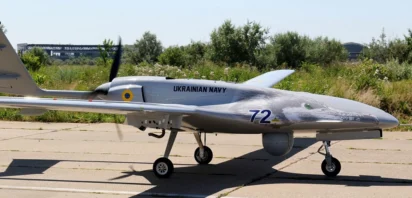
Ukraine’s military intelligence agency is reporting that a maritime drone has downed a Russian Su-30 fighter near Novorossiisk, marking the first recorded instance that an unmanned sea drone has downed a jet.
Why It Matters
The Ukraine war has served as a grim laboratory of drone warfare, where military tactics have innovated and then been countered as a matter of course since 2022. This latest development perpetuates several trends already established in the war, all of which will resonate in future military conflicts. They include:
- Decline of Manned Flight. Drones operate outside of operational manpower constraints and are less prone to error. They can also lie in wait for long periods, which appears to be the case in this instance.
- Favorable Fiscal Math of Drone Warfare: The Su-30 is a $50 million dollar piece of hardware. It is believed to have been downed by a Magura V5, a sea-based drone that costs just $250,000 per unit.
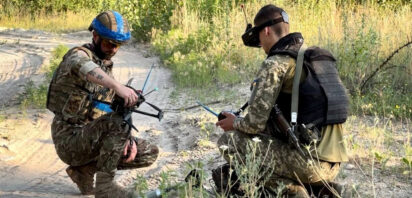
- Rapidly Evolving Nature of Drone Tactics. According to Naval News, the Su-30 was likely out hunting for sea drones following an incident in December of last year where two Mi-8 Hip helicopters were shot down by a Magura. Like the helicopters, the Su-30 was presumed to be safe from the drones – until it wasn’t. This illustrates the rapid pace of tactical and technological advances taking place in Ukraine, where the rules of the game change by the day. A similar example – this time where the Russians led the way – is the advent of fibre optic drones, which circumvent wireless jamming techniques by running a thin cable between drone and operator.
Middle East
US Military Power Not Enough in Yemen
What Happened
News out of Yemen has been bad of late for the Trump administration, which has been attempting to resolve the Red Sea crisis by force since the launch of ‘Operation Rough Rider’ in mid March. Over the past few weeks:
- The Houthis have been successfully shooting down MQ9 Reaper drones – at least seven of them since March 15, and 20 since Operation Rough Rider began. Reapers cost around $30 million per unit, and they’re being shot down by far cheaper, Iran-made Saqr-358 surface-to-air missiles.
- The US Navy lost a F-18 jet when the USS Harry S Truman was reportedly forced to make a hard turn in response to a Houthi attack, sending the jet into the Red Sea. The F-18 cost around $60 million.
- Washington has now spent $1 billion on Operation Rough Rider, launching an estimated 800 attacks on Houthi targets in Yemen. And while Houthi ballistic missile and drone attacks are down 69% and 55% respectively according to CENTCOM, the militant group clearly maintains a significant military capacity, as recently illustrated by the fact that:
- A Houthi-launched missile hit Israel’s Ben Gurion Airport on May 4. No one was injured in the attack, which evaded US and Israeli defense systems.
Why It Matters
The Trump administration is revisiting the lessons of past US foreign policy adventures, namely that the air power is not only expensive, but also largely ineffective over the longer term without a ground-level presence and a willing local partner to work with. It’s against the backdrop of these mounting operational costs that the UK recently joined the fight again.
It remains difficult to assess Operation Rough Rider without knowing the actual aims. Is the overriding goal a recovery in Red Sea shipping? If so this seems unlikely given that even pre-Rough Rider, under a unilateral ceasefire, ships were still staying away. Is it a pressure play against Iran, amid negotiations over a new nuclear deal? A nod to the Saudis – effectively continuing the war that they gave up on – in exchange for something else down the road? Or simply a general demonstration of US military might? If the answer is any of these, the cost-benefit ratio appears heavily skewed in favor of costs at the moment, and given the surprising effectiveness and durability of the Houthi arsenal, there will be reputational risks for the US military for as long as the conflict continues.
Africa
Algeria’s Mobilization Law Reflects Rising Regional Tensions
What Happened
In April 2025, Algeria introduced a draft law outlining the procedures for general mobilization in response to potential external threats. While the law has not yet been enacted, it marks a significant shift in the country’s defense posture. Its introduction comes amid rising tensions with Morocco, confrontations along the southern borders with Mali and Niger, and deteriorating relations with France, which Algeria increasingly sees as aligned with its rivals.
Although Algerian officials downplayed the law’s immediacy, its provisions grant the executive sweeping powers to implement national defense measures. Domestically, the law also appears to strengthen the government’s control over the military and bureaucratic elites.
Why It Matters
The mobilization law reflects Algeria’s evolving strategic priorities and regional outlook:
- Strategic Posture and Deterrence: The law formalizes Algeria’s deterrence framework in a context where it perceives itself as strategically encircled. It seeks to fill the gap left by traditional deterrents amid the rise of hybrid threats and shifting regional dynamics.
- Geopolitical Realignments: Algeria is not simply reacting to instability; it is recalibrating its regional role. As Western influence recedes in the Sahel, Algeria aims to assert strategic autonomy, though doing so risks prompting regional militarization and escalating tensions.
- Domestic Signaling and Elite Consolidation: The law serves a dual purpose. Externally, it projects resolve. Internally, it consolidates elite support by elevating national security to a central governing principle within Algeria’s civil-military framework.
- The Curse of Geography: Algeria’s vast and vulnerable southern frontier requires a more comprehensive security strategy. Militarization alone cannot ensure resilience; long-term stability depends on economic integration, border governance, and multilateral cooperation.
The mobilization law encapsulates Algeria’s attempt to reconcile its desire for strategic autonomy with the complex realities of a volatile region. While coherent in its internal logic, the law risks unintended consequences, including provoking militarization among neighbors and deepening Algeria’s reputation as an insular, security-obsessed state. Its long-term success will depend on the government’s ability to balance vigilance with adaptability.