Geopolitics Weekly analyzes emerging geopolitical trends around the world, distilling the cacophony of global events into one easy reader. It lands in the inbox of Geopolitical Monitor subscribers every week. This week’s edition has been made available to all our readers.
Middle East
Trump Ultimatum Looms (Again) as Iran War Enters Fifth Week
What Happened
Notable events in the US-Israel Iran war over the past week:
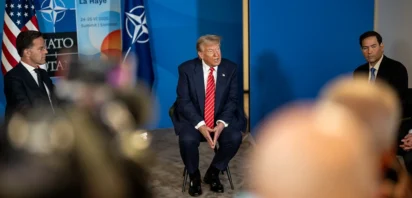
- President Trump said that he is “absolutely” considering withdrawing from NATO and that the matter was “beyond reconsideration” due to the Alliance’s refusal to assist in the war on Iran. The April 1 comments were pushed back on a day later by US senators on both sides of the aisle. Under the Biden-era National Defense Authorization Act (NDAA) of 2024, a formal withdrawal from NATO requires Congressional assent, which the president clearly lacks at the time being.
- President Trump went on US television to address the nation live on April 1. The speech hit several political beats (tax cuts, the Iran nuclear deal, the economy) and repeated threats of escalation while downplaying any long-lasting impact from the Strait of Hormuz blockade. Trump sent mixed signals on the future direction of the conflict, one moment invoking the years-long campaigns in Korea, WWI, and WWII, and the next declaring that core strategic objectives are nearing completion.
- Tehran’s B1 bridge was blown up in a US strike on April 2, with the US president declaring on social media: “The biggest bridge in Iran comes tumbling down, never to be used again.” The bridge was among the tallest in the Middle East and connected Tehran with Karaj, a city of two million.
- The Trump administration proposed a $1.5 trillion defense budget for 2027 on April 1, paid for in part by a 10% reduction in non-defense spending, notably including some $15 billion in cuts to Biden-era infrastructure spending. The executive proposal is non-binding, but it portends the inevitable fiscal reckoning of a war that has now cost an estimated $42 billion. By way of comparison, this is roughly the equivalent of South Korea’s annual military budget.
- A US F-15 fighter jet was shot down while conducting missions over Iran. The incident occurred on April 3, and the crew was successfully rescued in a bold operation days later. Several notable losses occurred during the search for these pilots, illustrating the risks of low-flying rescue operations. They include an A-10 Warthog that was shot down (pilot recovered successfully) and two helicopters, along with two transport planes that were blown up intentionally by the US military. The Iranian military claims that a new air defense system was used to shoot down the F-15.
- The Israeli military threatened to destroy more bridges in Lebanon over the weekend, specifically two bridges connecting the western Bekka Valley to the rest of the country. Israel has destroyed six bridges since the conflict began, hampering the flow of goods and people between southern Lebanon, the Bekka Valley, and central Lebanon.
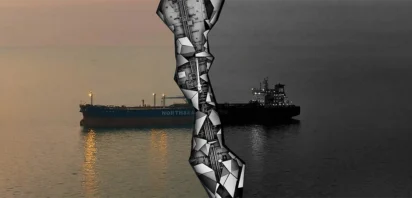
- Tankers from Oman (operated), Japan (owned), and France (owned) traversed the Strait of Hormuz over the weekend. The tankers were using their Automatic Identification System (AIS) transponders to signal to the Iranians that they were connected to friendly countries; for example, ‘India ship India crew’ and ‘Owner France.’ It’s unclear whether these tankers paid a toll for transit. However, as per Bloomberg reporting on April 1, the IRGC has established a payment system in yuan and crypto that vets ships according to a ‘friendliness scale’ of one to five, derived from its ownership, crew, cargo, and AIS tracking info. The nature of the scheme allows for opaque payments that fall outside the purview of US sanctions.
- President Trump threatened that ‘Hell will reign down on [Iran]’ if they don’t reach a deal to open the Strait of Hormuz within 48 hours. The post was made on April 4 and refers to Trump’s original ultimatum threatening strikes on Iranian critical infrastructure if a deal wasn’t reached, now twice extended.
- President Trump urged the Iranian regime to ‘Open the Fuckin’ Strait, you crazy bastards, or you’ll be living in Hell’ in a social media post on April 5.
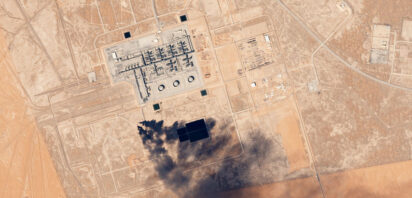
- Israel struck Iran’s South Pars gas field on April 6. The two refineries that were hit account for around 85% of Iran’s petrochemical exports. Previous strikes on South Pars have triggered Iranian reprisals on Gulf infrastructure like Qatar’s Ras Laffan field.
- The head of the IRGC intelligence apparatus, Masjid Khademi, was killed in an Israeli strike on April 6.
- Pakistan presented a two-phase peace deal to the US and Iran over the weekend, with a 45-day ceasefire serving as a window for more permanent peace negotiations. Neither side has responded positively to the proposal.
Why It Matters
Worldwide economic blowback is mounting from the Iran war. Elevated food and oil prices are giving way to state-level impacts around the world, with supply chain and fiscal risk leaving some states more exposed than others. Examples include:
- Japan has instituted its largest-ever release of oil from its strategic reserves – 80 million barrels, the equivalent of 45 days of domestic demand. The Takaichi administration is currently deliberating over whether to launch energy conservation efforts among the general population.
- Thailand is encouraging work-from-home and has instituted a temporary price cap on diesel.
- The Philippines has activated a $333 million emergency fund to boost fuel security, whereby the government purchases oil on the open market to stabilize domestic supply. The country’s reserves are not state-owned like Japan or the US; rather, they take the form of mandatory stockpiling requirements for private companies, which are then purchased by the government at market rates in times of crisis.
- Vietnam urged people to work-from-home back on March 10. It has also suspended environmental and consumption taxes on gasoline, diesel, and jet fuel though April 15, which translates into a monthly fiscal drag of 7.2 million dong ($273.34 million) on state revenues.
- Malaysia recently announced it will institute work-from-home policies, with more details to come. Per-month quotas on Malaysia’s pre-existing fuel subsidy have been cut as price hikes balloon government outlays.
- The UK is deliberating targeted assistance for vulnerable households struggling with energy bills.
- New Zealand unveiled a targeted assistance program for low-income families on March 23, estimated to cost NZ$373 million if it runs through the year.
- Australia announced that it would halve an excise tax on fuel and diesel, costing the government an estimated A$2.55 billion ($1.75 billion).
The common thread running through these policies is fiscal cost, with some more easily borne than others. Take the UK for example. A recent parallel lies in the Energy Price Guarantee (EPG) of 2022, which was launched in response to spiking energy costs amid the Ukraine war. The policy was untargeted and initially priced at 60 billion pounds over six months. Eventually, it would set the stage for the collapse of the Truss government by compounding the dire mathematics of its doomed mini-budget. Fast-forward to the present, with gilt yields testing 20-year highs, it’s no wonder that the Starmer administration is opting for targeted (cheaper) solutions – anything else increases the risk of another Truss-like rupture in bond markets.
The takeaway is that the COVID pandemic and Ukraine war have already constrained the resources available to governments in efforts to dampen supply shocks from the Gulf conflict. Moreover, the further that public spending veers into the red, the worse the debt hangover in the future.
NATO leaders are subtly changing tack on Trump. President Trump’s blunt disparaging of NATO this week was in keeping with his tone since 2016. But the responses from various NATO leaders exhibit tangible hints of exasperation, showing movement away from the hitherto favored tactic of managing the US president in hope that the hostility of the Trump era will eventually blow over. Over the course of the week:
- President Trump has been openly attacking the UK’s Kier Starmer, saying that he’s ‘no Churchill’ and mockingly impersonating him for having to consult with his team before sending his ‘old’ carriers to assist in Iran. Dismissing the comments as ‘noise,’ Prime Minister Starmer has framed the Iran war as proof of the need for closer security ties with Europe.
- At the same event, Trump openly disparaged Emmanuel Macron and his wife. The comments elicited a brusque response from the French President, who unloaded on Trump over his unserious attitude toward NATO and the Iran war: ‘When we’re serious, we don’t say the opposite of what we said the day before… we are talking about war, we are talking today about women and men who are in combat… who are being killed.’ Macron also openly derided the strategy of seizing the Strait of Hormuz, stressing that the US and Israel embarked on the Iran war without consulting NATO allies: ‘It’s not our operation.’
- Germany’s Friedrich Merz admitted that he doubts the prospects for success in the Iran war in an interview last week, adding that he had impressed upon President Trump in phone calls that he doesn’t view the Iran conflict as NATO’s war to fight.
- Poland, consistently one of the most pro-US members of NATO, refused to redeploy Patriot missile batteries to the Middle East last week.
- Italy has refused permission for US military aircraft to land at its Sigonella air base in Sicily en route to the Middle East. Under domestic law, authorization would require assent from the Italian parliament.
That there is no mandated assistance under the terms of the North Atlantic Treaty is not surprising. Article 5 was designed to be strictly defensive and geographically bound to North America and Europe so as to avoid the Alliance becoming embroiled in colonial wars in far-off lands. But the tonal shift from Europe is increasingly conspicuous, and it represents another step away from trans-Atlanticism and toward strategic autonomy, coming on the heels of other recent ruptures on tariffs and Greenland (apparently Denmark was ready to sabotage runways in the event of a US invasion). Yet cognitive drift must be matched with major new investments in military capacity for strategic autonomy to actually be realized, and even under the most optimistic outlook this will require years if not decades. So even if NATO leaders have begun to question a once unquestionable commitment to mutual defense, the Alliance isn’t going anywhere in the near term.