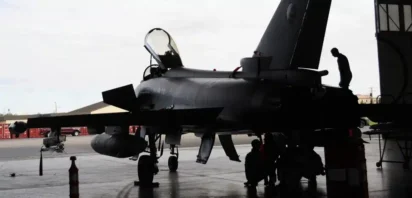
Europe is no longer asking if war with Russia is coming. It’s asking when. From Berlin to the Baltic Sea, policymakers are moving with a sense of urgency not seen since the end of the Cold War. Germany’s defense chief has warned that Russia could test NATO’s resolve by the end of the decade. The Baltic states and Poland have taken the extraordinary step of withdrawing from the anti-personnel mine ban treaty—one of the few remaining taboos in modern warfare. Trenches are being dug, arsenals expanded, and the borders of NATO’s eastern flank are being physically fortified in anticipation of a fight many now see as inevitable.
But the most alarming signal came not from Moscow, but from The Hague.
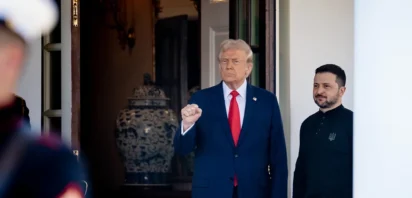
At the recent NATO summit, Donald Trump again cast doubt on the alliance’s collective defense commitment. His remarks reignited concerns among NATO’s eastern members that the U.S. might hesitate to respond in a crisis. At the same summit, NATO members pledged to work toward spending 5% of GDP on defense. It was an ambitious, even historic, target. But the reason for it was clear: Europe is racing to fill the vacuum left by a United States that appears increasingly disinterested in deterrence.
That anxiety is well-founded. Just days before the summit, Germany’s intelligence chief warned publicly that Russia “has plans to test NATO’s resolve,” confirming what many in European capitals already fear: that the Kremlin is actively seeking weak points it can exploit without triggering full-scale retaliation.
In Germany, those warnings are being met with action. Long hesitant to rearm due to its 20th-century legacy, Berlin is now pouring billions into defense procurement and preparing its population for war. In addition to overhauling its military logistics under “Operation Deutschland,” Germany has reactivated hundreds of Cold War-era bunkers and is expanding its national civil defense strategy, revamping sirens, emergency shelters, and public communication systems in the event of missile strikes or wider conflict. As one German interior ministry official told CNN, “We must again be ready to defend ourselves.” This is not saber-rattling. It’s mobilization.
On the eastern front, Estonia, Latvia, Lithuania, and Poland are leading the charge toward deterrence realism. In June, all four, along with Finland, filed formal notice to withdraw from the Ottawa Convention, which bans anti-personnel mines. It was a grim but rational move. These countries have watched Russia lay millions of mines across Ukraine to stall counterattacks. In rejecting mine bans and digging defensive lines, Eastern European governments are signaling that they will no longer outsource their survival, even to NATO.
At the same time, the Baltic states are constructing the “Baltic Defense Line”—a trench-and-bunker network to slow or absorb a potential Russian incursion. NATO’s enhanced forward presence, including a permanent German brigade in Lithuania, will not suffice on its own. Deterrence in this region must be layered, national, and immediate.
In parallel, European leaders are quietly debating the creation of a parallel “shadow” command-and-control structure within NATO. With the alliance’s operational headquarters and supreme command still dominated by the United States, such a framework would allow European militaries to coordinate and execute operations independently if necessary. While still hypothetical, this contingency planning reflects a growing recognition in Brussels and Berlin that Europe must be ready to transition to full self-sufficiency should Washington withdraw or reduce its leadership role.
Countries like Norway and Lithuania are also investing resources in Ukraine’s drone industry, not solely out of solidarity, but also to absorb tactical innovations. Ukraine is the world’s leading laboratory for next-generation warfare. Its drones, electronic warfare, and uncrewed sea vessels have changed the modern battlefield. By investing in Ukrainian tech and co-producing weapons, these countries are accelerating their own adaptation curves. Norway’s $600 million drone procurement pledge and Lithuania’s joint naval drone projects are a form of military hedging—and a recognition that innovation now flows east to west, not the other way around.
What links all of these efforts is not just a fear of Russia’s capabilities, but a fear of America’s unreliability.
Since returning to the office, Trump has not only halted US military aid to Ukraine but also effectively abandoned the Biden-era policy of treating Ukrainian resistance as a pillar of transatlantic security. European states are now scrambling to backfill the shortfall, sending weapons, funding production lines, and exploring long-term security pacts with Kyiv. But Europe’s defense transformation is not instantaneous. The painful truth is that it may take years before European militaries are truly ready for the kind of high-intensity conflict that Russia is preparing for.
That’s why supporting Ukraine is not just about helping a democratic ally resist aggression. It’s about buying time. Every month that Ukraine can continue to hold the line weakens Russia and delays a potential wider conflict. And every month that Europe has to go from pledging 5% of GDP in defense spending to actually implementing it is precious.
If the U.S. wants to avoid being pulled into a wider conflict later, it must do more than issue mixed signals. It must treat Ukrainian resistance and European rearmament not as burdens, but as investments in long-term global stability. Because if war with Russia does come, it won’t wait for Europe’s five-year spending plans—or US election cycles—to catch up.
The views expressed in this article belong to the author(s) alone and do not necessarily reflect those of Geopoliticalmonitor.com.