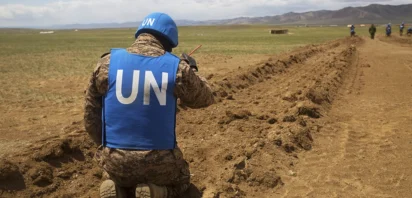
Canada ratified the conventions on land mines and cluster munitions in pursuit of worthy objectives grounded in the liberal values that define our country. Unfortunately, we failed to account for the logic of state behavior and the reality of modern warfare. Hence why our continued accession to these two treaties now runs counter to the Canadian national interest.
The Convention on Cluster Munitions has 111 parties. Up until recently, the Convention on Land Mines had 164 parties. Finland withdrew last week. Poland withdrew this week. Estonia, Latvia, and Lithuania intend to follow in their footsteps.
Canada’s NATO allies drew a logical conclusion: as liberal and democratic states that maintain healthy relations with most of the world, there are few countries they might eventually find themselves at war against. This short list includes Russia and Belarus, states that are not parties to either of these conventions.
The evidence is unfortunately clear: the only arms control and reduction treaties that work are between states that don’t need to defend themselves from each other.
Consider, for instance, the Intermediate Range Nuclear Forces Treaty (INF) and the Strategic Arms Reduction Treaties (START). These were long celebrated as diplomatic breakthroughs in arms control and reduction, nuclear nonproliferation, and international law. Though well-meaning, this positive sentiment was unfortunately detached from reality.
The INF and START treaties were bilateral accords between the United States and Russia. They were not multilateral agreements that included and applied to every member of the United Nations, let alone to all the states which possessed nuclear weapons programs or ballistic and cruise missile arsenals at the time.
In other words, apart from Russia and the U.S., the remaining nuclear powers were not subject to the provisions of the INF or START treaties. Naturally, states such as India and China continued developing their nuclear weapons programs and improving, as well as expanding, their ballistic and cruise missile arsenals.
The INF and START treaties didn’t prevent the proliferation of nuclear weapons either. Whereas Syria and Libya came close to obtaining nuclear weapons after their coming into force, Pakistan and North Korea actually did. Furthermore, Iran developed ballistic missiles capable of reaching as far as southern Europe and stockpiled the components required to build nuclear bombs.
Unfortunately, the INF and START treaties were also failures from a bilateral perspective. Moscow breached the INF Treaty by deploying land-based cruise missiles capable of reaching targets beyond 500 km and suspended its participation in START 3 by blocking US inspectors from examining Russia’s nuclear sites.
Moscow also violated the Treaty on Conventional Armed Forces in Europe (CAFE). While NATO states reduced the size of their armies and limited the quantity of weapons deployed on their borders with Russia, Moscow did the opposite. The Russian Armed Forces kept growing, as did Russia’s weapons arsenals. So did its territory, through its invasions of Georgia, Moldova, and Ukraine.
The history of international law teaches us three important lessons. First, that the international system is anarchic. Put simply, there is no hierarchically superior power that is both able and willing to enforce the law and maintain order. States must therefore help themselves, by increasing their hard power and forming alliances, in order to survive despite the chaos.
Second, the concept of sovereignty theoretically endows states with the authority to govern themselves both within their borders and externally. In practice, however, the strong do what they please, and the weak suffer what they must. Look no further than Russia’s non-compliance with its own arms control and reduction commitments, as well as its criminal wars of aggression against Georgia and Ukraine.
Third, wars are contests of resources and willpower. States fight them to achieve military and political objectives. In theory, wars are regulated by arms control treaties, international humanitarian law, and the like. In practice, they are little more than the leaders of one country ordering their soldiers to kill, or be killed by, an opposing army. The difference between death and survival is often just luck.
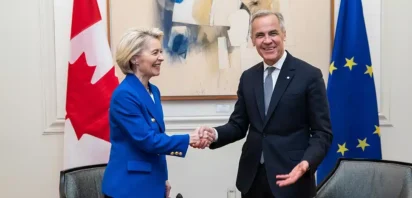
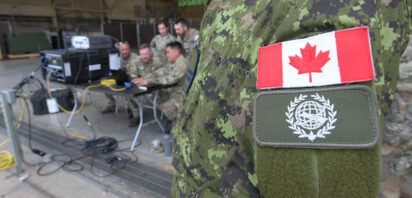
Canada must navigate the international system with moral and strategic clarity. As Prime Minister Mark Carney said, “this moment of change is also a moment of opportunity – to think bigger and to act bigger.” Our country is massive. The Canadian Armed Forces are unfortunately understaffed and under-equipped. The Canadian Arctic lacks military infrastructure and is undefended.
States join international treaties by relinquishing their sovereignty for the sake of the national interest. Canada’s adherence to the conventions on land mines and cluster munitions no longer satisfies that condition. In theory, abiding by these two treaties puts the protection of people, property, and animals first. In practice, it only puts the brave men and women serving in the Canadian Armed Forces last.
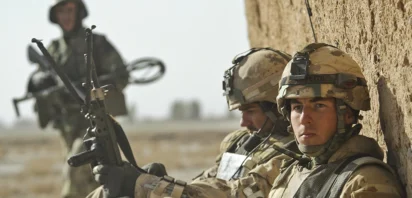
Decisions related to foreign policy, national defense, and collective security must be fact-specific and grounded in reality, not the magical thinking prevalent in the comfortable air-conditioned offices of New York, Geneva, and Ottawa. Canada’s soldiers, including those deployed in Latvia and tasked with deterring, defending against, and defeating Russia, deserve better. So, if the enemy has access to land mines and cluster munitions, the Canadian Armed Forces should too.
George Monastiriakos is a part-time professor at the University of Ottawa Faculty of Law.
The views expressed in this article belong to the author(s) alone and do not necessarily reflect those of Geopoliticalmonitor.com.