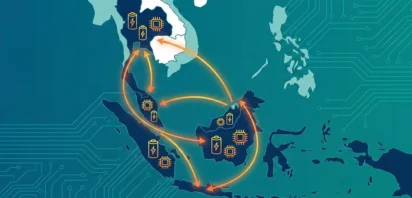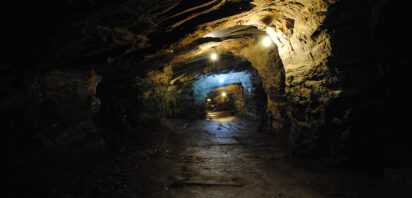
ASEAN is entering the critical minerals race with a strong hand, but a weak strategy would waste it. Indonesia dominates global nickel supply. The Philippines is important to nickel and cobalt. Vietnam is building rare-earth partnerships with Australia, Korea, and Japan, while Malaysia, Thailand and Singapore are expanding downstream clean-technology and battery-component manufacturing. The region has the raw ingredients for a larger industrial role, but geological advantage is not the same as strategic power. The real prize is not the mine. It is the ecosystem around the mine.
This distinction matters because critical minerals are no longer only a clean-energy issue. They now sit at the center of electric vehicles, battery storage, grid expansion, semiconductors, defense production and artificial intelligence infrastructure. Minerals policy has become industrial policy, and industrial policy has become geopolitical strategy. The United States, China, Japan, Korea, Europe, India and Australia are all trying to secure supply chains for minerals and rare earths. ASEAN is not outside this contest. It is one of its main arenas.
The danger is that Southeast Asia becomes a supplier of inputs for other countries’ industrial ambitions while capturing only a narrow share of the value chain. Exporting ore, intermediate products or lightly processed materials may generate revenue, but it does not automatically create technology transfer, manufacturing depth, resilient jobs, or regional bargaining power. A country can be mineral-rich and still remain strategically dependent if the processing, refining, design, standards, financing and manufacturing are controlled elsewhere.
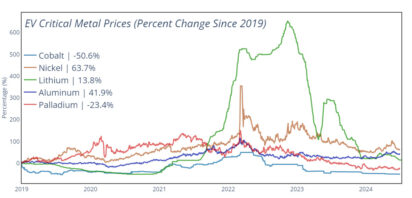
Indonesia’s nickel experience is the clearest warning. After banning raw ore exports in 2020, Indonesia attracted major investment into refining and increased its share of global nickel supply from 31.5 per cent in 2020 to around 60 percent in 2024. But the promise of a fully domestic EV industry has been harder to realize. Associated Press reported in 2026 that Indonesia is tightening state control over nickel just as global EV battery markets shift toward lithium iron phosphate batteries, which use far less nickel and cobalt.
The uncomfortable lesson is simple: dominating one mineral does not guarantee control over the industries that use it.
There are also supply chain vulnerabilities inside the processing model itself. Reuters reported in May 2026 that Indonesia’s nickel sector was being pressured by rising sulphur prices caused by disruption around the Strait of Hormuz. Indonesia relies on the Gulf for around 75 percent of its sulphur imports, which are needed for high-pressure acid leach processing plants that produce mixed hydroxide precipitate for the battery sector. This is precisely the kind of detail that should worry ASEAN policymakers. A supposedly domestic downstream strategy can still depend on imported chemical inputs, maritime chokepoints, and external shocks.
The environmental and social costs cannot be treated as side issues either. In April 2026, it was reported that investors managing US$4.5 trillion in assets were urging automakers to address deforestation and human-rights risks in nickel supply chains, particularly in Indonesia and the Philippines. Allegations include illegal forest clearing, pollution of drinking water, failures around Indigenous consultation, intimidation and attacks on local communities. If ASEAN’s critical minerals strategy becomes dirty, opaque, and extractive, it will weaken the region’s long-term credibility with buyers, investors and regulators.
This is where ASEAN’s regional agenda becomes important. The ASEAN Minerals Cooperation Action Plan 2026–2030 gives the region a framework for cooperation. The OECD’s 2026 regional note describes AMCAP IV as a strong blueprint, but it also stresses that governance capacity and deeper collaboration are needed before its objectives can be realized. The same OECD note highlights the need for better transparency, stronger market information, sustainable financing, mineral-processing skills, environmental management and clean-smelting technologies.
That is the right direction, but ASEAN needs to go further. A cooperation plan is not yet an industrial strategy. The region needs to move from minerals diplomacy to minerals capability.
The first priority should be a regional critical minerals map. This should go beyond geological reserves. ASEAN needs a practical value-chain map covering mines, processing facilities, refining capacity, ports, power availability, water stress, industrial land, ownership structures, recycling capacity, labor skills and downstream manufacturers. Policymakers cannot build strategy if they know where the minerals are but not where the bottlenecks sit.
Second, ASEAN should avoid ten national strategies competing to build the same value chain in isolation. The region needs an industrial division of labor. Indonesia and the Philippines have upstream strength in nickel and related minerals. Malaysia, Thailand and Vietnam bring electronics, manufacturing, industrial parks and logistics capability. Singapore can support financing, trading, certification and legal infrastructure. Not every member state needs to do everything. The goal should be to turn national strengths into regional industrial depth.
Third, foreign investment should be welcomed, but not passively. ASEAN should tie mineral partnerships to technology transfer, local workforce development, joint research, cleaner processing, supplier upgrading, recycling and downstream manufacturing. In January 2026, Indonesia’s Antam, Indonesia Battery Corporation and a Chinese consortium led by Zhejiang Huayou Cobalt signed a US$6 billion framework agreement covering nickel mining, processing, cathode production, and battery-cell production. Such deals show the scale of opportunity, but ASEAN’s broader question should be whether these investments build durable local capability or simply deepen dependence on external technology and capital.
Fourth, ASEAN needs regional standards for responsible minerals. These should cover traceability, carbon intensity, water use, land rehabilitation, labor conditions, Indigenous and community consultation, and anti-corruption safeguards. Standards should not be treated as Western compliance theatre. They are a bargaining tool. In a world of carbon rules, procurement standards and supply chain due diligence, cleaner and more transparent minerals will command strategic value.
Finally, ASEAN should treat recycling and recovery as industrial infrastructure. Battery recycling, e-waste recovery, and industrial scrap processing can reduce dependence on virgin extraction while creating technical jobs and circular manufacturing capacity. The mine is not the only strategic asset. So is the ability to recover value from what has already been produced.
ASEAN’s mineral wealth gives it leverage, but leverage can be wasted. The region should not measure success by export volumes, investment announcements, or the number of memoranda signed with outside powers. The real test is whether critical minerals help build processing capacity, manufacturing ecosystems, cleaner production, skilled jobs, technology transfer, and regional bargaining power. Nickel, rare earths, cobalt, copper, and tin may power the next economy, but extraction alone will not secure ASEAN’s place in it. Southeast Asia does not need to become the quarry of the energy transition. It needs to become one of its industrial architects.
The views and opinions expressed in this article are those of the author alone and do not represent those of Geopoliticalmonitor.com