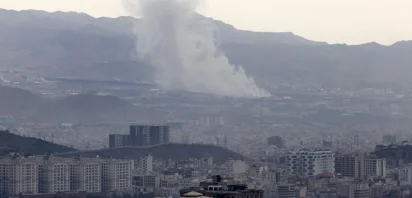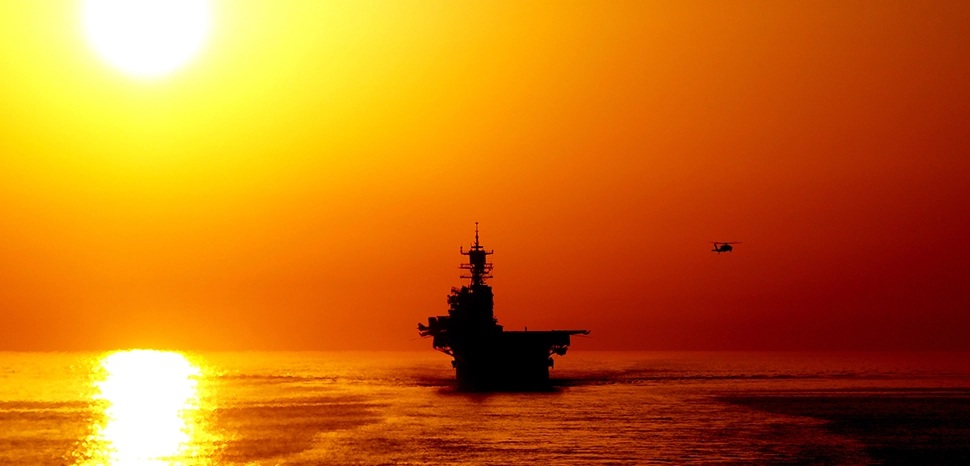
The June 26th American strikes on Iranian military infrastructure come as no surprise. After the Iranians attacked a Singapore-flagged ship in the Strait of Hormuz a day earlier, US Central Command (CENTCOM) had little choice but to respond. The Iranian attack, in turn, was a response to Israeli strikes in Lebanon against Iran’s ally, Hezbollah. Of course, this all has occurred barely twenty-four hours after US President Donald Trump declared that the war had been ended via a negotiated settlement signed with Iran on June 14th.
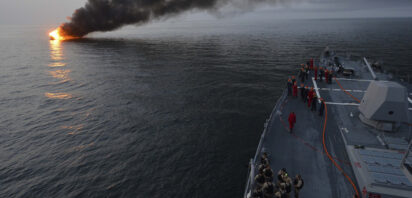
And on and on this cycle will continue until control of the uber-important Strait of Hormuz is definitively determined. At the moment, the Iranians control it – despite what Trump says, and despite a heavy US military presence. By launching attacks with drones, and their ‘mosquito fleet’ of pirate-like speedboats, the Iranian Revolutionary Guards Corps (IRGC) can effectively close the strait by making it too costly for commercial shipping to transit. Even if they can’t stop every boat, the increased risk makes them virtually uninsurable, and shipping companies become reluctant to put their cargo, and people, in danger. This reduces traffic enough to spike oil prices and rattle global markets, and they have been able to do it with a vastly superior US force in the strait trying to stop them – a dramatic testament to the asymmetric reality of modern warfare.
What Does Victory in Iran Look Like?
The Americans would like to have control of the strait, of course – this would curtail Iranian power and give them a decisive victory to a war they started without, it seems, a clear ‘Plan B’ after the anticipated popular uprising did not materialize. The Iranians have proved as unable to effectively counter-attack US and Israeli forces as the Americans have been to safeguard Hormuz – hence the current stalemate. Yet, as long as they can effectively block the waterway through which a fifth of the world’s oil passes they are the de facto victors in this conflict.
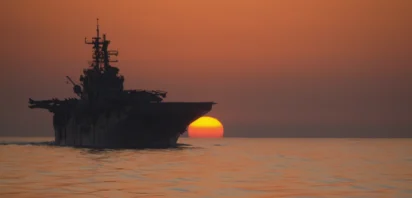
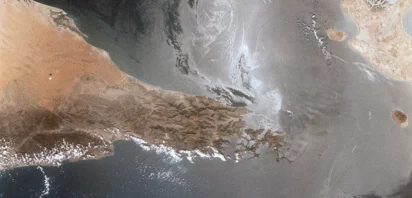
In order to break the Iranian stranglehold on shipping, and win the war, CENTCOM would almost certainly have to take the strait (if they could do it by other means, what are they waiting for?). Anything less would be a hopeful half measure. The formidable Fifth Fleet has been attempting to restore traffic to pre-war levels for the past four months, but remains unable to do so as long as the drones and speed boats are being launched from land sites. At a minimum, stopping this would mean taking Qeshm Island – the location of a major Iranian military base – and at least some of the Iranian coastline. Such an operation would involve mass US casualties, and so far Mr. Trump has demonstrated little appetite for such politically unpopular actions.
Preferring to approach the situation with his signature ‘dealmaker’ hacks, Trump has negotiated for months, while all three parties to the conflict (the third being Israel) continue to exchange fire intermittently. The Israelis initiate these sequences by launching attacks in Lebanon or Gaza; the Iranians, who want to replace Israel and Saudi Arabia as the regional power, feel they must respond by attacking ships in the strait; the Americans, who don’t want the Iranians to control the strait, feel they must respond to the response.
So why do the Israelis keep touching-off these triangular spats, preventing peace from taking hold? Because Prime Minister Benjamin Netanyahu, unlike Donald Trump, is not in search of a quick, bloodless settlement that can be presented to his population as a triumph of dealmaking. He is seeking to prevent Iran from establishing itself as a regional power rival. This is what the war has always been about: Who controls the middle east, and its precious oil? If the war concludes not because the Iranians were forced to open the strait, but because they agreed to open it, they remain in control – and firmly established as a regional player, with real power and influence.
Tehran will, for example, be able to clamp off the oil every time the Israelis launch a major military operation in response to a Hamas or Hezbollah attack – something that happens about every ten years. This will in turn constrain Israeli policy in the West Bank, where it ever seeks to expand settlements. Netanyahu doubtless sees this as an attenuation both of his state’s ability to defend itself, and its ability to direct policy with respect to expansion. He is prolonging the war to prevent a resolution that would be a strategic defeat for him, even if Trump considers it a PR victory.
The Dictates of Power Politics
Netanyahu, along with most statesmen who have done battle in the global arena throughout history, thinks about international affairs in the way that Don Pietro Savastano thought about Mafia politics in the acclaimed HBO series Gomorrah. After eschewing more temperate options and sending his men on a highly dangerous assault to oust an upstart rival, he consoles Ciro Di Marzio (his lieutenant, and the main protagonist) about the heavy losses, which included Ciro’s best friend and mentor, Attilio. “I know he was like a father to you – but it had to be done, right?” the boss intones poignantly, “And it had to be done like that.”
Don Pietro knew that, in order to remain in control of the criminal underworld, he had to be seen to crush his opposition – not weaken it, not bargain with it, not appease it: crush it with overwhelming force. Anything less would be the beginning of the end of his power, even if it were less costly, and brought temporary peace. This is what Netanyahu sees, and what Trump does not – the long game; the power game; the ‘Great Game’ as it is referred to in the parlance of international relations. He knows that global affairs are little different from a Mafia turf war: no justice, no morality, no higher authority enforcing the rules – only power, and the perception of power.
This misalignment of goals and viewpoints is what is prolonging the conflict. If Trump gets peace with a negotiated deal, he looks good today (or at least he thinks he does). But in starting the war, and then not having the stomach to finish it forcefully, he will have shown the world that the US – and therefore Israel – is no longer in control of the Middle East. The Iranians have previously attacked Israel and US forces primarily through proxies, rarely daring to come into direct conflict and risk outright war. When the war finally came, Tehran found that, overmatched as it was militarily, it could close Hormuz with surprisingly modest resources, and start a clock ticking for Washington as world oil prices soared and markets tumbled.
By bargaining with them to re-open the strait, instead of winning militarily, Trump will have handed the IRGC a power it didn’t know it had: the ability to hold the world economy hostage by closing Hormuz whenever it likes. That would be the beginning of the end of US dominance in the region – and perhaps globally. This is of course very bad for Israel, which gets its power through the ‘special relationship’ with the United States. Thus, Netanyahu will continue to scuttle ceasefire after ceasefire, provoking response and counter-response, with no end in sight.
Looking Ahead
So, will Trump bite the bullet, accept the casualties, and take Hormuz? No. It would be far too unpopular domestically. Will Netanyahu, or his eventual successor, stop breaking the ceasefires and re-starting the cycles of retaliation? No. Any Israeli prime minister will have the same incentive to stop Iranian power from rising. Will the Iranians stop attacking ships in response to Israeli strikes in Gaza and Lebanon? No. They have more power now than ever and aren’t going to stop using it. Will the world economy gradually start working around the strait, finding other ways to transport oil and other commodities? Yes, but Hormuz will never stop being a significant trade route, and crucial source of power and control in the ‘Great Game’ of international affairs.
The stalemate can, and will, continue until something changes. What exactly that will be is very hard to predict. Underneath the surface of the weekly back and forth, global power balances are shifting, and we will not know what the board will look like until the pieces have stopped moving.
Simon Capobianco is a former Senior Analyst at the Munk School of Global Affairs at the University of Toronto, where he contributed to the Canadian Centre for the Responsibility to Protect (CCR2P) and Syria Watch projects. He writes about international relations and foreign policy.
The views and opinions expressed in this article are those of the author alone and do not represent those of Geopoliticalmonitor.com