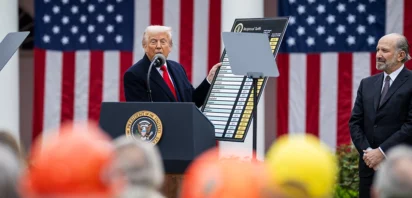
Washington has made the tone clear early in 2026. On January 15, President Donald Trump imposed a 25% tariff on certain high performance AI chips, framed as a national security measure following a Section 232 process. The White House then described this as “phase one,” signaling that further actions remain on the table. For ASEAN manufacturers and the industrial ecosystems that serve them, this matters less because of the initial tariff’s narrow product scope and more because it normalizes a world where trade policy becomes a recurring variable in operational planning.
At the same time, US policy is not moving in a single, linear direction. The administration has authorized Nvidia’s H200 exports to China under conditions that include third-party testing, caps relative to US customer volumes, and end-use restrictions – a set of constraints that critics have already labelled difficult to enforce. Meanwhile, a US House panel is preparing to vote on legislation to give Congress greater authority to review or block export licenses for advanced AI chips, explicitly tied to China-related security concerns. The message for supply chain planners is straightforward: the rulebook is not merely tightening or loosening, it is becoming more contested and more politically reactive.
This volatility extends beyond chips into the broader architecture of tariffs and deals. Various reports on a new US–Taiwan tariff and investment arrangement highlights how Washington is using trade to lock in high-tech alignment, even as Beijing protests the agreement as politically provocative. This is the strategic backdrop for ASEAN’s “China+1” gains. The region’s comparative advantage is no longer only labor cost or industrial parks. It is the ability to offer predictable, trusted production nodes amid accelerating great power competition. Yet “trusted” now means auditable origin, clear end-use, and compliance capability, not simply quality assurance.
Electricity Bottlenecks
Policy volatility is only half the story. The other half is that Southeast Asia’s industrial upgrading is increasingly constrained by the most physical of inputs: electricity. Malaysia’s recent experience captures the broader dynamic. Reuters analysis of Grid System Operator data shows Peninsular Malaysia stepped up gas-fired generation sharply in December as overall electricity supply rose, partly enabled by stronger domestic gas output and lower LNG imports. But the same reporting notes coal still dominated annual generation in 2025, with demand growth linked in part to data centers, and solar contributing a small single-digit share. In other words, even as countries try to rebalance fuel mixes, the immediate driver is still reliability under rising load.
Region wide, the energy constraint looks even starker. An IEA projection published in late 2025 notes Southeast Asia’s coal demand is expected to rise by more than 4% annually through 2030, led by Indonesia and Vietnam, complicating the credibility and pace of transition commitments such as Just Energy Transition Partnerships.
For industrial policy, this is a double bind. Coal remains an affordability and reliability backstop, but dependence on it increases carbon exposure and can weaken access to certain pools of capital. Meanwhile, the physical reality of grid build-out, permitting, and financing means that even willing transitions can move slowly.
This is where policy volatility and energy infrastructure collide. If the United States and its partners continue to push de-risking away from China in strategic sectors, more manufacturing will be pulled into Southeast Asia. But high-quality manufacturing does not run on political opportunity. It runs on stable power and competitive prices. A region that cannot expand generation, transmission, and firm capacity fast enough will see its “China+1” tailwind turn into congestion, curtailment risk, and higher operating costs. In 2026, the real question is not “will investment come?” It is “can the system carry it?”
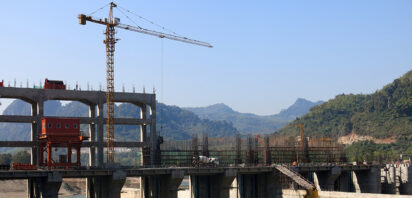
There are early signs of a constructive response, but scale remains modest. Reuters and local reporting describe an agreement enabling up to 100 MW of renewable electricity from Laos to be transmitted to Singapore via existing interconnections through Thailand and Malaysia, reviving and expanding the LTMS-PIP framework.
The capacity is small relative to regional demand, but the structure matters: it operationalizes cross-border wheeling and begins to normalize a regional electricity trade model. If ASEAN wants industrial resilience in a volatile policy environment, this is the kind of plumbing that needs to move from pilot to platform.
A Pivotal Year Ahead
What, then, should policymakers and industry leaders in ASEAN prioritize in 2026?
First, ASEAN should treat grid expansion and regional interconnection as industrial policy, not climate policy. The goal is firm capacity, redundancy, and predictable pricing that can support advanced manufacturing and digital infrastructure. The LTMS-PIP expansion is a useful template, but it needs replication and scale.
Second, ASEAN governments and firms should institutionalize policy-shock readiness in supply chain design. That means building compliance-grade traceability, origin discipline, and export-control awareness into procurement and production systems, because the US policy environment is signaling ongoing contestation over advanced technology flows.
Third, ASEAN should create credible industrial power procurement pathways for manufacturers and data centers, including bankable long-term contracting options and clearer frameworks for clean firm power where possible. Malaysia’s experience shows that demand is rising faster than transition capacity, so the practical task is to ensure reliability first while steadily improving the emissions profile over time.
In 2026, ASEAN’s competitive edge will not be defined by rhetoric about resilience. It will be defined by whether the region can build systems that absorb policy shocks while keeping the lights on.
The views expressed in this article belong to the author(s) alone and do not necessarily reflect those of Geopoliticalmonitor.com.