The world’s trade and power map is being redrawn in real time. In recent months, punitive US tariffs on India and Brazil’s exports have been imposed, citing their continued purchases of discounted Russian crude oil as undermining sanctions and strategic interests. These tariffs have reshaped global energy alliances, pushing India and Brazil to strengthen bilateral ties and reduce dependence on US-aligned supply chains. As a result, just this month, President Trump imposed 50% tariffs on Indian goods, explicitly linking them to New Delhi’s Russian oil purchases, and urged the EU to levy 100% duties on Chinese and Indian imports, aiming to curb “unfair” trade advantages of emerging economies. Even US allies, such as Canada, Japan, and the European Union, are not exempt from Trump’s transactional view of tariffs. However, this policy also risks fostering retaliatory measures and fragmented global governance. Brussels resisted discussion of tariff escalation under US pressure, indicating Europe’s increasing involvement in Trump’s trade wars. This demonstrates how, once focused on US-China trade tensions, tariff diplomacy has evolved into a wider geopolitical tool. In a broader sense, these maneuvers highlight the erosion of traditional alliance-based cooperation, favoring ad hoc, transactional arrangements, aligning with Trump’s vision of trade as a zero-sum contest.
US courts have challenged Trump’s use of executive powers to impose tariffs unilaterally, with a recent appeals court ruling that he cannot use “national emergency” provisions to justify specific duties. This raises a constitutional question about the extent to which the president can use emergency powers to pursue trade wars. The outcome may affect the durability of Trump’s tariff regime and test the balance between congressional oversight and executive discretion in US trade policy. At the same time, a US appeals court has struck down parts of Trump’s tariff regime, causing legal uncertainty in global trade flows. This has reinforced perceptions in the Global South of US economic policy as coercive, prompting leaders to focus on strategic autonomy and alternative alliances.
While Washington frames these tariffs as protective measures for domestic industries, critics see them as a high-stakes gamble in economic coercion, with the potential to destabilize established trade relationships and alliances. This has created a chain reaction across the Global South, igniting new alliances, reviving old rivalries, and accelerating a pivot away from Washington’s orbit. What was once a slow drift toward multipolarity has become a geopolitical riptide, pulling emerging economies into bold experiments in self-determination. The question is no longer whether the Global South will resist, but how far and soon it will reshape the global power map.
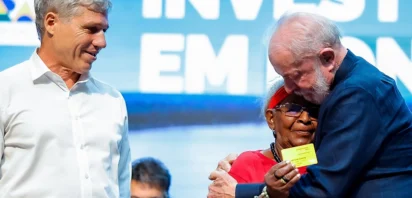
In response, the BRICS bloc, now joined by Saudi Arabia, Egypt, and the UAE, has rallied around multilateralism. Leaders from Brazil, Russia, India, China, and South Africa are calling for a united front against US economic pressure. Indeed, Brazil’s President Lula da Silva is proposing a joint counter-tariff strategy. Persistent tensions between India and China hinder the bloc’s ability to operate cohesively, highlighting the complexities of relationships within BRICS, where geopolitical tensions often take precedence over economic collaboration. China has intensified its focus on domestic innovation in response to the tariffs and implemented retaliatory measures. Countries in the Global South are working to deepen economic ties through platforms like South-South Cooperation and SAARC, as well as with Russia. Southeast Asian countries are keen to cooperate and trade with each other more within ASEAN. This could redraw global trade paths and supply chains, marking a decisive pivot away from the Western-centric models. Meanwhile, Washington’s offer of tariff exemptions to allies willing to negotiate bespoke deals has drawn Japan and the EU closer, while emerging economies are exploring alternative partnerships. Furthermore, Washington has convinced Switzerland to build a gold refinery in the United States and continues to lobby the EU for steep tariffs on China and India.
The implications for the Global South are far-reaching. The weakening of multilateral institutions such as the World Trade Organization (WTO) and the rise of rival blocs like RCEP and BRICS signal that emerging economies are no longer inert recipients of Western aid or directives. They actively leverage relationships with multiple powers to advance their interests. This proactive stance, “non-alignment 2.0,” is a strategic balancing act, enabling countries to navigate ties with significant powers to maximize benefits and strengthen their global standing.
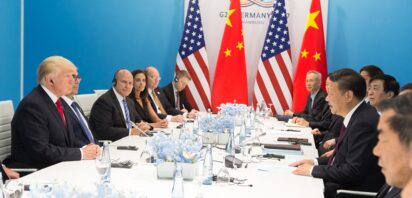
The recent Shanghai Cooperation Organization (SCO) summit captured this momentum. Leaders from over 20 nations, including Xi Jinping, Narendra Modi, and Vladimir Putin, pledged to resist “Cold War mentalities” and committed to significant development financing for member states. For India, facing steep US tariffs, the summit was an opportunity to deepen ties with China and Russia, positioning the SCO as a model for international relations less dependent on US-led institutions.
Moreover, the effects on the Global South may differ from Trump’s expectations. While Trump’s policies threaten to slow GDP growth in advanced economies, Canada’s economy shrank in the second quarter of 2025, owing primarily to falling exports as a result of Trump’s tariffs. The picture for emerging markets is different. By diverting trade away from established partners, tariffs may open up new opportunities for Global South countries to expand their export markets, build regional supply chains, and leverage their growing importance in global governance forums such as BRICS and the G20. These protectionist shocks can paradoxically accelerate South-South cooperation while decreasing reliance on global North markets. Rather than being weakened, the Global South may find itself in a stronger bargaining position, leveraging established flows’ disruption to increase its influence.
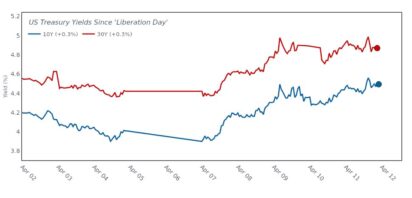
The Trump administration’s protectionist trade policies, particularly the imposition of a 10% blanket tariff on imports and targeted duties on key partners, reshaped global trade flows by straining supply chains and fueling inflationary pressures across industries. The resulting increase in the effective US tariff rate raised concerns about long-term competitiveness and consumer affordability, especially as costs spread across energy, technology, and agricultural markets. Consequently, emerging economies in the Global South face a dual reality: increased vulnerability to global demand volatility and opportunities to strengthen their own bargaining power. Countries like Brazil, India, and China are responding by enhancing South-South cooperation, developing joint trade policies, and establishing independent dispute resolution mechanisms outside traditional Western frameworks. These actions mitigate the immediate impact of US tariffs and lay the groundwork for increased economic sovereignty and a more multipolar global governance architecture.
Trump’s legacy has a complex impact on US-Global South relations. His transactional approach potentially weakens multilateral institutions, and the US withdrawal from international agreements has accelerated the turn towards cooperation within the Southern bloc. As nations seek alternative partnerships to fill the void, Global South nations challenge existing finances and assert their agency. This has led to calls for alternative lending mechanisms and debt restructuring processes less dominated by Western powers. As a result, US foreign policy toward the Global South now stands at an impasse, as Trump’s zero-sum approach tends to push away these nations. However, the growing trend toward multipolarity opens new avenues for engagement amid shifting traditional dynamics of dominance. The United States needs to recognize this shift, adapt to it, and build relationships grounded in mutual benefit, maintaining credibility in a rapidly changing world.
Donald Trump’s leadership and rhetoric may align with the Global South’s concerns over sovereignty, economic independence, and resistance to external influence. His emphasis on national sovereignty aligns with leaders in the Global South who advocate for autonomy from international institutions. His protectionist trade policies reflect a desire for economic independence, focusing on local industries over global agreements. His anti-globalism and conservative values appeal to those who want to preserve traditional cultural identities against Western liberalism.
Trump’s tariff diplomacy, which aims to maintain US dominance, undermines the postwar trade order and creates strategic opportunities for the Global South. The irony is that, while intended to maintain US dominance, this strategy may accelerate the redistribution of economic power to emerging economies, leading to the transition to a multipolar world. Whether the Supreme Court limits his use of emergency powers is unknown. Tariffs are now a key component of Trump’s global strategy, with legal, economic, and geopolitical implications. The administration’s trade weaponization demonstrates the limits of unilateralism, as does the backlash from courts, allies, and affected economies. The era of predictable trade relations has ended, and the potential for long-term leverage or global fragmentation remains to be seen.
President Trump faces criticism for his rhetorical grandstanding, which can weaken his global credibility. The Global North requires tangible actions and collaboration, not just words. Promoting unity and multilateralism will help him build trust and demonstrate that the United States values other nations’ input, leading to impactful policies and collective solutions to global challenges.
The views expressed in this article belong to the author(s) alone and do not necessarily reflect those of Geopoliticalmonitor.com.