Trump’s unprecedented 50% tariffs on Brazil have created the opposite of their intended effect, transforming President Lula from a politically weakened leader into a nationalist champion while accelerating Brazil’s strategic pivot toward China and BRICS. The tariffs—the highest rate imposed by Trump on any country—represent a fundamental miscalculation that is undermining US influence across Latin America and strengthening the very multipolar order that US strategic competitors seek to create.
Rather than compelling Brazil to halt former president Bolsonaro’s prosecution, the politically motivated tariffs have boosted Lula’s approval ratings to 50.2% for the first time since October 2024, creating a powerful rally-around-the-flag effect and provided Lula with an ideal campaign narrative heading into 2026 elections. Meanwhile, Brazil has deepened its partnership with China to historic levels, with bilateral trade reaching $188 billion in 2024 and China stepping up as Brazil’s defender in the face of US “bullying.”
The tariffs took effect August 1, 2025, though they include 694 product exceptions covering $18.4 billion in trade (43.4% of bilateral commerce), sparing key Brazilian exports like Embraer aircraft, orange juice, oil, and minerals while hitting coffee and beef with the full levy. This approach reveals the inherently political rather than economic nature of Trump’s intervention in Brazilian domestic affairs.
China Ascends as Brazil’s Strategic Partner
The tariff crisis has turbocharged Brazil’s relationship with China, transforming economic partnership into strategic alliance. Chinese Foreign Minister Wang Yi’s response was unequivocal: “China resolutely supports Brazil in defending its state sovereignty and national dignity, and opposes groundless interference in Brazil’s internal affairs by external forces.” The statement shows how the Trump tariffs are providing an opportunity for China to project itself as a defender of Global South sovereignty against the United States.
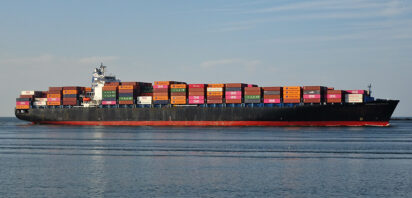
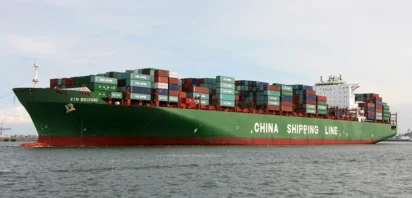
Brazil-China trade has reached unprecedented levels, with January 2025 bilateral commerce jumping 33% to $12.83 billion, driven by an increase of 53.7% in Brazilian exports. China has been Brazil’s largest trading partner since 2009, but the relationship has deepened qualitatively during Xi Jinping’s November 2024 state visit, which produced 37 cooperation agreements and elevated the partnership to a “community with a shared future” for the next 50 years.
China approved 38 new Brazilian meat processing plants in March 2024 the highest number ever, while Brazilian agricultural exports to China reached $57.94 billion in the past year. Perhaps most significantly, 76.6% of Brazil’s soybean exports now flow to China, creating deep supply chain interdependence that insulates Brazil from US economic pressure.
BRICS expansion has also accelerated in the context of US trade pressures. The organization now includes 10 full members representing 50% of global population and 41% of world GDP, with nine new partner countries added in January 2025. President Trump’s threat of additional 10% tariffs on countries pursuing “anti-American BRICS policies” backfired spectacularly when 36 world leaders attended the July 2025 Rio BRICS summit despite his warnings.
Lula Surges on Nationalist Messaging
The tariffs have generated an unexpected political windfall for Lula, creating precisely the nationalist rally that his struggling presidency needed. His approval ratings surged from a low of 40% in May 2025 to 50.2% by July 31 – the first time approval exceeded disapproval since October 2024. Political analysts describe this as a “rally around the flag” effect that has repositioned Lula as defender of national sovereignty against foreign interference.
Lula’s “Sovereign Brazil” messaging campaign has proven remarkably effective across the political spectrum. His July 17 national television address emphasized “defending national sovereignty, multilateralism, and dialogue between nations,” while symbolic gestures like wearing a blue cap reading “Sovereign Brazil Unites Us” in opposition to Trump’s red MAGA imagery. His defiant declaration—”A gringo will not give orders to this president,” resonates strongly with Brazilian nationalism across party lines.
Even traditionally conservative constituencies have rallied behind Lula’s response. The agribusiness sector—normally right-wing aligned—has united in criticism of the politically motivated tariffs, while conservative newspaper O Estado de S. Paulo called Trump’s action “a mafia thing.” Congressional leaders from across the political spectrum, including Senate President Davi Alcolumbre and Chamber Speaker Hugo Motta, have issued joint statements supporting Lula’s defense of sovereignty.
The political mood is resonating in electoral calculations for 2026. With Bolsonaro declared ineligible until 2030 by Brazil’s Supreme Court, Lula has been positioned as the natural defender of democratic institutions, against both domestic coup attempts and foreign intervention.
Regional Realignment
Trump’s Brazil strategy has catalyzed a broader Latin American pivot away from US influence. The Community of Latin American and Caribbean States (CELAC) summit issued calls for “regional unity in response to Trump’s trade war,” while the long-stalled EU-Mercosur trade agreement has gained sudden momentum as an alternative to US-dominated trade flows.
Uruguay’s President Yamandú Orsi echoed that Trump’s protectionist policies are “helping move the EU–Mercosur trade deal closer to reality,” with European Commission President von der Leyen calling the agreement “not just an economic opportunity, [but] a political necessity.” The deal would create a market of over 700 million people with combined GDP of $22 trillion, potentially the world’s largest free trade zone by population.
China has moved aggressively to exploit these openings, offering visa-free travel to Brazil, Argentina, Chile, Peru, and Uruguay, while announcing a €7.7 billion credit line for Latin American infrastructure projects. Chinese control or operation of 31 major Latin American ports provides economic leverage that complements diplomatic initiatives, while Brazil-China cooperation extends into sensitive areas like space technology, with six jointly developed Earth Resource Satellites already operational.
A Political Lifeline for Lula
Trump’s Brazil tariffs represent one of the most significant strategic blunders of his trade policy agenda, achieving precisely the opposite of intended outcomes across multiple dimensions. Rather than compelling Brazilian compliance with US preferences, the tariffs have strengthened Lula politically, accelerated Brazil’s pivot toward China, and catalyzed regional integration initiatives that exclude US participation.
The episode showcases flaws in weaponizing trade policy for political objectives. The 694 product exemptions covering 43.4% of bilateral trade demonstrate that comprehensive economic pressure would harm US interests more than Brazilian ones, while the selective approach reveals the inherently political rather than economic logic driving the tariffs.
Most significantly, the tariffs are helping to consolidate the multipolar world order that US strategic competitors are seeking to create. China’s successful positioning as Brazil’s defender against US bullying provides a template for Beijing’s expanding influence across the Global South, while regional integration initiatives like the EU-Mercosur deal reduce dependence on US-dominated trade relationships.
The domestic political boost for Lula, transforming him from a weakened incumbent into a nationalist champion, may have lasting implications for US-Brazil relations extending far beyond the current crisis. With Lula positioned as defender of sovereignty against foreign interference and Brazilian public opinion shifting decisively against Trump, the foundation for future cooperation has been severely damaged.
Trump’s approach has essentially handed China and Russia a strategic victory in Latin America without requiring any significant investment of resources or political capital. The Trump tariffs have essentially validated longstanding Chinese arguments about US hegemonic behavior while providing a concrete justification for countries to seek alternative partnerships and institutions.
The views expressed in this article belong to the author(s) alone and do not necessarily reflect those of Geopoliticalmonitor.com.