The July 27 trade framework between the United States and the European Union marked a pivotal moment in the evolving landscape of transatlantic commerce. What was once the most liberal and mutually beneficial trading relationship in the world (with average tariffs near zero) has now shifted into a structurally imbalanced arrangement.
Under the new agreement, the United States imposes a 15% average tariff on most EU goods, a stark increase from the pre-2017 average of approximately 1.5%. This reconfiguration was narrowly achieved days before a 30% tariff was scheduled to take effect, which would have severely disrupted bilateral trade.
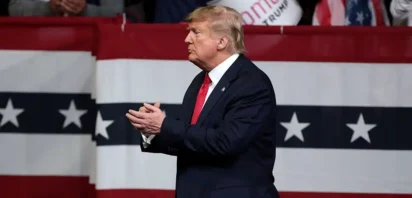
The deal emerged from a backdrop of growing US protectionism under President Trump, who has repeatedly framed the EU’s trade surplus as evidence of unfair competition. In US domestic politics, this surplus became politically salient, reinforcing a narrative that foreign partners exploit US market openness. As a result, the Trump administration deployed tariffs not merely as a tool of trade defense, but as a means of forcing strategic concessions.
From a structural perspective, the EU’s position was compromised by its dependence on export-driven growth and internal political fragmentation. While the European single market lends the bloc immense economic weight, its trade diplomacy is constrained by the need to achieve consensus among 27 sovereign member states, each with distinct sectoral interests and exposure to the US economy. This diffuses its bargaining coherence and allows Washington to impose asymmetrical outcomes with limited resistance.
Thus, what appears as a temporary tariff compromise is, in fact, a codification of an altered strategic equilibrium, one in which the United States, leveraging its central position in international trade and finance, redefines the parameters of economic engagement on terms that favor its own interests.
Energy and Defense Trade Reforge Strategic Dependency
A central feature of the agreement is the EU’s pledge to purchase $750 billion in US energy products (primarily oil, natural gas, and nuclear fuel) over the next three years, alongside $600 billion in investment into the American economy by 2029. These commitments include unspecified acquisitions of US defense equipment and agricultural goods, such as soybeans and corn. While these targets are politically significant, their actual implementation hinges on decisions made by private firms rather than by EU institutions, since trade and investment are market-driven activities within the bloc.
The magnitude of these pledges is striking. US energy exports to the EU in 2024 were valued at approximately $78.5 billion. To meet the $750 billion target would require nearly a tenfold increase in just three years, a scenario that stretches the limits of physical infrastructure, shipping capacity, and market absorption. Europe’s energy diversification strategy following the escalation of the Ukraine war in 2022 has already reoriented procurement toward US liquefied natural gas (LNG), but not at the volumes stipulated in the agreement.
In this context, the agreement transcends economics. It reflects a calculated realignment of European procurement and capital flows toward US industrial and geopolitical priorities. The sectors targeted (fossil fuels, military hardware, and high-demand agricultural commodities) are integral to US national strategy. By committing the EU to long-term consumption of these goods, Washington is aiming for captive demand and deepened dependency.