Just over a month after the United States entered a bilateral ceasefire agreement with Houthi rebels in Yemen, which effectively ended active conflict, a series of Israeli and US military strikes targeting Iran shifted the region in ways that Washington cannot afford to ignore.
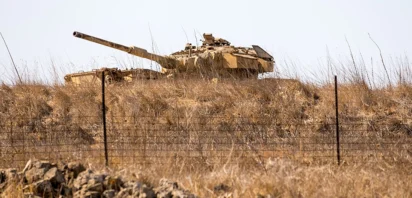
As part of Operation Rising Lion, the Israeli Air Force conducted over 1,000 strikes, dropping hundreds of munitions on Iranian ballistic missiles and storage sites. The operation also included targeted assassinations of senior Iranian Revolutionary Guard Corps (IRGC) officials, such as IRGC Chief Hossein Salami, Armed Forces Chief Mohammad Bagheri, Air Force Chief Amir Hajizadeh, and nine nuclear scientists.
Only hours afterwards, the United States launched a coordinated strike on three Iranian nuclear sites — Fordow, Natanz, and Isfahan — with President Trump himself proclaiming that “Iran’s key nuclear enrichment facilities have been completely and totally obliterated.” Two days later, on June 23, Israel launched another wave of airstrikes across Tehran, hitting “regime targets and government repression bodies,” including the notorious Evin prison that holds political prisoners and dissidents and the Fordow nuclear site. Despite public statements by the Houthis that they would retaliate if the United States joined the war against Iran, their threats were mostly hollow.
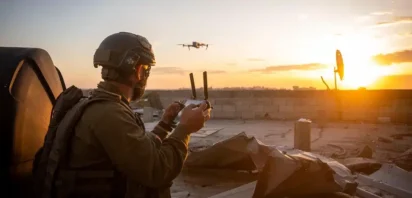
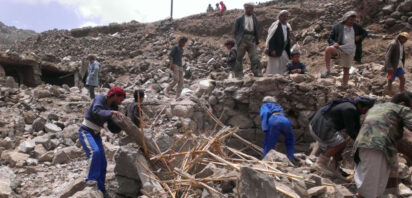
While the Houthis have claimed several missile attacks on Israel since the start of the Israel-Iran war, making them the only Iranian proxy to join the war in solidarity with Tehran, the attacks have had limited impact. Some missiles were intercepted by Israeli air defense systems, others missed Israel entirely, and at least one airstrike reportedly injured Palestinian children. Their lackluster performance may stem from depleted weapon stockpiles following the thousands of airstrikes associated with US Operation Rough Rider earlier this year. Alternatively, it could reflect strategic restraint: the Houthis likely recognize that support from Tehran may be limited in the near term and are instead conserving resources while rebuilding their arsenal through domestic weapons production and alternative suppliers. Another possibility is that the Houthis are intentionally avoiding escalation as Iran may be trying to relocate some of its ballistic missile and drone operations to territory under the group’s control, according to the Yemeni government.
Regardless of the motive, the Houthis’ response to the Israel-Iran war was far from a propaganda success. Unlike their high-profile maritime attacks in the past, the Houthis’ most recent campaign against Israel failed to project strength or strategic relevance—undermining their self-styled image as the vanguard of the regional resistance. Even so, the Houthis will be feeling the pressure of Iran shifting its focus away from its proxies and allies while it regenerates its own military capabilities, giving the group fewer options for resupply, less political cover, and more to lose if hostilities resume.
The current situation has opened a window for the United States and its partners to engage with the Houthis and test the group’s pragmatism — a trait the Houthis have demonstrated earlier this year when they engaged in back-channel talks with Washington. The Trump administration should seize this opportunity to push the Houthis toward a clearer and more enforceable roadmap agreement that prioritizes a comprehensive ceasefire and humanitarian access for, as well as steps toward, a durable political settlement. Such engagement would likely require difficult trade-offs that the group can market as a win, including discussions around sanctions relief and the potential lifting of the Foreign Terrorist Organization (FTO) designation. While the details will require careful negotiation, the U.S. should aim to lock in de-escalation, preserve the fragile gains made over the past year, and move Yemen closer to a post-conflict political transition.
However, that window is quickly closing. The Houthis are an incredibly resilient and adaptable group, demonstrated by their ability to maintain operational capacity and territorial control despite being pummeled by over 25,000 Saudi airstrikes between 2015 and 2022. Adding to those concerns, the group has been working to widen its support base by offering Chinese ships free passage through the Red Sea in exchange for Chinese-made weapons, receiving weapons and targeting intelligence from Russia, and even collaborating with al-Qaeda’s Somali affiliate al-Shabaab despite sectarian differences.
Moreover, progress in Yemen will not come from Houthi engagement alone. The United States must also strengthen the Presidential Leadership Council (PLC), despite its fractured nature and transitional status, as it remains a necessary vehicle for engagement and the best path forward for a future legitimate government. International support should go beyond military and intelligence assistance and should bolster the body’s constitutional reform processes and financial transparency. Recognizing that much of the heavy lifting will need to come from regional actors, particularly Saudi Arabia and the United Arab Emirates, the United States should seize the opportunity to shake Riyadh and Abu Dhabi out of their recent strategic complacency and re-engage them on a credible, unified approach to bolstering the PLC. The U.S. should also encourage its Gulf partners to invest in stabilizing the PLC’s institutions, supporting the integration of its armed factions, and promoting technocratic leadership. Even if the PLC does not persist in its current form, strengthening its core functions will be vital for laying the groundwork for a post-conflict governing body that the United States and its allies can treat as a credible long-term partner.
If the Trump administration is serious about creating a new security architecture in the Middle East, it cannot afford to leave Yemen out of the equation. The shockwaves of the US and Israeli strikes on Iran constitute a strong — but temporary — blow to the group that Washington should treat as an opportunity to turn military momentum into diplomatic leverage. Doing nothing risks the rebels regrouping under new patrons, potentially deepening domestic and regional instability, and squandering the clearest opening for pressure and progress in years.
The views expressed in this article belong to the author(s) alone and do not necessarily reflect those of Geopoliticalmonitor.com.