On June 22, at dawn, the worst-case scenario unfolded from the perspective of the Iranian leadership: the United States, in support of Israel, deployed heavy bombers against Iran’s underground nuclear facilities in Fordow, Natanz, and Isfahan—targets that, according to US statements, were destroyed. Iran now stands against not just Israel, with its unmistakable edge in military and intelligence capabilities, but also against the direct involvement of a global superpower. Tensions between Washington and Tehran were already elevated following the 2020 assassination of Qasem Soleimani—commander of the Quds Force, the elite clandestine branch of Iran’s Islamic Revolutionary Guard Corps (IRGC) responsible for foreign operations and widely considered Iran’s second most powerful figure. At that time, Iran responded with a limited missile attack on US military bases in Iraq, but the conflict quickly de-escalated by February 2020.
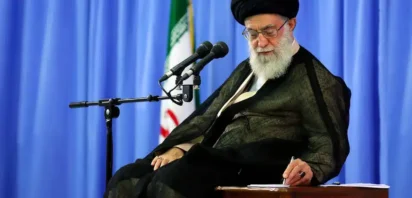
However, the current crisis differs markedly from the 2019–2020 US–Iran standoff. This time, the survival of the Iranian regime appears to be in jeopardy. This analysis aims to examine the key questions and strategic choices facing Iran’s leadership in this critical moment. According to the author, Supreme Leader Ali Khamenei must now balance two interdependent priorities: preserving domestic stability and crafting a credible response to the attack.
Maintaining Political Stability and Avoiding a Power Vacuum
The Iranian leadership is justifiably concerned about the possibility that armed domestic groups, with foreign support, could organize a rebellion within the country and that Washington and Tel Aviv may ultimately seek to target and eliminate Iran’s political leadership.
In this context, the key question centers on the succession of Iran’s top-level leadership. The issue has been a topic of political speculation for years, with Ebrahim Raisi—who died in a helicopter crash in 2024—widely considered the leading candidate. According to press reports, Supreme Leader Ali Khamenei spent days in an undisclosed location, likely a bunker, and was avoiding the use of electronic devices to prevent Israeli or US intelligence from tracking him. At 86, Khamenei has reportedly designated potential successors to prevent a power vacuum in the event of his death. When Ayatollah Khomeini died in 1989, the Assembly of Experts (Majlis-e Khobregan), composed of 88 Islamic clerics, elected his successor within 24 hours. While the Majlis-e Khobregan may ultimately choose a single individual, there has also been discussion about a 3–5-member leadership council assuming the role. This collective approach is seen as a potentially stabilizing measure, particularly if Israel or the U.S. persists in targeting Iranian leaders.
Some speculate that, given Iran’s current state of war, a military figure may temporarily assume the presidency, with the Majlis-e Khobregan selecting Ali Khamenei’s successor once the conflict ends. Among the potential candidates mentioned are Mojtaba Khamenei, the Supreme Leader’s son; Hassan Khomeini, the grandson of Ayatollah Khomeini; and Mohsen Araki, a member of the constitutional body. However, some sources claim that Mojtaba Khamenei is not among the three successors reportedly named by the Supreme Leader. Additionally, Khamenei has already designated successors for key military leaders in the event of further targeted assassinations by Israel. On July 5, Khamenei made a public appearance at a Shia mourning ceremony in Tehran commemorating Ashura—the Muslim holy day observed on the 10th of Muharram. It marked his first public appearance in weeks. Khamenei did not deliver a major address, but the message was clear: defiance toward the West and a show of stability amid the chaos.
For the Iranian leadership, controlling the narrative of the conflict is vital to securing public support. In recent years, Iranian society has grown increasingly fragmented. Over the past two to three years, the regime has faced one of its most severe political and economic crises. A telling example is the energy crisis—marked by daily two-hour power outages even before the Israeli intervention—in a country that possesses some of the world’s largest oil and gas reserves. Like many Arab republics, Iran has tried to maintain social stability by subsidizing basic foodstuffs. Politically, however, one of the regime’s most notable failures has been its inability to enforce the mandatory dress code. Despite a hardline crackdown in 2022–2023, the sight of women without headscarves has become increasingly common, especially in Tehran.
An attack on a country often strengthens its sense of national unity, and this dynamic is evident in Iran. On June 20, Tehran’s leadership organized a large anti-Israel demonstration, drawing significant crowds. Thousands protested in Tehran and across the region against Israel’s war on Iran. Demonstrators chanted ‘Death to America’ and ‘Death to Israel,’ burning the flags of both nations. In Lebanon, Iraq, and Yemen, Iranian proxies and other Shiite groups rallied following Friday noon prayers. On the same day, hundreds of thousands of Iraqi Shiites rallied with chants of ‘Iran is not alone.’ Since 1979, anti-Israel and anti-American sentiment has been central to the regime’s ideology, forming the backbone of the Iranian leadership’s narrative. A key element of this narrative is to minimize the perceived impact of military strikes by the U.S. and Israel. Following the heavy US bombing of the Fordow facility, Iranian officials downplayed the damage, claiming the site was largely unharmed as they had anticipated the attack and removed all critical assets beforehand.
Iran is also conveying a resolute message to the global community: it will relentlessly pursue its nuclear program, which is firmly rooted in international law, particularly the right to a peaceful nuclear power generation. Yet, it remains uncertain whether Tehran will openly admit to any military dimensions of the program in response to US strikes—a claim it currently denies by citing a verbal religious decree (fatwa) issued by Ali Khamenei. Official Iranian statements emphasize resistance to the U.S. and Israel, invoking ideology and nationalism to frame Iran’s position in the ongoing conflict as a form of quasi-successful defiance. In mid-June, Iran arrested two individuals suspected of ties to Israel and espionage for the Mossad intelligence agency. During the ensuing 12-day conflict, Iranian intelligence and security forces reported detaining more than 700 people during an ‘espionage crackdown,’ accusing them of having similar ties and labelling them as ‘Israeli agents.’ It has become clear that Mossad once again outmaneuvered Iranian intelligence, having planned the June operation months in advance. While Iran cannot conceal this reality from its domestic audience, the regime has made it unmistakably clear that it will adopt a hardline approach and will not hesitate to execute those found collaborating with Israel.
A critical challenge for Iran’s leadership lies in the country’s diverse minorities and the non-state armed groups active within them. While Persians make up just over half of the population, there are approximately 8 million Kurds, nearly twice as many Azerbaijani people, and a Baluchi community estimated between 2 to 4 million. In September 2022, protests surged notably in Kurdish and Baluchi regions—unrest that Iranian authorities have only partially managed to contain. Armed groups in both areas openly aim to overthrow the current regime. Additionally, the Mojahedin-e Khalq (MEK), an opposition organization with around 10,000–13,000 armed members, could exploit the instability to further weaken the government. The military confrontation’s ultimate impact on Iran remains uncertain, as does the regime’s ability to maintain control amid these pressures.
Diplomacy Closed Off: Potential Iranian Reactions to the US Attack
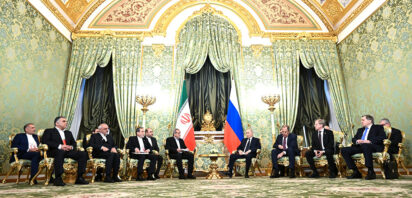
Following the 2024 presidential election, Iran’s new leadership—President Masoud Pezeshkian and Foreign Minister Abbas Araghchi—has openly emphasized the necessity of engaging in relations and negotiations with the U.S. and the wider Western world. The greatest losers in the ongoing conflict are the Iranian reformists who sought to secure a nuclear agreement. On the day of the strike, Araghchi expressed how Iran might have returned to the negotiating table had it not been forced to leave. He noted that, in his view, Israel’s illegal intervention against Iran occurred just two days before the sixth round of talks scheduled for June 15, which was then followed by a US military strike. From Tehran’s perspective, only Moscow remains a potential mediator; yet, Iran is acutely aware that President Putin could sacrifice Iranian interests in a possible deal with Washington over the Ukraine war. Thus far, aside from rhetorical support, Iran has received no tangible assistance from Russia. With diplomacy faltering, the pressing question remains: how will Iran respond to the US attack on June 22?
- Sidestepping the US Strike: Escalating Pressure on Israel. Iran could choose to ignore the recent US strike and instead intensify military pressure on Israel. However, this strategy is unlikely due to domestic political considerations, as it would entail a serious loss of prestige for the Tehran leadership. Iran has already begun deploying more advanced missile systems against Israel, including the recently used Khoramsar-4. Nevertheless, given the scale and frequency of Israeli retaliatory strikes, Iran’s capacity to sustain military operations may be rapidly depleted.
- Targeting US Forces. Approximately 40,000 US troops are currently stationed across the region—including in Iraq, Bahrain, Kuwait, and Qatar—and Iranian leaders have openly identified them as potential targets. Any such attack would likely provoke a strong US response, raising concerns that the entire Gulf could spiral into a broader conflict. Iran maintains substantial influence over several non-state armed groups in Iraq, particularly Shia militias, which could be mobilized to target US assets. Tehran might also aim to broaden the conflict on three strategic fronts:
- The Gulf States — Iran could aim to disrupt Arab-Israeli normalization efforts by drawing the United Arab Emirates (UAE) and Bahrain, signatories of the Abraham Accords, into the conflict.
- Iraq and Jordan — Both states serve as transit zones for Iranian missiles and, in Iraq’s case, Israeli air operations, making them vulnerable to escalation.
- Türkiye — President Erdoğan, a vocal critic of both Israeli and US interventions, has no interest in a strengthened Iran. At the recent Organization of Islamic Cooperation (OIC) meeting, he suggested that Western powers are once again attempting to redraw the map of the Middle East—a reference to the Sykes-Picot Agreement—and called for collective opposition.
Regional actors remain cautious about engaging in direct conflict; while they oppose Iran’s nuclear weapons program, they are equally wary of the potential destabilization or regime change in Tehran. Israel’s alleged collaboration with Iranian Kurdish organizations, for instance, runs the risk of escalating tensions with Türkiye. As observed in the hours leading up to the ceasefire, Iran launched limited missile strikes on US bases in Qatar and Iraq—an approach closely resembling its response during the 2019–2020 escalation that led to the IRGC launching missiles at the al-Asad Airbase in western Iraq. Tehran’s last attacks—hailed by the government as a ‘mighty and successful response’ to ‘American aggression’—were strategically aimed at achieving rapid de-escalation, especially given that the regime’s survival was now directly at stake.
- Choking the Strait of Hormuz. Iran has reportedly disrupted maritime traffic in the Strait of Hormuz—a key passageway for nearly a quarter of the world’s oil shipments—by jamming ships with electronic signals, impairing their navigational systems and significantly increasing the risk of accidents. Two vessels collided off the coast of the UAE just days ago, likely due to such interference. With the Iranian-backed Houthi movement (Ansar Allah) controlling substantial territory in Yemen—including key areas along the Red Sea coast and near the Bab al-Mandeb Strait, enabling them to disrupt shipping and attack vessels—the potential closure of the Strait of Hormuz presents a significant strategic challenge for the West. Even militarily superior powers can find themselves vulnerable at such maritime chokepoints. Economic analysts warn that a prolonged disruption could lead to a sharp and sustained surge in oil prices, with some forecasts projecting levels as high as $120 to $130 per barrel.
- Disrupting the Digital Front. Iran has developed a sophisticated cyber warfare capability over the past decade, allowing it to conduct covert operations against critical infrastructure and strategic targets. In response to US airstrikes, Iran could launch targeted cyberattacks aimed at disrupting vital US systems and those of its allies. These attacks might focus on disabling or degrading energy grids, financial institutions, communication networks, and transportation systems, causing economic and logistical chaos without direct military engagement. Additionally, Iran could target the oil and gas infrastructure of Gulf Cooperation Council (GCC) states aligned with the United States, thereby exerting indirect pressure on US interests by threatening global energy supplies. Cyber operations also provide Iran with a means to maintain plausible deniability, complicating efforts by the U.S. and its allies to attribute and retaliate effectively. Cyberattacks could serve as both a tactical tool to inflict damage and a strategic message to signal Iran’s resilience and capacity to respond asymmetrically.
A Crisis with No Exit?
While the world closely monitors Iran’s leadership, few acknowledge that the regime’s primary motivation is its survival, a factor that frequently leads to unpredictable and seemingly irrational decisions. At the same time, it remains unclear how Israel can disengage from a conflict that has grown well beyond its initial objective of targeting nuclear facilities. The emergence of a new nuclear arsenal in the region clearly contradicts the national interests of many states. Preventing additional escalation and ensuring a prompt return to peace are crucial from a wider security perspective. Ongoing instability risks empowering radical groups and disrupting key oil and liquefied natural gas (LNG) transport routes — developments that could drive inflation.
Despite its ambitions, Tehran is unlikely to provoke a full-scale war. Instead, the most probable response is a hybrid warfare strategy that blends asymmetric retaliation via proxies with diplomatic maneuvering and domestic propaganda. While avoiding direct large-scale confrontation with the U.S., Iran aims to convey a clear message that any attack will provoke serious consequences. Ultimately, the coming months will test Tehran’s ability to navigate a precarious path between defiance and restraint. How Iran balances these pressures will shape not only its own survival but also the stability of an already volatile region.