The unfolding military confrontation between Israel and Iran introduces significant geopolitical risk to the commercial realization of the India-Middle East-Europe Economic Corridor (IMEC). Earlier in 2023, some of the anticipated challenges for the IMEC corridor were evident, namely the paramount need for security and stability in the Middle East, which hasn’t been the case. As the Israel-Iran conflict deepens following Israel’s multi-pronged air operation “Rising Lion” against Iran’s nuclear infrastructure, regional security dynamics have entered a new phase of volatility. This new outlook not only threatens maritime and land-based supply chains amid Iran’s retaliation, but also emerging strategic partnerships—particularly the India–UAE segment of IMEC. For regional policymakers and security officials, the moment calls for a sober reassessment of IMEC’s rollout pace, security safeguards, and diplomatic frameworks.
IMEC: A Trade Corridor Derailed by Geopolitical Risk?
Unveiled at the G20 Summit in September 2023 with the backing of the United States (US), the IMEC corridor was envisioned as a transformative new trade route linking India to Europe via the United Arab Emirates (UAE), the Kingdom of Saudi Arabia (KSA), Jordan, and Israel. The project would serve as a counterweight to China’s Belt and Road Initiative (BRI), fostering economic connectivity and consolidating strategic trust between regional and global powers.
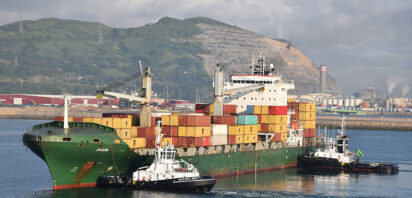
The India–UAE segment forms IMEC’s foundational leg, enabling maritime goods to flow westward to Gulf ports like Jebel Ali, Fujairah, and Khalifa before transitioning to overland transport across the Arabian Peninsula toward Europe. However, the sharp escalation between Iran and Israel jeopardizes this initial implementation phase.
Iran possesses a wide spectrum of asymmetric maritime capabilities, including naval mines, drone boats, coastal missile batteries, and sympathetic proxy actors such as the Houthis in Yemen. Tehran has repeatedly demonstrated its capacity and willingness to disrupt maritime traffic in the Strait of Hormuz, the Bab el-Mandeb Strait, and the Gulf of Oman—choke points that directly impact the UAE’s shipping infrastructure and India’s west coast export lanes.
In the wake of Israel’s June 2025 strikes, the Iranian leadership vowed a “strategic and extended retaliation,” suggesting the likelihood of proxy activation and hybrid threats. A campaign targeting commercial shipping, particularly vessels associated with the GCC ports or Indian cargo, would drive up insurance premiums, deter private sector investment, and delay or reroute foundational maritime flows along the IMEC corridor.
All of this serves to erode the political feasibility of commencing IMEC operations in the current geopolitical climate, especially if India and the UAE are forced to recalibrate their maritime logistics toward alternative routes—such as via Oman or East African ports.
UAE’s Strategic Dilemma: Growth or Deterrence
The UAE, a central IMEC player and host of world-class ports and duty free zones, finds itself in a precarious position. On one hand, the UAE seeks to accelerate its role as a logistics, trade, and innovation hub aligned with India and Israel. On the other hand, the UAE and KSA have maintained relatively stable diplomatic and partial economic ties with Iran since their rapprochement in 2022.
The Israel-Iran conflict heightens the UAE’s geopolitical risk, particularly in light of its proximity to potential Iranian or Houthi maritime aggression. Emirati critical infrastructure—ports, energy terminals, and airports—could come under threat from a broader Iranian response, especially if Tehran interprets IMEC as part of a US-aligned strategic encirclement. The threat level increases further if the U.S. officially joins with Israeli strikes on Iran, and thus, Iran will likely view regional US-Arab allies as potential targets to pressure Washington; that is, unless the these strikes are able to diminish Iran’s naval, air force, and ballistic missile capabilities so as to blunt the threat.
This threat matrix overall may force the UAE to slow its IMEC commitments, at least in visible coordination with Israel, to avoid retaliatory costs. Instead, the UAE may choose to pursue a quiet balancing strategy, advancing IMEC logistics with India while delaying explicit operationalization of the land and rail links beyond the Saudi territory.
Saudi Arabia and the Question of Israel’s Integration
Saudi Arabia’s role is indispensable to the IMEC corridor: it hosts the land bridge connecting UAE ports with Jordan and Israel. Yet, Saudi-Israeli normalization remains incomplete and slowed as a result of the unresolved conflict in Gaza, and the current Israel-Iran conflict risks freezing progress entirely.
Riyadh has no strategic interest in being pulled into a binary confrontation. If the conflict expands or becomes prolonged, KSA may condition its IMEC participation on US security guarantees or, at a minimum, sequencing the project in phases that prioritize intra-Arab cooperation and regional stability first – an unlikely outcome in the short-term.
This geopolitical fragmentation undermines IMEC’s original vision and complicates the India–UAE pipeline, as the route’s viability becomes contingent on downstream linkages that are increasingly uncertain.
India’s Strategic Options
India, a principal driver of IMEC, faces a difficult strategic calculus. As the eastern anchor of the corridor, India benefits from expanded access to Gulf and European markets, energy trade diversification, and greater geopolitical stature.
However, India must now account for the growing regional security volatility, especially concerning maritime exposure in the Arabian Sea and potential Iranian covert activity. India could explore several contingency tracks:
- Diplomatic neutrality: Avoid overtly aligning IMEC rhetoric with US or Israeli objectives to preserve working relations with Iran. Although theoretically this is a possible pathway, it is highly unlikely that India will go in this direction.
- Security partnerships: Strengthen naval and overall military cooperation with the UAE and KSA to safeguard shipping lanes and infrastructure. This pathway represents one of the benefits of IMEC, as it enhances regional integration among the involved nations, including strategic security cooperation.
- Diversification: Invest further in alternative trade corridors, such as INSTC (International North-South Transport Corridor) via Iran-Russia, or pursue temporary expansion via Chabahar Port, which enjoys significant Indian investment and Iranian support. However, this pathway remains vague given how Iran will already be preoccupied with its increasing risk of full-scale war, as well as an already preoccupied Russia in Ukraine.
The Israel Factor: A Fragile IMEC Endpoint
The intention behind Israel’s inclusion in the IMEC corridor was to establish a link to European ports, utilizing its rail connectivity and the Haifa Port. However, its deepening confrontation with Iran, in addition to instabilities surrounding it in Gaza, Syria, and Lebanon, now places its infrastructure and logistics systems at direct threat from missile attacks and cyber strikes.
Iran-backed militias in Lebanon and Syria may launch sustained attacks on Israel’s northern transport corridors. At the same time, the viability of rail transit across Jordan to Haifa becomes politically and logistically uncertain in the face of growing public opposition and strategic caution from the Jordanian leadership.
This undermines the European-facing end of IMEC and may prompt a decoupling, necessitating firm steps in the execution of IMEC on different fronts until security conditions stabilize in the region. That, in turn, reduces the attractiveness of immediate India-UAE activation, as goods may reach a dead end in Jordan or KSA.
Policy Recommendations
To safeguard the corridor’s strategic viability amid ongoing conflict, participating governments—particularly India, the UAE, KSA, and Israel—should consider the following measures:
- Adopt a phased implementation strategy: Prioritize the India–UAE–Saudi segment as an initial commercial axis, with a plan to integrate Israel when geopolitical tensions deescalate.
- Strengthen maritime security cooperation: Establish joint naval task groups, MDA (Maritime Domain Awareness) centers, and escort protocols for commercial vessels across the Arabian Sea and Gulf.
- Diversify corridor narratives: Reframe IMEC as a multilateral economic corridor focused on resilience and regional growth to prevent escalatory perceptions and resistance from non-participating nations in the region.
- Institutionalize conflict monitoring: Create a corridor-specific Strategic Risk Assessment Task Force to monitor geopolitical developments, infrastructure exposure, and proxy threats.
- Strategically engage European and US partners: Solicit financial guarantees, naval support, and diplomatic endorsements to de-risk the India-UAE segment and encourage investor confidence. A flourishing IMEC would not be realized without full US support and security backing to participating nations, who are already strategic US allies.
The vision of IMEC remains compelling, but its realization is now subject to the shifting sands of Middle Eastern geopolitics. The escalating Israel-Iran conflict introduces security dilemmas that could fracture the corridor’s intended integration, particularly in its early phase between India and the UAE as well as KSA and Israel. For security strategists, the challenge is to preserve strategic momentum while managing volatility—through adaptability, diplomacy, and phased execution. IMEC’s future now depends less on ambition and more on calibrated resilience.