The INSTC as it is imagined is nothing less than a geopolitical game-changer: a 7,200-km trade corridor linking St. Petersburg to Mumbai, one that wires India into the trade circuits of Central Asia and enables Russia to reach new and lucrative markets in the Global South via the Persian Gulf.
For India, the INSTC represents a homegrown alternative to China’s Belt and Road, a new avenue into European markets, a fount of cheap coal and oil from Russia, and an insurance policy should there ever be a falling out with the West. For Russia, it offers an escape from the vice of Western sanctions and a promise of privileged position in the trade flows of tomorrow. For Iran and Azerbaijan, the INSTC is an opportunity to extract developmental and trade concessions from the project’s primary backers. And for the BRICS, the INSTC is a chance to flex the bloc’s muscles by actualizing a project that reroutes trade flows beyond the reach of US sanctions.
This is the vision of the INSTC. The reality, however, is entirely different, as the project has been largely stalled for over 20 years, now requiring significant investments to fill rail gaps and expand terminal capacity in the Caspian Sea legs. Moreover, US sanctions continue to hang like a sword over the project, sapping its momentum.
This backgrounder will assess these risks while examining the interests and regional geopolitics behind the INSTC trade corridor.
The Evolving Geopolitics of the INSTC
The INSTC is not a new vision, having been originally mooted in 2000 and then ratified by India, Iran, and Russia in 2002. It wasn’t long before the original three were joined by other interested parties, including Azerbaijan, Armenia, Belarus, Kazakhstan, Kyrgyzstan, Tajikistan, Turkey, Ukraine, Oman, and even Syria – all of which saw value in the INSTC drive to establish a direct trade route between the Indian Ocean, Persian Gulf, and the Caspian Sea, and then further into Northern Europe via Russia. From a raw efficiency perspective, the INSTC route represents an attractive alternative to traditional Suez Canal trade flows, with the potential to reduce transit times by up to 40% and freight costs by up to 30%.
Fast-forward nearly 25 years and the INSTC project has still not been realized. This glacial pace is more a consequence of geopolitics than anything else, as the project was and remains a lucrative endeavor for all states involved. The delays mostly trace back to Iran, a founding member and key leg of the trade corridor, which has often been targeted by Western sanctions to the detriment of the INSTC. These include the so-called Axis of Evil-era sanctions, nuclear proliferation-related sanctions, and terrorism-related sanctions dating back to the 1990s, all of which have at various times made it difficult for Indian and Russian companies to operate in Iran.
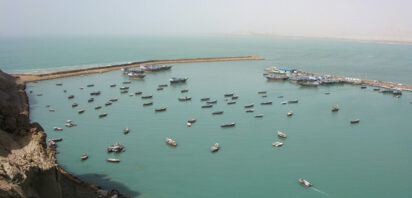
The 2015 Joint Comprehensive Plan of Action (JCPOA), signed by Iran and several world powers including the United States, was assumed to be a turning point. The agreement lifted sanctions and paved the way for the INSTC’s return to the region’s diplomatic agenda. India wasted no time in moving forward, signing an MOU to develop and operate Iran’s Chabahar Port, a rival to Pakistan’s Gwardar Port and presumed terminal of choice for the INSTC. But then in 2018, Iran became state non-grata once again when the Trump administration pulled out of the JCPOA and began re-applying sanctions.
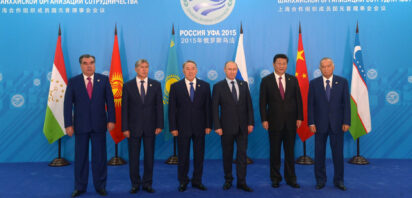
Yet this new sanction regime has failed to put a halt to the INSTC like before. On the contrary, the trade corridor remains high on the agenda in bilateral meetings between member states, and India is determined as ever to develop Chabahar Port in Iran. Slowly but surely, the project is set to become a cause célèbre of the BRICS bloc, with INSTC-member Azerbaijan now potentially in line for BRICS membership.
What has changed? Geopolitics. The world of 2024 is not that of two decades ago, and the middle powers of the INSTC are much more willing to assert their own interests at the expense of Washington’s preference. So much is evident when one assesses the interests and strategies of the main INSTC players.
India’s Role and Interests
The first and arguably most important of the main INSTC backers is India, which has long viewed the trade corridor as indispensable for strengthening its trade ties with Central Asia, a region that is rich in hydrocarbons and highly geopolitically significant. Critically, however, these trade links must be forged without the involvement of New Delhi’s arch-rival, Pakistan. The permanently fraught status of India-Pakistan relations explains why the first leg of the INSTC is maritime rather than over land. The INSTC’s linking up at Chabahar Port is another geopolitically loaded decision, as it allows for Indian access to the critical Afghanistan market via a new Iranian rail link from Chabahar to Zahedan. Any advance in trade relations between India and Afghanistan reduces the latter’s historical economic overreliance on Pakistan, thus eroding the ‘strategic depth’ that Islamabad has long enjoyed in Afghan politics and society.