Geopolitics Weekly contextualizes emerging geopolitical trends around the world, distilling the cacophony of global events into one easy reader. It lands in the inbox of Geopolitical Monitor subscribers every week. This edition has been made available to all our readers.
Middle East
Israel-Iran War Erupts over Iran Nuclear Program
What Happened
On June 13, 2025, at approximately 0300 hours local time, Israel launched an extensive and coordinated military operation against the Islamic Republic of Iran. The campaign, designated Operation Rising Lion, represented the most ambitious Israeli offensive against Iranian territory to date. Involving over 200 fixed-wing combat aircraft, the operation struck an estimated 100 strategic targets across Iran, including nuclear development sites, ballistic missile production facilities, and integrated air defense systems.
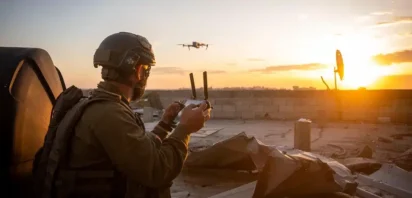
Among the most consequential targets were the Natanz uranium enrichment complex, long identified by Western intelligence as a key hub in Iran’s nuclear fuel cycle, along with the Isfahan uranium conversion facility and military installations surrounding Tabriz and Tehran. Concurrently, Mossad-directed operatives on the ground executed sabotage missions aimed at degrading radar networks and neutralizing surface-to-air missile batteries. These missions were enabled by prepositioned drones and clandestine launch platforms operating from within Iranian territory.
The strikes resulted in the confirmed deaths of high-value Iranian personnel, including Major General Hossein Salami (Commander-in-Chief of the IRGC), General Mohammad Bagheri (Chief of Staff of the Armed Forces), and several nuclear physicists critical to Iran’s enrichment and weaponization programs.
Global markets reacted immediately: oil prices surged by more than 10% and gold approached all-time highs.
In retaliation, Iran initiated Operation True Promise III, launching over 150 ballistic missiles along with more than 100 Shahed-series drones. The barrage targeted key Israeli urban and military nodes, including Tel Aviv and Haifa. While Israel’s multilayered air defense system, comprising Iron Dome, David’s Sling, and Arrow interceptors, mitigated much of the incoming threat, a number of projectiles penetrated these defenses, resulting in civilian casualties and substantial infrastructure damage. Notably, the headquarters of the Israeli Ministry of Defense in Tel Aviv sustained a direct hit.
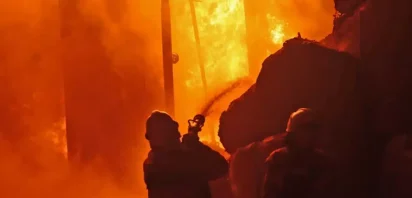
In the days following the initial exchange, Israel expanded its operational scope to include Iranian energy infrastructure. Strikes targeted the South Pars gas processing facilities and the Shahran fuel depot, critical to Iran’s domestic energy distribution. Iran, in turn, launched further missile attacks against Israeli refineries and energy installations, causing partial shutdowns and triggering emergency response protocols.
At time of writing, Israeli airspace remains restricted; Ben Gurion Airport is closed. Iran and Iraq have also closed their airspace, and both militaries continue to maintain elevated alert levels. Civilian populations in both countries face displacement, infrastructure disruption, and persistent security threats from ongoing hostilities.
Why It Matters
The unfolding Israel-Iran war marks a possible turning point in global nonproliferation. Recall John F. Kennedy’s famous warning, born of how nuclear know-how inevitably proliferates over time, that the world will have 20 nuclear powers by 1975. His fears gave rise to the ‘carrot’ approach of non-proliferation: inducing states to forego a weapons program by offering civilian nuclear assistance under the UN Non-Proliferation Treaty (NPT). The Iran nuclear talks, whether under Obama or Trump, were a last gasp attempt at continuing this legacy.
The Israel campaign represents a pivot toward the ‘stick’ approach, the idea that states must be coerced into foregoing a nuclear weapon program. The strikes are likely to achieve Israel’s short-term strategic objectives by hobbling Iran’s capacity to achieve a nuclear break-out, at least for now. But looking long term, the takeaway is clear for any aspirant, non-Western middle power: nuclear weapons are the only way to ensure your security. Israel’s operation thus becomes a self-fulfilling prophecy, having demonstrated the ineffectiveness of Iran’s conventional deterrent posture. In this new context, and so long as Iran retains some vestiges of its nuclear program, any pause in the fighting or longer-term ceasefire risks affording Tehran an opportunity to assemble a bomb and achieve nuclear breakout. Will Israel be able to maintain this kind of military pressure indefinitely? And which states are now watching the war unfold and making their own plans to avoid Tehran’s fate?
North America
Israel-Iran War Throws a Wrench into President Trump’s Trade Policy?
What Happened
The Israel-Iran war is having an immediate impact on global energy prices and there’s a high risk of severe supply disruptions so long as the conflict continues. Israel has targeted fuel depots, oil refineries, and the massive South Pars gas field in various airstrikes. But it’s the potential closure of the Strait of Hormuz, through which 30% of global oil and 20% of liquified natural gas (LNG) traverse, that is keeping commodity traders up at night.
Why It Matters
President Trump’s tariff policy is innately inflationary, but it has benefited so far from extremely low global oil prices, depressed by the OPEC+ pivot from price support to market capture. This has helped to mitigate or entirely cancel out trade war-induced inflation through deflationary energy prices. However, the Israel-Iran war could remove this economic tailwind. Iranian oil production accounts for around 3.3 million barrels per day (bpd), 2 million of which are exported, and there are doubts that OPEC+ can bring enough supply online to compensate. The potential inflation spike is not inconsequential: researchers at the US Federal Reserve found that a 10% increase in the price of oil can increase headline CPI by 0.4% year-on-year.
VOA Persian Rises from the Dead
What Happened
Voice of America (VOA) – a US-government funded media outlet broadcasting in 46 languages – was gutted by DOGE earlier this year, which cut loose some 600 contract workers and 800 full-time employees. Now the US administration is scrambling to get the VOA Persian service back online so as to communicate directly with the Farsi-speaking population of Iran, ordering some 75 workers on administrative leave to return to work immediately.
Why It Matters
The reversal highlights the soft power value of media outlets broadcasting in local languages, which can boost alternative narratives in media climates dominated by state-run or state-friendly outlets. This is especially true in closed authoritarian systems. In the absence of VOA Persia – which typically broadcasts over radio, satellite television, and online – the US administration effectively has no way to ‘speak’ to the Iranian people.
The reversal is not surprising given the enduring importance of soft power in global geopolitics, and the DOGE cuts buck the wider trend of major powers beefing up their outward messaging capacity; for example, China expanding the global reach of its state-run media outlets and social media giants like TikTok. But it certainly is damaging to the VOA’s capacity to deliver the kind of content that can undermine state narratives, since the persuasiveness of said content rests on ground-level credibility and cooperative sources, both of which have been undermined by the closure. It remains to be seen whether VOA Persian is an exception, or if the Trump administration is warming to the utility of soft power in modern inter-state conflict.
Europe
Israel-Iran War a Mixed Blessing for Russia
What Happened
Higher oil prices will provide Moscow with some short-term economic relief, but the news isn’t all positive for the Kremlin. Iran has been a major supplier of drones for Russia in the Ukraine war, providing several thousands of Shahed-136 kamikaze drones and the know-how needed to set up domestic production chains at the Alabuga complex in Tatarstan.
Why It Matters
- Iran’s Link in Drone Warfare Chain. The full extent of Russia’s indigenization of Shahed-136 production is unknown; however, there’s a running assumption that Iran still provides the MD-550 engines that power the drones. (The story of these engines is a fascinating instance of Russia-Iran bilateral cooperation on weapon development and sanction evasion). With the advent of the Israel-Iran war, Tehran’s attention will shift toward domestic production and bolstering its own deterrent, potentially impacting Russia’s drone output. This may be the least of the Kremlin’s worries, however, as the Alabuga drone factory was just confirmed to have been hit by a Ukraine drone attack some 1,000 km away from the Ukrainian border.
- Friends without Benefits. Moscow will also be under pressure to provide some kind of material or diplomatic support to Tehran so as to actualize their long-term strategic partnership and identity as an anti-West axis. Of course, the Kremlin is in no position to do so currently as it is engaged in its own multi-year mass mobilization against Ukraine.
- Oil Price Relief for Russian Economy. The Russian economy was in a bad way before the war broke out last week. Inflation remains was hovering around 10%, trending upward, with food prices experiencing some of the stickiest increases. More alarmingly, oil and gas revenues were down 35% year-on-year due to OPEC+ turning on the pumps. A sustained increase in oil prices can reverse the downward trend of late and provide the Kremlin with some economic breathing room as the Ukraine war grinds on.