Europe is rearming at a pace unseen since the Cold War, yet without a cohesive political compass. In 2025, the continent navigates a strategic predicament in what Ian Bremmer calls a ‘G-Zero’ world: a landscape shaped not by defined threats but by cascading uncertainty, where power shifts faster than alliances can form. Rather than presenting discrete threats, this environment amplifies systemic uncertainty: a condition in which risks cascade across domains without clear mechanisms for containment or coordination. In this setting, uncertainty is not merely a lack of foresight – it becomes the dominant strategic variable. Europe’s challenge lies not in eliminating uncertainty, but in confronting it as a structural reality that demands cohesion, adaptability, and strategic foresight.
In the wake of Russia’s invasion of Ukraine in 2022, Europe’s response was robust yet reactive: sweeping sanctions, notable increase in defense spending, and unprecedented NATO unity. However, these necessary measures inadvertently triggered second-order effects, including inflation, political fragmentation, and social unrest. Military budgets surged dramatically, with Poland and the Baltics committing upwards of 4–5% of GDP to defense. Germany’s self-proclaimed “Zeitenwende,” an epochal break from postwar strategic restraint, constituted a doctrinal watershed, while Sweden and Finland’s accession to NATO marked both symbolic and strategic expansions. Yet, despite this swift and decisive reaction, the continent lacked a cohesive long-term diplomatic strategy.
The reelection of Donald Trump in 2024 has further intensified Europe’s strategic predicament. His demands for NATO members to allocate 5% of their GDP to defense spending significantly exceed previous expectations, effectively redefining alliance obligations along transactional lines. The implicit threat of a “two-speed NATO” has raised serious concerns over a conditional Article 5, undermining collective defense principles once taken for granted. As a result, the European Union finds itself compelled to accelerate militarization to reassure Washington, while simultaneously seeking strategic autonomy in anticipation of a potentially unreliable US partner. This delicate balancing act has transformed transatlantic alignment from an implicit guarantee into a continuously managed political challenge.
Trump’s early actions in 2025 – particularly his oscillation between unilateral engagement with Moscow and temporary disengagement from Kyiv – have further underscored this shift, marking a clear departure from established alliance-based security commitments. The brief suspension and subsequent conditional reinstatement of US military aid and intelligence-sharing, confined to a narrow ceasefire framework, exposed the precariousness of Ukraine’s external dependencies. Europe’s response, spearheaded by a coalition led by France and the United Kingdom and initially joined by Turkey, reflected the complex web of competing geopolitical interests within this fragile alliance. However, the coalition remains ambiguously defined, shaped more by national discretion than by cohesive doctrine.
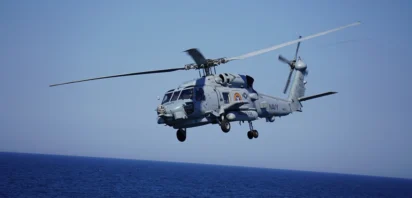
More recently, signals from the Trump administration suggest a willingness to step back from active mediation, citing frustration over stalled diplomatic progress. While a $50 million arms sale was announced – widely seen as a symbolic signal of continued engagement – Washington’s broader intentions remain undefined. This ambiguity casts further uncertainty over Europe’s ability to coordinate a coherent response and sustain long-term engagement with Kyiv.
Compounding this external ambiguity are widening strategic divergences within the EU itself. Eastern European states perceive Russia as an existential threat necessitating maximal deterrence, while Western capitals maintain a more cautious, sometimes ambivalent approach. Hungary openly defies sanctions; Italy and Slovakia voice growing public fatigue; France carefully balances robust deterrence with forward-looking diplomacy, influenced by its strategic concerns in Africa, particularly the Sahel, where Russia’s increasing influence directly challenges French interests. Additionally, Italy’s recent rapprochement with Turkey – including Prime Minister Meloni’s official visit aimed at enhancing defense and economic cooperation – highlights intra-European divergences. This alignment potentially complicates EU cohesion, especially regarding Greece and Cyprus, whose geopolitical interests in the Eastern Mediterranean could be adversely impacted by a closer Italy-Turkey axis.
The resulting strategic divergences are further compounded by growing domestic unrest, as populist movements exploit inflation, energy insecurity, and socioeconomic grievances, questioning the rationale and sustainability of prolonged confrontation with Russia. Divergences within the EU may intensify further as militarization increasingly generates asymmetric benefits, particularly for member states with advanced defense industries, while other nations absorb substantial costs without equivalent economic returns.
Europe’s energy transition underscores similar contradictions. The rapid decoupling from Russian gas fundamentally reshaped Europe’s energy landscape but created new dependencies. US LNG replaced Russian supplies at premium prices and under politically conditional terms. Simultaneously, stalled negotiations with Qatar and internal debates about pragmatic reintegration of limited Russian energy flows reveal underlying tensions. Furthermore, the geopolitical costs of energy independence are unevenly distributed, exacerbating societal unrest and polarization across member states.
Amid these tensions, the European Union – historically a prime beneficiary of globalization – now finds itself navigating a shifting geoeconomic environment shaped by renewed pressures from both allies and adversaries. The reinstatement of tariffs by the Trump administration marks a shift toward transactional economic nationalism. Concurrently, the duty-free import of Ukrainian agricultural goods has provoked strong opposition from Central and Eastern European states. Domestic producers in those countries are facing increasing pressure from uncontrolled inflows, triggering political backlash. While the European Commission argues that trade preferences for Ukraine bolster wartime resilience, internal critiques accuse Brussels of subordinating economic cohesion to geopolitical symbolism.
Adding to these strains, structural dependencies – particularly on China – remain deeply embedded, and industrial strategies to achieve strategic autonomy are still conceptual rather than operational. The EU’s global position is further complicated by US pressures for economic decoupling from adversarial powers, juxtaposed against the European imperative to sustain diversified economic relationships with the Global South. Reactive policymaking under geopolitical pressure has left the bloc without a clear geoeconomic direction. Recent agreements, such as the EU-Australia Memorandum of Understanding on critical minerals, highlight efforts to reduce reliance on adversarial states. Still, these efforts remain nascent and require strong institutional foundations to develop into tangible geopolitical capacity.
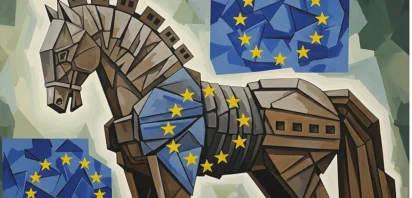
Against this backdrop of economic fragmentation and geopolitical volatility, Europe’s increasing militarization suffers from a strategic deficit. A clear asymmetry has emerged between military capabilities and political clarity. Military hardware expansion has outpaced Europe’s capacity to clearly articulate strategic objectives. The EU as a geopolitical actor remains ambiguously defined, torn between projecting strength and articulating clear strategic intentions.
Europe’s accelerating rearmament, absent a cohesive political compass, risks becoming inherently destabilizing. Without clear diplomatic guardrails, the dangers of miscalculation, unintended escalation, and fragmented responses grow exponentially. To move beyond reactive deterrence, Europe must strengthen its capacity to interpret uncertainty, trace cascading effects across domains, and reconcile external postures with internal cohesion.
Meeting this challenge will demand renewed investment in diplomacy, not only with allies but also through calibrated engagement with adversaries and actors operating in the grey zones. Energy policy must be reframed as both a tool of geopolitical leverage and a social contract that stabilizes domestic consensus. At the institutional level, the European Union needs mechanisms that align foreign initiatives with internal resilience, ensuring that external ambition does not outpace political and societal unity.
Such initiatives could be realized through the creation of a permanent European mechanism for preventive diplomacy, the systematic stress-testing of key policy domains under multiple scenarios, and the development of a Mechanism for Strategic Alignment to assess the compatibility between Europe’s external actions and its internal architecture.
In an era defined more by disruption than by resolution, Europe’s resilience will hinge not on force alone, but on its capacity to absorb shocks, sustain internal cohesion, and act with long-term purpose and foresight. Only by embodying these qualities can Europe hope to reclaim agency in an increasingly fractured and unpredictable world.
The views expressed in this article belong to the authors alone and do not necessarily reflect those of Geopoliticalmonitor.com.